
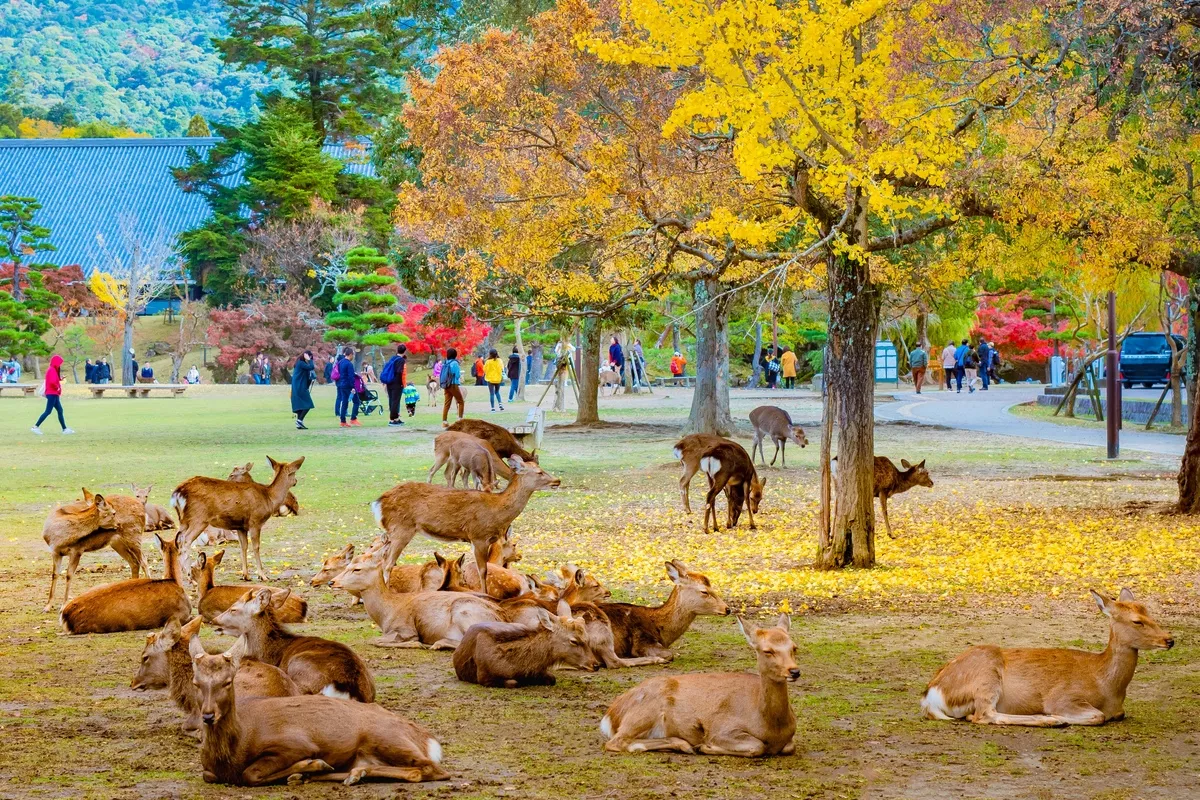


What Is Nara Park? Famous City Park with Deer and UNESCO World Heritage Sites
Nara Park (Nara Kōen) is one of Japan’s most iconic sightseeing destinations, located in the heart of Nara City.
Established in 1880, this vast park covers about 660 hectares and is home to multiple UNESCO World Heritage sites, including Tōdai-ji, Kōfuku-ji, and Kasuga Taisha, all scattered within the grounds.
The symbol of Nara Park is its deer that roam freely throughout the park.
Long protected as sacred messengers of Kasuga Taisha (shinroku), these deer—together with beautiful nature and historic structures—create a uniquely “Nara” sightseeing experience where you can enjoy wildlife and heritage side by side.


Top Things to Do in Nara Park
1. Scenery Where Nature and History Intertwine
Nara Park is a place where Japanese history and nature come together in beautiful balance.
Historic structures with more than 1,000 years of history—such as Tōdai-ji and Kasuga Taisha—dot the park, giving many visitors the feeling of stepping back in time.
Seasonal scenery is another highlight: in spring, cherry blossoms (late March to early April) bloom across the park, and in autumn, foliage (mid-November to early December) adds vivid color throughout the landscape.
In particular, the broad lawns of Ukigumo-enchi and Tobihino offer a classic Nara Park scene where deer and nature coexist.
2. Interacting with the Deer, a National Natural Monument
Nara Park’s deer are designated a National Natural Monument of Japan as “Nara no Shika,” and they have been treasured for over 1,000 years as sacred messengers of Kasuga Taisha.
You can try feeding deer with shika senbei (deer crackers), sold at shops in the park (typically a few hundred yen).
The sight of deer bowing as they ask for crackers is a classic Nara travel moment.
However, deer are wild animals, so avoid teasing them by showing food without giving it, and interact while keeping an appropriate distance.
3. The Convenience of Multiple World Heritage Sites Within Walking Distance
One of Nara Park’s biggest draws is that many World Heritage structures are gathered within easy walking distance.
- Tōdai-ji: The Great Buddha Hall and the Nara Great Buddha are must-sees.
- Kōfuku-ji: Enjoy Buddhist art such as the Five-Story Pagoda (National Treasure) and the Asura statue at the National Treasure Hall.
- Kasuga Taisha: A shrine known for its beautiful vermilion buildings and many lanterns.
You can visit all of these in a single day, making it easy to experience Nara’s history and culture efficiently.
4. Beautiful Scenery Through the Four Seasons
Nara Park offers different beauty in each season.
- Spring (late March to early April): Cherry blossoms reach full bloom, and the park becomes lively with hanami visitors.
- Summer: Fresh greenery spreads across the park, creating a bright, refreshing landscape.
- Autumn (October to early December): Vivid foliage colors the park, and the traditional event “Deer Antler Cutting” is held in autumn.
- Winter: The contrast of deer and temples in a snowy landscape feels magical.
5. Expansive Lawns Perfect for Walks and Picnics
Nara Park is spacious and filled with green areas, making it ideal for strolling and picnics.
In lawn areas like Ukigumo-enchi and Tobihino, you can relax and spend unhurried time among the deer.
It’s a popular spot for families and couples looking to enjoy a laid-back afternoon.


How to Get There
By Train
- About a 5-minute walk from Kintetsu Nara Station
- Kintetsu Nara Station is very close to the park and is the most convenient access point.
- About a 20-minute walk from JR Nara Station
- Or take a local bus from JR Nara Station for about 10 minutes.
- From Kyoto or Osaka
- From Kyoto Station: about 35 minutes by Kintetsu Limited Express, or about 45 minutes by JR Rapid Service.
- From Osaka (Namba): about 40 minutes by Kintetsu Rapid Express.
By Car
- About 1 hour from Osaka
- Use the Daini Hanna Road or the Keinawa Expressway.
- There are multiple paid parking lots around Nara Park, but cherry blossom and autumn foliage seasons can be crowded, so public transportation is recommended.


How to Enjoy Nara Park
1. Take Photos with the Deer
The deer of Nara Park are a friendly symbol for travelers.
When you offer shika senbei, deer gather around, creating great photo opportunities.
A popular tip is to capture the moment a deer bows.
2. Visit Historic Landmarks
In addition to Tōdai-ji, Kōfuku-ji, and Kasuga Taisha, the park includes other sights such as the Nara National Museum and Ukimido pavilion.
Set aside half a day to a full day to explore at a relaxed pace.
3. Enjoy Seasonal Scenery
Try strolling through the park while soaking in seasonal views.
Cherry blossoms and autumn leaves create especially beautiful landscapes.
If you climb Mount Wakakusa (342 m above sea level), you can enjoy a panoramic view over Nara City.
4. Relax Inside the Park
Spend time on a bench, or lay out a picnic sheet on the grass and enjoy a casual picnic.
There are also cafés and tea houses within the park, making it easy to take a break when you get tired from walking.


Etiquette and Safety Tips When Interacting with the Deer
Nara Park’s deer are wild animals.
To interact safely and enjoyably, please follow these manners.
- Do not feed them anything other than shika senbei.
- Because they may eat plastic bags or paper, watch your belongings carefully near deer.
- Young children should stay with an adult, and avoid suddenly approaching or chasing deer.
- During the rut (autumn) and birthing season (spring to summer), deer may become more aggressive—keep extra distance.
- If you tease a deer by showing crackers without giving them, it may get excited and bite or headbutt.

Useful Information for Travelers
- Admission
- Entry to Nara Park is free. Facilities such as Tōdai-ji and Kasuga Taisha require separate admission fees.
- Opening Hours
- The park itself is open 24 hours. Opening hours vary by facility.
- Best Times to Visit
- Spring (March–May) and autumn (October–November) are especially recommended.
- Facilities
- Restrooms, vending machines, and benches are installed throughout the park.
- A tourist information center is located in front of Kintetsu Nara Station and offers multilingual support including English.
- Notes
- Because deer are wild animals, be careful not to get too close too suddenly.
- Please take your trash with you and help keep the park clean.
Summary
Nara Park is a historic park where the National Natural Monument deer, UNESCO World Heritage temples and shrines, and rich nature coexist in one place.
Across its vast grounds, you can enjoy interacting with deer, walking among World Heritage sites, and taking in seasonal scenery all in the same visit.
With easy access from Kyoto and Osaka, it’s also ideal for a day trip—be sure to visit and experience Japan’s culture and nature in Nara.


Reviews (0)