


1. What Are the Ine Funaya Boat Houses?
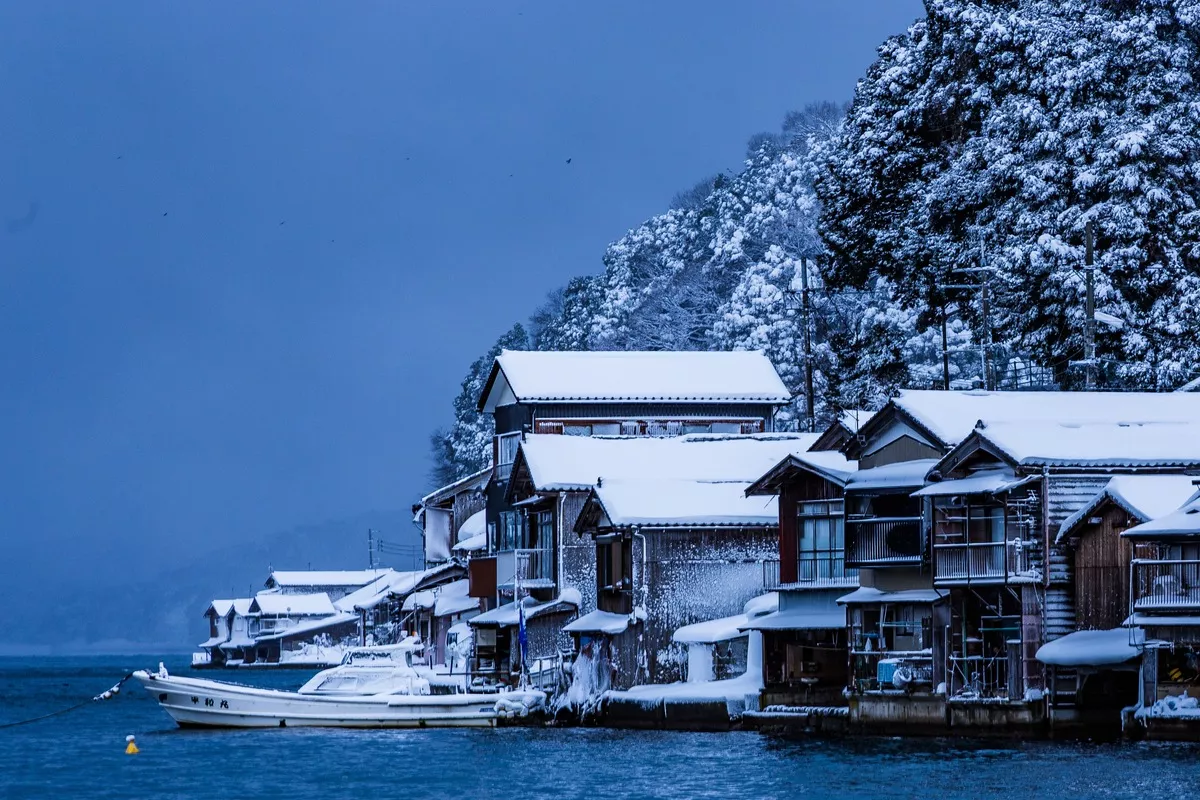
The Ine Funaya Boat Houses (Ine no Funaya) are a traditional cluster of waterfront homes lining Ine Bay in Ine Town (Ine-chō), on the Tango Peninsula in northern Kyoto Prefecture.
Each funaya is built with a boat garage on the first floor and living/storage space on the second floor, reflecting generations of fishing families who have lived and worked here.
Around 230 funaya stand in a sweeping arc around Ine Bay, creating a one-of-a-kind seascape that looks as if the houses are floating on the water.
In 2005 (Heisei 17), the funaya district was selected as an Important Preservation District for Groups of Traditional Buildings (a national designation), the first such designation for a fishing village in Japan.
With beautiful Sea of Japan scenery and a distinctive lifestyle shaped by the sea, Ine is a rare place to discover Japan’s traditional coastal way of life—an unforgettable travel spot in Kyoto’s Tango area.


2. How to Get to Ine Funaya (From Kyoto Station)
For access to Ine Funaya, a common route is Kyoto Station → (Limited Express) Amanohashidate Station (about 2 hours) → local bus (about 50 minutes) = about 3 hours total.
By car, it takes about 2 hours from central Kyoto using the Kyoto Jūkan Expressway.
Driving through the Tango area’s beautiful nature is also highly recommended.
The nearest rail station is Amanohashidate Station on the Kyoto Tango Railway, and you will need to transfer to the Tankai Bus (Ine Line).
Renting a car or using a sightseeing taxi is also convenient.
Because streets in Ine are narrow and parking is limited, using public transportation or an e-bike (electric-assist bicycle) is also a smart option.
Town-operated parking lots include Ōnishi Parking Lot (37 spaces), Ineura Park Parking Lot (22 spaces), and Shichimensan Parking Lot (57 spaces). Fees and free-time rules vary by lot and day of the week.
For example, at Ōnishi Parking Lot, entry between 8:00–21:00 includes the first 30 minutes free, then 100 yen per 30 minutes.


3. Top Things to Do at Ine Funaya
Ine Funaya is not only beautiful to look at—you can also enjoy a variety of activities.
Ine Bay Sightseeing Cruise
There is a large sightseeing boat that lets you admire the funaya exteriors from the sea.
On the roughly 25-minute cruise, you can take in the powerful view of about 230 funaya stretching along the bay from the water.
On the deck, feeding seagulls and black-tailed gulls is a popular experience.
Interacting with the birds swarming around the boat is one of the cruise’s highlights.
If you are lucky, dolphins may even approach the sightseeing boat.
Tickets cost 1,200 yen for adults and 600 yen for children.
Departure times may operate on schedules such as 9:00–16:00 at :00 and :30 each hour.
The number of services and timetables vary by season.
There are also small water taxis operated by local boatmen, allowing you to view the funaya from much closer up.
Prices and details vary by operator and course.
Hands-On Fishing Experience
In Ine, you can join local fishermen for a hands-on fishing experience.
From fishing to sorting the catch, you can feel close to a seaside lifestyle that is hard to experience in everyday travel.
Because Ine Bay is sheltered on three sides by mountains and Aoshima Island, the waves are gentle, making it an easy setting even for beginners.
What to Eat in Ine: Seafood & Local Sake
There are many places to enjoy fresh seafood—especially Ine buri (yellowtail) sashimi, saba-zushi (mackerel sushi), and set meals made with locally landed seafood.
Mukai Shuzō (Mukai Sake Brewery), founded in the mid-Edo period (1754 / Hōreki 4), brews a sake called “Ine Mankai” using ancient rice (shikokumai / Murasaki Komachi).
Ine Mankai is sometimes described as having a rosé-wine-like flavor and is especially popular with women.
Mukai Shuzō is also known as a brewery built close to the sea, and you can enjoy tastings at the shopfront.


4. Where to Stay: Overnight in a Funaya
Some Ine funaya can actually be stayed in, making it possible to spend a night inside a traditional boat house—an experience unique to Ine.
Options range from old-style fishermen’s inns to renovated, private whole-house funaya rentals, so you can choose the style that suits your trip.
With the sound of the sea, you can enjoy slow, relaxing time and a special escape from the bustle of the city.
In whole-house rentals, you can fish directly from the accommodation by dropping a line, then clean and enjoy what you catch—one of the most “Ine” ways to spend your time.


5. Etiquette & Tips for Visiting Ine Funaya
Ine Funaya are private homes, and the land is privately owned.
Please refrain from entering private property without permission or taking photos/videos of residents without consent.
Respect the quiet atmosphere of this fishing village and practice responsible tourism.
At the Ine Town Tourism Association across from Ineura Park, you can pick up maps and pamphlets and use coin lockers (around 500 yen).
Business hours are 9:00–17:00, and it is convenient to stop by at the start of your visit.

6. Summary
Ine Funaya is a unique destination where you can experience Japan’s traditional coastal lifestyle up close.
It offers a beautiful landscape shaped by about 230 funaya.
Historic architecture designated as an Important Preservation District for Groups of Traditional Buildings is also a major highlight.
Through warm encounters with local people, Ine offers visitors unforgettable memories.
When you visit Kyoto, be sure to add this hidden gem—Ine Funaya—to your travel list.


Reviews (0)