


Kyoto Historic Townscape Guide: Preservation Districts and Nearby Experiences
Across Kyoto Prefecture, seven distinct Important Preservation Districts for Groups of Traditional Buildings (Jūyō Dentōteki Kenzōbutsu-gun, or "Jūdenken") are scattered from the streets of central Kyoto City to Miyama, Ine, and Yosano.
At the same time, places like Pontocho and the Kamogawa Nōryō-yuka (riverside dining platforms) allow you to experience Kyoto's old townscapes and waterside culture even though they are not designated preservation districts.
By separating official preservation districts from nearby experiences that capture the wider townscape, you can plan your trip without confusion.
Preservation Districts Help You Understand a Town's Character
Each preservation district has different origins, including temple-gate towns, teahouse districts, shrine-priest neighborhoods, mountain villages, fishing villages, and textile-producing towns.
Even within Kyoto Prefecture, the stone-paved lanes and townhouses of Higashiyama, the thatched-roof homes of Miyama, and the boathouses of Ine offer dramatically different scenery and ways of walking.
Choosing from the Top 10: Pick by Purpose for Easier Walking
For a short stay, Higashiyama and Gion in the city are ideal; for quiet town walks, try Kamigamo or Saga-Toriimoto; and for wide-ranging exploration, head to Miyama or the Tango area.
| Place | Category | Best for |
|---|---|---|
| Sannenzaka | Preservation district | First-timers |
| Ninenzaka | Nearby walk | Slope strolls |
| Gion Shinbashi | Preservation district | Waterside town |
| Pontocho | Nearby walk | Evening alleys |
| Kamogawa Nōryō-yuka | Seasonal experience | Riverside dining |
| Kamigamo | Preservation district | Quiet town |
| Saga-Toriimoto | Preservation district | Inner Saga |
| Miyama | Preservation district | Rural scenery |
| Ine | Preservation district | Seaside life |
| Kaya | Preservation district | Tango culture |
Walking Higashiyama: Sannenzaka, Ninenzaka, and the Old Streets of Gion Shinbashi
If you want to feel Kyoto's classic townscape with minimal travel, the walk from Higashiyama to Gion is an easy choice.
Stone-paved lanes, sloping streets, traditional townhouses, and canal-side scenery follow one after another, naturally tracing the image of the ancient capital.
Sannenzaka: A Temple-Gate Townscape Shaped by Slopes and Townhouses
Sannenzaka was designated a preservation district as a temple-gate town in 1976, lining the approach toward Kiyomizu-dera Temple.
The flow of the approach and the rows of townhouses overlap, making the slope itself part of the scenery.
Since some sections are not very wide, choosing a spot that does not block foot traffic when you stop to take photos will keep things comfortable for everyone.

Ninenzaka: Enjoy the Fine Details of the Stone Paving
Ninenzaka is not itself a preservation district, but it is an easy Higashiyama slope to walk together with Sannenzaka.
Rather than getting too close to shopfronts and homes, step back a little to take in the lattice windows, eaves, stone steps, and continuous walls, and the cohesion of the whole townscape comes into view.
Gion Shinbashi: Savor the Atmosphere of a Waterside Teahouse District
Gion Shinbashi was designated a preservation district as a teahouse town in 1976, and its appeal lies in the calm scenery created by the lane along the Shirakawa stream, the bridge, and the townhouses.
It is important to refrain from chasing and photographing geisha, maiko, or passersby without permission, and instead quietly enjoy the buildings and waterside views.
Pontocho and the Kamogawa Nōryō-yuka: Enjoy Kyoto's Evenings with Refinement
Pontocho is not a preservation district, but it is an area where you can experience Kyoto's narrow alleys, dining culture, and Kamogawa riverside scenery all at once.
Unlike daytime temple and shrine visits, the lights and river breeze transform the town's impression from evening onward.
Pontocho: Enjoy the Width of the Alley and Its Lights
In Pontocho, signboards, latticework, noren curtains, and the depth of the alley create the evening scenery.
Standing in front of shop entrances or passageways for a long time tends to block the flow of patrons and residents, so this area is best enjoyed by soaking in the atmosphere as you walk.

Kamogawa Nōryō-yuka: Enjoy It as a Seasonal Riverside Food Culture
The Kamogawa Nōryō-yuka is known as a seasonal dining experience set up along the Kamogawa River, mainly from May 1 to October 15.
Since operating details and periods differ by restaurant, if there is a particular place you want to visit, it is reassuring to check its operating information in advance.

Evening Photography: Make the Town's Lights the Star Rather Than People's Faces
When taking photos, making lanterns, alley reflections, and light on the river surface the focal point lets you preserve Kyoto's atmosphere while respecting people's privacy.
Enjoy a Quiet Townscape Walk at Kamigamo and Saga-Toriimoto
Even within Kyoto City, stepping a little away from the bustle of the center lets you enjoy a calm walk through preservation districts.
Kamigamo and Saga-Toriimoto are districts better suited to enjoying the open space of the streets and continuous rows of houses than to rushing through tourist sites.
Kamigamo: Walking the Calm of a Shrine-Priest Neighborhood
Kamigamo was designated a preservation district as a shrine-priest town (shake-machi) in 1988.
The townscape of the shake families connected with Kamigamo Shrine, along with canals, earthen walls, and gateways, creates a quiet scene.
Because it has a strong residential character, it is better suited to a quiet daytime stroll than to walking and talking loudly early in the morning or at night.

Saga-Toriimoto: Savor the Open Space of the Inner Saga Streets
Saga-Toriimoto was designated a preservation district as a temple-gate town in 1979, and it retains calm rows of houses along the Atago Kaidō road.
By stepping a little away from central Arashiyama, the flow of people changes, making it easier to sense the deeper layers of Kyoto.
In Quiet Districts, Slow Down Your Pace
Old townscapes draw their atmosphere not only from the buildings but also from the width of the streets, the walls, the plantings, and even the sounds of daily life.
Rather than rushing just to take photos, slowing down a little makes it easier to notice the finer details of the scenery.
Encounter Living Landscapes at Miyama's Thatched-Roof Village and Ine's Boathouses
Venturing into the northern and central parts of Kyoto Prefecture, you can encounter old townscapes unlike those in the city.
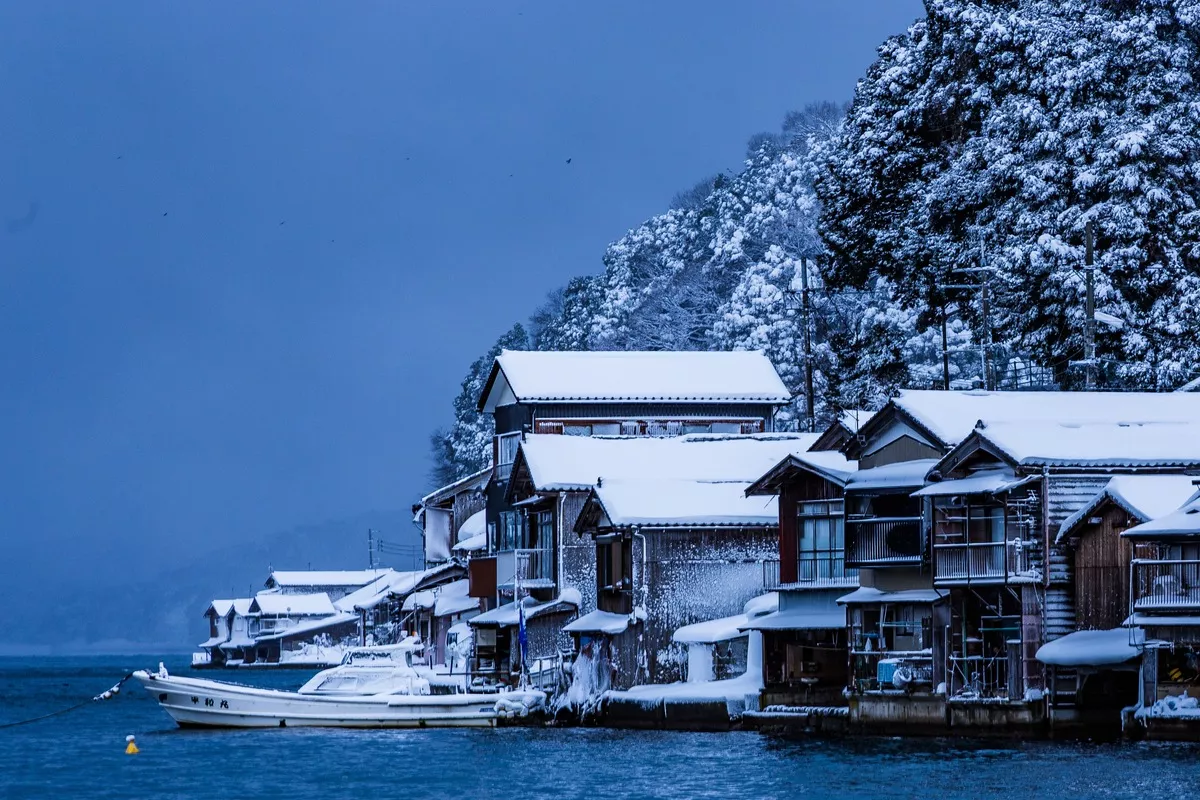
Miyama preserves rural mountains and thatched roofs as its landscape, while Ine preserves a life close to the sea with its boathouses.
Miyama Kayabuki no Sato: Take in the Whole Rural Landscape
Miyama Kayabuki no Sato (Kita, Miyama-chō, Nantan City) was designated a preservation district as a mountain village in 1993, and from the direction of Kyoto Station you should allow around two hours one way, transferring between train and bus.
We recommend viewing not only the thatched roofs but also the mountains, fields, roads, and village as a single unified landscape.
Many of the houses are people's homes, so staying off private property and walking quietly helps protect the landscape.

Ine's Boathouses: Walk with Respect for Seaside Life
The boathouses of Ine (Ineura, Ine-chō) were designated a preservation district as a fishing village in 2005, and the area is known for its scenery of about 230 funaya (boathouses) lined along Ine Bay.
Since the boathouses are not just sightseeing facilities but buildings still tied to daily life and work, it is important to stay off private property and view them from the road or from the water.
Enjoy How the Townscape Changes with the Seasons
Old townscapes are not appealing only on sunny days.
On rainy days the stone paving and the color of the wood appear deeper, and in winter the lines of the roofs and mountains stand out clearly, so the atmosphere of your photos changes with each season.
| Season | How it looks | Best place |
|---|---|---|
| Spring | Flowers and townhouses | Higashiyama |
| Summer | Riverside coolness | Kamogawa |
| Autumn | Mountain colors | Miyama |
| Winter | Quiet streets | Saga-Toriimoto |
Visiting Kaya in Yosano-chō and Tango's Townscapes by the Kyoto Tango Railway
If you want to tour the old townscapes of the Tango area, a trip using the Kyoto Tango Railway is also an option.
Combining it with Amanohashidate or Ine makes it easier to enjoy the scenery and townscapes of "Kyoto by the Sea" all at once.
Kaya in Yosano-chō: Be Mindful of Its Background as a Textile Town
Kaya in Yosano-chō was designated a preservation district as a textile-producing town in 2005, and it is a district where you can feel the history of a town connected with Tango chirimen (Tango crepe silk).
Knowing how the textile industry overlapped with local life, beyond just the townhouses and old residences, deepens your perspective as you stroll.
The Kyoto Tango Railway: Transport That Connects Kyoto by the Sea
The Kyoto Tango Railway connects Fukuchiyama, Miyazu, Amanohashidate, Yosano, and the Kyotango area.
Since travel beyond the stations may involve combining buses and walking, it is reassuring to check schedules and service information in advance.

Don't Cram Too Much into One Day in Tango
Miyama, Ine, and Kaya each lie in different directions with different travel times, so rather than rushing to see everything in a single day, focusing on the towns you most want to visit makes for a more relaxed experience.
Etiquette and a Mindset for Photos When Walking Old Townscapes
Preservation districts and old townscapes are not places preserved solely for tourists.
Walking with the understanding that people live, work, and pray there lets you feel the town's charm while avoiding trouble.
Stay Off Private Property and View from the Road
However beautiful an old building or garden may look, the basic rule is not to enter places that are not open facilities without permission.
Avoid entering entryways, gardens, parking areas, and the interiors of boathouses unless you have permission.
Don't Chase People to Photograph Them
Chasing and photographing maiko, geiko, residents, shop staff, or passersby without permission places a burden on them.
Making the townscape, light, shadows, and architectural details the focus rather than people also gives your travel photos a calmer impression.
Don't Forget Consideration for Noise, Open Flames, and Trash
In narrow alleys and residential areas, voices and the sound of suitcase wheels can echo more than you might expect.
Since smoking, eating while walking, and leaving trash also damage the scenery and living environment, follow local signs and remember to take your trash with you.
| Situation | Good behavior | Avoid |
|---|---|---|
| Alleys | Walk to the side | Blocking the road |
| Photos | Photograph buildings | Chasing people |
| Boathouses | View from outside | Peering inside |
| Within villages | Walk quietly | Loud voices |
| Resting | Designated areas | Using private property |
How to Choose Kyoto's Old Townscapes for First-Time Visitors to Japan
You will be more satisfied with Kyoto's old townscapes if you choose them based on your length of stay and the purpose of your trip.
The best place differs depending on whether you want to see famous scenery, take a quiet stroll, or venture as far as northern Kyoto Prefecture.
For First-Timers, Center Your Trip on Higashiyama and Gion
If you are visiting Kyoto for the first time, combining Sannenzaka, Ninenzaka, and Gion Shinbashi lets you experience sloping streets, waterside views, and townhouses all at once.
Since some surrounding areas are crowded, adjusting your walking time to the morning or evening makes them calmer and easier to enjoy.
For Tranquility, Head to Kamigamo or Saga-Toriimoto
For those who want to step a little away from the city center's crowds, Kamigamo and Saga-Toriimoto are good choices.
Their appeal comes through when you think of them as a stroll to savor the character of the streets and continuous rows of houses, rather than touring one sight after another.
To Feel the Vastness of Kyoto, Go to Miyama, Ine, and Kaya
For those who want to feel the diversity of Kyoto Prefecture, Miyama Kayabuki no Sato, the boathouses of Ine, and Kaya in Yosano-chō leave a lasting impression.
Even within the same "old townscape," the rural mountain, the sea, and the textile town each have different backgrounds, making for a trip that does not end within the city alone.
Summary: Kyoto's Old Townscapes Can Be Deeply Enjoyed with Respect for Daily Life
Walking Kyoto's old townscapes and preservation districts offers a wide range of experiences, from easy strolls in places like Ninenzaka in Higashiyama and Gion Shinbashi to wider-ranging destinations such as Miyama Kayabuki no Sato, the boathouses of Ine, and Kaya in Yosano-chō.
Combining visits to Pontocho and the Kamogawa Nōryō-yuka with a ride on the Kyoto Tango Railway lets you savor not only the preservation districts but also Kyoto's waterside culture and the scenery of Tango.
What matters everywhere is to imagine people's daily lives before taking a photo, to avoid blocking the road, to stay off private property, and to walk quietly.
Rather than consuming the townscape merely as a backdrop, viewing it as a living culture that continues today makes your Kyoto trip calmer and more memorable.


Reviews (0)