


Plan Your Ōkawara Highland Walk Around Your Interests
If you are visiting Ōkawara Highland (Ōkawara Kōgen), a scenic plateau in Sanagōchi Village, Tokushima Prefecture, deciding whether you want to admire the views, take photos, or walk in nature will make your itinerary easier to plan.
At an elevation of about 1,020 m, the highland is around a 1-hour drive from central Tokushima, but its mountaintop setting means the weather can change quickly.
Leave some flexibility in your plans so you can adjust your time on the highland according to the weather and local guidance.
Allow Separate Time for Sightseeing and Walking
If your main aim is to enjoy the views, take time to look around from a spot with stable footing rather than trying to cover more ground.
You can drive to a parking lot near the summit of Ōkawara Highland, making it easy to enjoy the scenery without a long walk.
If walking is your priority, check which paths are open and how to return before setting off so you can adjust your route along the way.
For sightseeing and a short walk around the hydrangeas, allowing about 1–2 hours on site makes it easier to plan your day, including the round-trip journey.
Sharing your priorities with your companions will also help you accommodate both those who want to take photos and those who prefer to rest.
Use Local Signs to Decide Where to Walk
Distances on a map do not tell you everything about the actual walking route or conditions underfoot.
Make it a basic rule to compare your pre-trip map with local guidance and stay within areas where access is permitted.
Parts of Ōkawara Highland are cattle pastures or areas protected for nature conservation, so stay out of places marked by fences or signs.
If you are traveling with children or have concerns about walking, ask in advance about stairs, changes in level, path surfaces, and rest areas, then plan a visit that suits your group.


Ōkawara Highland Highlights and the Best Time to Visit
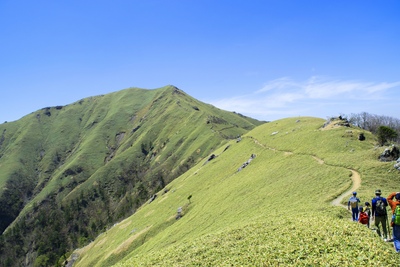
Ōkawara Highland offers mountain panoramas, hydrangeas, wind turbines, and starry skies, with different scenery depending on the season and time of day.
The recommended time to visit is roughly May through October.
Here is the basic information to check before your visit.
| Item | Details |
|---|---|
| Location | Ōkawara, Kami, Sanagōchi Village, Myōdō District, Tokushima Prefecture |
| Elevation | About 1,020 m |
| Admission and Closing Days | Free; open year-round |
| Parking | About 300 spaces (free) |
| Hydrangea Season | Late June to mid-July |
| Contact | Sanagōchi Village Office (088-679-2111) |
Panoramic Views from the Kii Channel to the Asan Mountains
The view from Ōkawara Highland was selected for the “88 Scenic Views of Shikoku,” an initiative promoted by the Shikoku Regional Development Bureau of the Ministry of Land, Infrastructure, Transport and Tourism and other organizations, as a panoramic view stretching from the Kii Channel to the Asan Mountains.
On clear days, you can take in several of Shikoku's landscapes at once, including the sea of the Kii Channel (Kii Suidō), the Tokushima Plain, and the Asan Mountains (Asan Sanmyaku).
You can also see the sunrise and sunset, making early morning and evening rewarding times to visit as the direction of the light changes.
See Around 30,000 Hydrangeas from Late June to Mid-July
Around 30,000 hydrangeas grow at Ōkawara Highland, usually reaching their best from late June to mid-July.
The acidic soil produces many blue flowers, creating a refreshing landscape that seems to blend with the color of the sky.
The Sanagōchi Hydrangea Festival (Sanagōchi Ajisai Matsuri) is usually held in early July; in 2026, farm produce sales, stage events, nature observation walks, wind turbine tours, and other activities were scheduled around the summit parking lot from 10:00 a.m. to 3:00 p.m. on Sunday, July 5.
The mountain roads are expected to be busy on festival day, so allow extra driving time.
Wind Turbines Along the Ridge and Grazing Ōkawara Highland Cattle
The Ōkawara Wind Farm stands along the highland ridge, where 15 turbines rated at 1,300 kW each (a total output of 19,500 kW) have operated since February 2009.
The turbines lining the mountains make a distinctive Ōkawara Highland photo subject, especially when framed with hydrangeas or the sky.
Cattle raised under the Ōkawara Kōgen-gyū beef brand sometimes graze on the highland, so depending on the season, you may also encounter peaceful pastoral scenes.
Keep your distance from grazing cattle and watch quietly from outside the fences.
Enjoy Starry Skies and Tokushima's Night Views
On clear nights, Ōkawara Highland offers views of a sky filled with stars and the lights of Tokushima below.
The Ōkawara Highland Hilltop House has an astronomical telescope, and the village holds stargazing events from summer through fall.
Events may be canceled due to weather or equipment conditions, so check that year's event information if you would like to join.
Mountain roads become dark and visibility is limited at night, so planning to drive down before dark is a reassuring option if you are unfamiliar with this kind of driving.


Ōkawara Highland Photography Tips and Walking Advice
When taking photos in nature, first look for scenery you can capture from where you are standing before moving in pursuit of a subject.
You can change the feel of your photos by adjusting the amount of sky in the frame or your viewing height without pushing yourself to walk farther.
Build Your Composition Around Hydrangeas, Wind Turbines, or Another Main Subject
Deciding whether you want to capture an expansive sky, layers of distant scenery, or nearby plants will help you compose your shot.
Even with a smartphone, simply checking the edges of the frame for unwanted objects can help you focus attention on your subject.
Here are some ways to approach composition for different subjects.
| Subject | Composition Idea | What to Consider |
|---|---|---|
| Expansive Sky | Include plenty of sky | Balance with the ground |
| Layers of Distant Scenery | Include foreground and background | The sense of depth you want to show |
| Nearby Plants | Keep the background uncluttered | The shapes of flowers and leaves |
At Ōkawara Highland, placing hydrangeas in the foreground with turbines or mountains behind them helps convey the depth of the landscape.
If a wind turbine is your main subject, include the blade tips and plenty of sky to emphasize its height.
Morning and evening light comes in at a low angle, making these good times to capture the shape and depth of mountain ridges and clouds.
Check Your Footing and Where You Stop
Before taking a photo, check the ground around you and the space behind you, and avoid stepping backward while looking at your screen.
On narrow paths, move to a place where you will not obstruct others before stopping to take photos.
Grass and paths can become wet and slippery after fog or rain, so make sure your footing is stable before taking photos.
Use zoom to compose shots of distant subjects, and do not climb over fences or step into vegetation for a photo.
Make Time to Put the Camera Down
Between photos, look away from your screen and take in the sky and surrounding colors with your own eyes.
Making time to notice the wind and moving clouds—parts of the highland atmosphere that photographs rarely capture—can deepen your memories of the trip.
Writing down a few words about a favorite scene can help you recall how it felt when you look at your photos after returning home.


What to Wear and Pack for a Walk at Ōkawara Highland
For a day of outdoor walking, bring clothing and gear you can adjust for rain and wind rather than relying only on what you wear when you leave.
Air temperature is generally said to fall by about 0.6°C for every 100 m of elevation, so a simple calculation puts Ōkawara Highland, at about 1,020 m, roughly 6°C cooler than the lowlands.
Packing your belongings in a backpack or another bag that leaves both hands free makes it easier to switch between walking and taking photos.
Choose Easy Layers and Familiar Walking Shoes
Dress in layers and keep an extra layer somewhere you can reach easily.
Even in midsummer, a lightweight long-sleeved top or wind-resistant jacket helps you adapt to cool mornings, evenings, and windy conditions.
Choose well-fitting shoes you have worn before, and check that the soles suit the surfaces you plan to walk on.
Long sleeves and long pants reduce exposed skin, making them an option to consider if you expect to walk near vegetation.
Prepare for Insects and Snakes on Summer Walks
For a summer visit to Ōkawara Highland, bring long sleeves and rubber boots as protection against insects and snakes.
Stay away from mamushi pit vipers, use insect repellent against mosquitoes and blackflies, and keep exposed skin to a minimum.
Avoid putting your hands into thick grass or gaps behind rocks, and watch your footing as you choose easy places to walk.
Prepare Separately for Rain, Wind, and Sun
Rain gear, a warm jacket, and sun protection serve different purposes, so combine them according to the forecast and your planned activities.
Because of its elevation and changeable weather, conditions at Ōkawara Highland can differ greatly from those at the foot of the mountain.
Keep your smartphone and paper notes in protective bags so you do not have to unpack everything in a hurry when it starts to rain.
Here are useful items for different conditions and ways to adjust your plans.
| Condition | What to Bring | How to Adapt |
|---|---|---|
| Rain Forecast | Rain gear and waterproof bags | Reconsider the extent of your walk |
| Cold Temperatures | An easy-to-remove jacket | Adjust your layers before you get cold |
| Strong Sunshine | A hat and drinks | Take breaks |
| Increasing Wind | A wind-resistant jacket | Reconsider whether to continue walking |
Sunshine can feel intense in places with little shade, so sunscreen and sunglasses, as well as a hat, can make your visit more comfortable.
Prepare Without Relying Entirely on Shops or Mobile Reception
Check whether you can buy drinks and other walking essentials locally, and pack them before setting out if you do not know where to obtain them.
Local produce and processed foods are sometimes sold at the Hilltop House in summer, but availability varies, so buying drinks at the foot of the mountain is a reassuring choice.
Save contact details and your return meeting point on your device so you can check them regardless of mobile reception.
Your smartphone may also serve as your camera, map, and translation tool, so charge it and prepare a backup power source before you leave.


How to Get to Ōkawara Highland by Car or Bus: Plan Both Ways
Transport planning should include how you will return after your walk as well as how to get there.
Allow about 60 minutes by car from central Tokushima or about 1 hour 30 minutes from Tokushima Awaodori Airport to reach Ōkawara Highland.
Check local government and transport operator guidance as well as directions in your map app.
Check Navigation Settings and Parking Before Driving
Before setting out by car, check road information, including closures, and find out where you can park.
From Tokushima, the route follows National Route 438 and the village's Chūō Road to the highland.
Setting “Ōkawara Highland” as your destination from the start may lead your navigation system onto narrow mountain roads.
The recommended approach is to first set “Sanagōchi Village Office” or “FamilyMart Tokushima Sanagōchi” as your destination, then set Ōkawara Highland again after arriving there.
The regular route to the highland heads south from the T-junction about 20 m east of FamilyMart Tokushima Sanagōchi.
Parking is free, with capacity for about 300 vehicles, although temporary parking areas may be set up on the day of the hydrangea festival.
If you need to check your route while driving, stop in a safe place where stopping is permitted, or ask a passenger to navigate.
Plan to leave your car in a designated parking area before walking rather than stopping on the road to admire the scenery.
Arrange Your Return When Using Local Buses and Taxis
If you are considering public transport or a taxi, ask the operator whether you can reach your destination and where you will need to change.
The Sanagōchi Line operated by Tokushima Bus takes about 40 minutes from Tokushima Station to Nakahen bus stop, but you then need a taxi to the highland, a drive of about 40 minutes.
Taxis may not be available immediately in mountain areas, so reserving both your outbound and return rides in advance is a reassuring option.
For scheduled services, check operating days and return departures; for taxis, discuss booking arrangements and meeting points as well.
Saving your destination and accommodation name and address in Japanese can help you explain where you need to go when communication is difficult.

Ōkawara Highland Walking Etiquette: Respect Nature and Other Visitors
When walking on the highland, take care not to damage nature or interfere with other people's movement or rest.
Follow any local guidance in addition to general visitor etiquette.
Enjoy Hydrangeas and Other Plants Without Leaving the Paths
Leave flowers and leaves where they grow, and avoid pulling branches toward you or breaking them for a photo.
Cutting or taking home Ōkawara Highland's hydrangeas without permission is prohibited.
Many rare plants grow in the Ōkawara Highland area, which includes the Asahigamaru Rare Wildlife Protection Area designated under a Tokushima Prefecture ordinance.
Stay on designated paths even if another route looks like a shortcut, and take all your trash home, including food scraps.
Be Considerate of People and Shared Space When Taking Photos
If other travelers will appear prominently in your photo, speak to them first; if they seem uncomfortable, consider changing your composition.
Keep bags out of the middle of paths and share photo spots after taking your pictures so others can enjoy the view too.
Hydrangea season and festival days draw more visitors, so try to keep your time at popular photo spots brief.
If you use a tripod or other equipment, check whether it is allowed and where it can be set up, and avoid obstructing the path.
Check the Meaning of Japanese Signs Before Continuing
If you encounter a sign you do not understand, use a translation tool or ask for clarification before going farther.
Here are examples of signs found at Japanese sightseeing spots, along with their meanings and the actions they require.
| Sign | Meaning | Required Action |
|---|---|---|
| No Entry | Entry is prohibited | Stay outside the area |
| Road Closed | Passage is not permitted | Stop and check the guidance |
| Private Property | Privately owned land | Do not enter without permission |
| No Parking | Parking is not permitted | Find an available parking area |
Final Checks Before Departure and Adjusting Your Plans on the Day
Even after making your plans, recheck the weather and visitor guidance before leaving and adapt your activities to conditions on the day.
Use older travel accounts and photos to get a sense of the atmosphere, but base access and facility-use decisions on current official guidance.
List Your Questions About Toilets and Other Facilities Before Asking
For toilets, rest areas, and other facilities you need, check both whether they exist and whether they will be available when you visit.
For inquiries about Ōkawara Highland, contact Sanagōchi Village Office (main number: 088-679-2111); the Industry and Environment Division handles the hydrangea festival (088-679-2115) and stargazing events.
Preparing the following details before making an inquiry will help you explain what you need.
- Your planned visit date and preferred transport
- Any walking concerns or accommodations your companions need
- The facilities you want to use and the conditions you need to check
If you need information in another language, check availability in advance rather than assuming it is offered, or prepare your questions in translation.
Shorten Your Visit When Visibility Is Poor
If rain or fog makes it difficult to see your surroundings, consider stopping your walk or turning back rather than following an unfamiliar path in search of a view.
Thick fog also reduces visibility on mountain roads, so turn on your lights and slow down when driving back down.
Reducing the number of places you visit to preserve a comfortable margin is more important than walking faster to keep to your return schedule.
Being able to adapt your plans to the day's scenery and how everyone feels is also part of preparing to enjoy a trip in nature.
Plan Your Visit to Ōkawara Highland
When planning a visit to Ōkawara Highland, decide what you want to enjoy—such as scenery or photography—and prepare your clothing, transport, and activities as a connected plan.
Choosing highlights to suit the season and time of day, such as hydrangeas from late June to mid-July, turbines along the ridge, views as far as the Kii Channel, or the night sky, will make your time on the highland more rewarding.
Check local guidance and conditions underfoot, respect nature and the people around you, and enjoy the highland at your own pace.


Reviews (0)