


Wakimachi Udatsu Townscape: Mima's Historic Indigo Merchant District
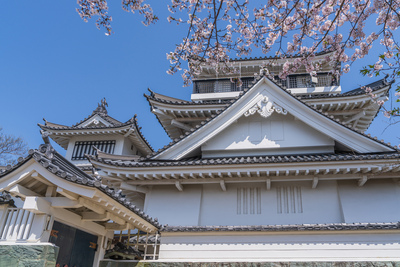
In Wakimachi, Mima City, Tokushima Prefecture, the Udatsu Townscape preserves a street of merchant houses with white walls and tiled roofs.
As you walk and look up toward the rooftops, you can discover udatsu, the firebreak walls behind the Japanese expression udatsu ga agaranai, meaning "unable to get ahead," alongside the history of the indigo merchants.
From Waki Castle Town to an Indigo Trading Hub on the Yoshino River
Wakimachi began as the castle town of Waki Castle and developed into an indigo distribution center using shipping on the Yoshino River.
It occupied a strategic transport location where highways met on the river's north bank, with favorable access to river transportation too.
With the Hachisuka clan encouraging indigo production after entering Awa, many wealthy merchants in Wakimachi devoted themselves to the indigo trade.
When the municipal system was introduced in 1889 (Meiji 22), Wakimachi is said to have been the prefecture's third-largest town by population, after Tokushima City and Muya, now Naruto City.
The prosperity of the merchants who bought, sold, and transported indigo is reflected in the impressive merchant houses lining the street.
Knowing before you look at the buildings that this was a town of indigo merchants makes it easier to appreciate the significance of its grand roofs and storehouses.
Explore 85 Historic Buildings in a National Preservation District
On December 16, 1988 (Shōwa 63), the area became Japan's 28th nationally designated Important Preservation District for Groups of Traditional Buildings.
Along a street stretching about 430 m east to west, 85 traditional buildings from the mid-Edo period through the early Shōwa period survive, allowing you to compare designs from different eras on a single street.
The oldest building in the townscape is said to be the Kunimi Residence, whose main house was built in 1707 (Hōei 4).
In May 2019 (Reiwa 1), the story of Awa indigo, including the Udatsu Townscape, was recognized as the Japan Heritage story "Awa: The Home of Indigo."
As you look along the street's buildings, focusing on wall finishes, windows, and boundaries with neighboring houses turns your walk into a closer study of architecture.
Edo-period houses feature low mezzanine floors with mushiko-mado, cage-style plastered windows, and upward-opening shitomi-do shutters, while some Meiji-period houses have wooden latticework and high second-floor eaves.
Other sights are scattered along the street, including old communal wells with bucket-and-pulley systems and a shojō-shūbako letter collection box modeled on an early Meiji-period mailbox.


What Are Udatsu? How to Recognize Firebreak Walls and Roof Decorations
Udatsu, which give the Udatsu Townscape its popular name, are projecting wing walls at both ends of a building, each topped with a small tiled roof.
Many of Wakimachi's udatsu have traditional roofing made with alternating flat and rounded tiles and white plaster finishes, projecting about 1 m from the second-floor walls.
Looking for these white-plastered sections makes it easier to recognize the townscape's defining features.
Around 50 udatsu are said to remain along the street.
The Origin of Udatsu ga Agaranai: From Fire Protection to Merchant Pride
Udatsu were originally built for fire protection, but because they were expensive to install, they increasingly became decorative displays of wealth and success.
In Wakimachi, the Inada family, who governed the area at the time, is said to have encouraged udatsu as a fire prevention measure.
During the Edo period, wealthy merchant families competed to build impressive udatsu, which came to be regarded as symbols of wealth.
The Japanese expression udatsu ga agaranai is also said to derive from the fact that only wealthy people could afford to erect udatsu.
It is said that this expression is rarely heard in Wakimachi, with its many udatsu.
View them with both roles in mind: protecting houses from fire and expressing a merchant's success.
Compare Traditional Townhouse Details, from Onigawara Tiles to Mushiko-mado Windows
At the roof ends, you can see onigawara decorative ridge-end tiles embodying wishes for protection against misfortune, evil, fire, and lightning.
Part of the fun is looking for different expressions, including smiling tiles and pairs with open and closed mouths representing the sounds "a" and "un."
The toribusuma tiles above the onigawara are intended to stop birds from perching on them and leaving droppings, and some feature water-related designs such as sailing boats and waves.
The second-floor mushiko-mado windows are said to take their name from their resemblance to cages used for keeping insects.
Sturdily constructed from kneaded earth coated with plaster, they provided security, light, and ventilation, and acquired a decorative role over time.
Fine latticework is said to have been used for living spaces and coarser latticework for shop areas, so pay attention to differences in the lattice spacing too.
The following table explains architectural terms you will encounter along the street and where to look for them.
| Term | Form and Function | What to Look For |
|---|---|---|
| Udatsu | Wing walls with small roofs | Projections at boundaries with neighboring houses |
| Onigawara | Decorative tiles at roof ends | Differences in expressions and craftsmanship |
| Mushiko-mado | Plastered windows for light and ventilation | The shapes of second-floor windows |
| Shikkui plaster | A wall-finishing material | The combination of white walls and roof tiles |
Notice the Deep Townhouse Plots That Once Reached the Yoshino River
Some traditional Wakimachi townhouses occupy plots that extend far back from their comparatively narrow street frontages.
Some merchant houses, including the Kunimi and Tamura residences, are said to have occupied plots stretching from the main street to the Yoshino River bank.
At the Kunimi Residence, a gate on the riverbank is said to have led down stone steps to the Yoshino River.
Rather than imagining the entire building solely from its facade, look at the relationship between courtyards and storehouses inside facilities open to the public.
Connecting the ornate street-facing side with the spaces behind that supported commerce helps you understand the townhouse layout.


Discover Indigo Merchant History at the Yoshida Residence and Funatsukiba Park
Combining a visit inside an indigo merchant's residence with Funatsukiba Park, which recalls Yoshino River shipping, gives a tangible sense of how the indigo trade operated in this town.
Sanao Indigo Merchant Yoshida Residence: Things to See and Admission
The Sanao Indigo Merchant Yoshida Residence was the home of Yoshida Naobē, an indigo merchant who traded under the business name Sanao.
Founded in 1792 (Kansei 4), the indigo business is said to have been among the wealthiest in Wakimachi.
Near the center of the Udatsu Townscape street, its approximately 600-tsubo plot, measured in traditional Japanese units of land area, contains 5 buildings arranged around a courtyard: the main house, pawn storehouse, middle storehouse, indigo storehouse, and detached house.
Built from the mid- to late Edo period, the buildings are open to the public as city-designated cultural properties, preserving the typical layout of an indigo merchant's premises.
The arrangement of large storehouses behind the main house shows how trading spaces and indigo storage areas shared the same plot.
Stay within the areas open to visitors and use the signs to see how spaces for receiving customers and handling goods were arranged.
Opening hours are 9:00 a.m.–5:00 p.m., with last admission at 4:30 p.m., and the residence is closed over the year-end and New Year holidays, from December 27 to January 1.
Admission is 510 yen for adults and 250 yen for elementary and junior high school students, with discounts for groups of 15 or more.
Temporary closures or special admission fees during events may apply, so check information from the Mima Tourism Bureau or Mima City before visiting.
Every January, the Yoshida Residence hosts the flower arrangement exhibition "Udatsu o Ikeru."
Experience Yoshino River Shipping History at Funatsukiba Park
The Yoshino River once flowed south of the townscape, and a landing behind the Yoshida Residence is said to have provided access to the river.
Today, Funatsukiba Park, beside the Ai Land Udatsu roadside station, recreates an old Yoshino River boat landing and indigo storehouses.
The townscape also preserves funaita-kabe walls made from the planks of sailing boats that traveled the Yoshino River, recalling the days when the river reached this area.
Stopping here after exploring the street makes it easier to picture the connection between merchant houses and river transportation.
Shop for Souvenirs and Take a Café Break at Aigura
Immediately south of the Yoshida Residence is Aigura, a shop in a renovated old storehouse once used to keep indigo.
With a souvenir shop on the first floor and a café on the second, you can add shopping and a break to your walk.
The shop sells Tokushima souvenirs such as local sake, the extra-hot condiment Mimakara, and indigo-dyed products, while the café serves chiffon cake and lunches such as bamboo-steamed Awa Odori chicken, a local breed.
Opening hours are 9:00 a.m.–5:30 p.m., and it closes over the year-end and New Year holidays.
Noticing how historic buildings are used today broadens your understanding of the townscape.


Things to Do Near the Udatsu Townscape: Odeon Theater and Traditional Crafts
If you have time to extend your walk, visiting a nearby theater or hands-on activity facility will deepen your understanding of Wakimachi's culture.
Visit Wakimachi Theater Odeon-za, an Early Shōwa Playhouse
Wakimachi Theater, also known as Odeon-za, was built as a playhouse in 1934 (Shōwa 9).
It hosted kabuki and rōkyoku, a traditional narrative singing performance, and became a community gathering place as a cinema after the war.
Although it closed in 1995 (Heisei 7), its use as a setting for director Yōji Yamada's film Niji o Tsukamu Otoko brought renewed appreciation of its value, and it was restored to its original appearance in 1999 (Heisei 11).
The stage has a revolving platform about 6 m in diameter, allowing you to see the structure of an early Shōwa-period playhouse up close.
Opening hours are 9:00 a.m.–5:00 p.m., with last admission at 4:30 p.m., and admission is 200 yen for adults and 100 yen for elementary and junior high school students.
Located east of the Udatsu Townscape, it is easy to combine with a walk through the historic district.
Try Indigo Dyeing and Discover Mima's Traditional Paper Umbrellas
At the Mima City Tourism Exchange Center beside the Ai Land Udatsu roadside station, you can try indigo dyeing activities such as dyeing a handkerchief with natural indigo.
Activities run from 10:00 a.m. to 4:00 p.m., with registration closing at 3:00 p.m.; reservations receive priority, and groups are limited to 8 people.
Activities may be suspended on some days depending on the condition of the indigo, so inquire in advance if you wish to participate.
Near the middle of the townscape, the Mima City Traditional Craft Experience Center, Mirai Kōbō, occupies a building constructed as a legal affairs bureau in 1961 (Shōwa 36) and remodeled in 1988 (Shōwa 63) with a Meiji-period tax office as its inspiration.
You can watch Mima wagasa, traditional Japanese paper umbrellas, being made free of charge, and activities include making miniature umbrellas and umbrella lampshades using traditional umbrella-making techniques.

Photography Tips for Walking Through the Udatsu Townscape
If you want to take photos, looking separately at the continuity of the whole street and the details of individual buildings makes it easier to choose your subjects.
Start with the Row of Houses, Then Look at the Details
First, find a position that does not obstruct pedestrians or vehicles and take in the continuous line of white walls and roofs.
Then focus on an udatsu or onigawara that catches your eye, and you may notice differences in shape that you missed in the wider view.
When looking at roofs, avoid walking while constantly looking up; check your surroundings and stop for a safer view.
Frame the White Walls and Roofs Together
Vary the balance of walls and roofs in your frame to capture the brightness of the white walls and the overlapping roof tiles.
When photographing an udatsu, include the whole building too, so its position is clear.
Choose compositions from what you can see from the street, without approaching residential property too closely to photograph details.
Photograph the Lantern-Lit Townscape at Night
Lanterns illuminate the townscape at night, creating a warm, dreamlike atmosphere different from daytime.
When soft light falls on the white walls, you can photograph a different side of the street from its daytime appearance.
However, people still live here, so keep nighttime photography quiet and brief.


Wakimachi Visitor Etiquette: Respecting Homes and Taking Photos
Because the Udatsu Townscape includes private homes, it is important to distinguish facilities open to visitors from private property.
Do Not Treat Entrances or Private Grounds as Visitor Areas
Many buildings along the street are still people's homes, so do not enter buildings or grounds unless they are open to the public.
An open front door does not necessarily mean a property welcomes visitors, so check for signs or information confirming public access.
Give residents priority when entering or leaving, and avoid peering into their homes.
Consider People and Traffic Before Taking Photos
Check local signs or ask staff whether photography is allowed inside a facility.
When making someone the main subject of a photo, ask if it is okay to photograph them.
Here are ways to show consideration in situations that can cause uncertainty while walking or taking photos.
| Situation | What to Do | What to Avoid |
|---|---|---|
| In front of a home | Leave enough room for people to enter and leave | Lingering in front of an entrance |
| Photographing people | Ask the person first | Taking close-up photos without permission |
| Taking photos inside a facility | Check signs or ask staff | Assuming photography is allowed |
| When a vehicle approaches | Check your surroundings and make way | Blocking the road while focused on photos |
Street Smoking Ban, Traffic, and Late-Night Visits
Smoking on the street is prohibited within the Udatsu Townscape district.
If you smoke, use only the locations with ashtrays marked as smoking areas on the map or on site.
Residents' vehicles use the street, so avoid sightseeing while driving; park in a parking lot and explore on foot.
Avoid late-night visits and loud conversations so that you do not disturb residents' rest.
How to Get to the Udatsu Townscape and Prepare for Your Visit
If traveling without a car, planning the journey from the station to the townscape and your return trip, as well as your train journey, makes getting around easier.
About 10 Minutes by Taxi from JR Anabuki Station
For train travel, Anabuki Station on the JR Tokushima Line is the starting point for access.
The Tsurugisan limited express takes about 40 minutes from Tokushima Station to Anabuki Station.
From Anabuki Station, the townscape is about 10 minutes away by taxi.
Check train times with JR Shikoku, and discuss how to arrange your return taxi and where to board it in advance.
A note displaying "Wakimachi Udatsu Townscape" in Japanese is useful when explaining your destination.
About 10 Minutes from Wakimachi Interchange: Park at Ai Land Udatsu Roadside Station
By car, it is about 10 minutes from Wakimachi Interchange on the Tokushima Expressway.
Allow about 40 minutes from central Tokushima via the Tokushima Expressway, about 1 hour on local roads, or about 1 hour 20 minutes from central Takamatsu on local roads.
The Ai Land Udatsu roadside station south of the townscape has parking for 39 standard cars and 5 large vehicles, available 24 hours a day.
With toilets and a location about 1 minute on foot from the Yoshida Residence, the roadside station is a convenient base for exploring.
Check Facility Admission Details and Volunteer Guides
If you plan to enter facilities such as the Yoshida Residence, check opening hours, closing days, and admission fees separately from your plans to walk through the townscape.
If you want to learn more about its history, volunteer guides introduce the history and culture of the udatsu and townscape.
Guides can also provide tours in English and simple sign language.
The suggested contribution is 500 yen per person for parties of 1–4, or 2,000 yen per bus and guide for groups.
Contact the Mima Tourism Bureau at 0883-53-8599 in advance about booking procedures and participation conditions.
The Mima Tourism Bureau's official website also has English, simplified Chinese, and traditional Chinese pages, useful for gathering information before departure.
The following preparations will also help you enjoy a relaxed walk.
- Choose comfortable walking shoes, and prepare rain gear or heat protection suited to the weather
- Limit your luggage to an amount that is easy to carry
- Agree on a meeting place with your companions in case you become separated
Planning Your Walk Through Wakimachi's Udatsu Townscape
Wakimachi's Udatsu Townscape is a place to explore indigo merchant history through the fire protection features of its udatsu and the designs of its roofs.
Combining the Yoshida Residence with Funatsukiba Park lets you appreciate the buildings' beauty while also considering how daily life and commerce connected with the river.
Check your round trip from the station and information for the facilities you plan to visit, and walk with consideration for a town where people still live.


Reviews (0)