


How to Plan a Walk Through Yamashita Park in Yokohama
Yamashita Park (Yamashita Kōen) in Yokohama is a waterfront park stretching approximately 700 m along Yokohama Port, where you can stroll with views of Yokohama Bay Bridge and ships passing through the harbor.
Before visiting, decide whether you most want to enjoy the scenery, take photos, or walk at a leisurely pace to make it easier to plan your time.
Keep your schedule flexible and leave time to stop so you can also enjoy your walk as a break during your trip.
The park is approximately a 3-minute walk from Motomachi-Chūkagai Station on the Minatomirai Line, making it an easy stop between sightseeing activities.
Make Time for Views of Yokohama Port and Bay Bridge
On your waterfront walk, look beyond the distant Yokohama Bay Bridge and passing ships to notice the colors of the water and the expanse of the sky.
Rather than focusing on walking continuously, stop somewhere you will not block others whenever a view catches your eye.
There are also spacious waterfront lawns, where many people bring takeout meals and relax while looking out to sea.
Putting your smartphone away and taking time to enjoy the scenery lets you remember your trip in a different way from photographs.
Set Aside Separate Time for Walking and Photography
If you want to take plenty of photos, give your walk a natural rhythm by looking for interesting views as you go and stopping only when you take a shot.
Save selecting images and sending them to your companions for your breaks so you can do it at a relaxed pace.
Instead of becoming too focused on a particular composition, make time to share the scenery with your companions after taking your photos.
The waterfront park measures approximately 700 m from end to end, so identifying the places you want to photograph beforehand helps you explore efficiently.
Plan Rest Stops and Restroom Visits Around Your Group's Pace
When traveling with children or people who are not used to walking, plan around opportunities to rest before they get tired rather than the distance they can cover.
Take a break when you find somewhere to sit, and if your group separates, choose a landmark everyone recognizes as your meeting point.
Taking and sharing photos of local maps and signs reduces the need to explain locations entirely in words.
The park has 3 general restroom locations, equipped with amenities such as diaper-changing tables and baby seats.
An accessible restroom near the Stone Stage (Ishi-no-Sutēji) also has facilities for ostomy users.
If visiting with a wheelchair or stroller, you can use the elevator from the parking lot to Sekai-no-Hiroba (the World Plaza) on the east side from 8:30 a.m. to 5 p.m.; contact the parking office to use it outside these hours.


Yamashita Park History and Top Things to See
Learning about the park's origins and main attractions before your walk can deepen your appreciation of the scenery.
Japan's First Urban Waterfront Park, Built During Earthquake Recovery
Yamashita Park was built on land reclaimed using earthquake rubble and other materials as part of recovery efforts after the Great Kantō Earthquake of 1923 (Taishō 12).
Seawall construction began in 1925 (Taishō 14), and the park opened in March 1930 (Shōwa 5).
It was Japan's first urban waterfront park.
The US military requisitioned the park after World War II, but it was gradually returned from 1954 (Shōwa 29) and redeveloped into largely its current form by 1961 (Shōwa 36).
In 2007 (Heisei 19), it was designated a nationally Registered Monument.
Covering 74,121 square meters, the park extends along the waterfront from near the east side of Ōsanbashi Pier to Yamashita Pier.
See Hikawa Maru and the Future Rose Garden at Yamashita Park
The passenger-cargo ship Hikawa Maru is moored in front of the park; it was completed in 1930, the same year the park opened.
Nippon Yūsen built Hikawa Maru for its Seattle route, and the ship was also known as the Queen of the North Pacific.
It has been preserved at its mooring in front of Yamashita Park since 1961 and was designated a national Important Cultural Property in 2016.
The interior is open to visitors as NYK Hikawa Maru from 10 a.m. to 5 p.m. (last admission at 4:30 p.m.), closing on Mondays or the following weekday when Monday is a public holiday.
Admission is 300 yen for adults, 200 yen for visitors aged 65 and over, and 100 yen for elementary, junior high, and high school students, with payment accepted in cash only.
The Future Rose Garden (Mirai-no-Bara-en), right beside Hikawa Maru, reopened after renovation in April 2016 and contains approximately 1,900 rose bushes of 160 varieties.
The Sunken Flower Garden (Chinshō-kadan), set below the surrounding ground level, was created by redeveloping an area used as a boat basin when the park first opened.
Monuments around the park include the Little Girl with Red Shoes Statue (Akai-Kutsu-Haiteta-Onna-no-Ko-zō), associated with a popular children's song; the Guardian of Water (Mizu-no-Shugoshin), a gift from sister city San Diego; and a monument to the children's song Kamome-no-Suihei-san (The Seagull Sailor).
At the park's western end, the Indian Water Tower (Indo-Suitō) is a drinking fountain donated by an organization of Indian residents in Japan in gratitude for assistance after the Great Kantō Earthquake, with an eye-catching Islamic-style design.
The World Plaza on the east side was developed for the Yokohama Expo and features a plaza with paths designed to extend toward 6 continents, as well as a grand staircase with a cascade (a waterfall flowing down steps) reminiscent of Park Güell in Barcelona.
Best Time to See Roses, Cherry Blossoms, and Other Seasonal Flowers
The Future Rose Garden is typically at its best in spring from early May to mid-June and in autumn from mid-October to early November.
Cherry blossoms are generally at their best from late March to early April in spring, and tulips from around early April.
The ginkgo-lined Yamashita-Kōen-dōri street facing the park turns golden, with peak autumn color typically from mid-November to early December.
Blooming and fall foliage dates vary with each year's weather, so check the latest information shortly before visiting if you are coming for the flowers.


Yamashita Park Waterfront Photography: Composition and Etiquette
For travel photos, deciding what your main subject will be helps you clarify the impression you want to capture.
Yamashita Park offers many possible subjects, including Hikawa Maru, Yokohama Bay Bridge, passing ships, and seasonal roses.
Choose Your Subject and Leave Space Around Hikawa Maru or the Sea
Try changing where you point your smartphone depending on whether you want a broad view of the sea and sky or a photo of your travels with people in the frame.
When photographing Hikawa Maru, decide first whether to include the entire ship or focus on details such as the bow or mast to make composition easier.
Rather than filling the entire frame, leave space around your subject to make it clearer what you want to show.
The table below outlines composition ideas for the impressions you may want to capture.
| Impression to Capture | Composition Tip | Things to Watch |
|---|---|---|
| Expansive scenery | Include plenty of sky or water | Check that the horizon is level |
| People and scenery | Position people to one side | Be considerate of people in the background |
| Colors and shapes | Frame the main subject closely | Do not move too close |
| The feel of a walk | Use the depth of the path | Keep pathways clear |
Check the Direction of Light and Image Brightness
Even during the day, the direction of light can make faces appear dark or create bright reflections on the water.
Check the brightness of your photos and adjust your position or camera angle slightly if needed.
When photographing flowers in the rose garden, tap the flower on your screen and reduce the brightness if necessary to keep the petals' colors from washing out.
Avoid stepping backward while watching your screen; lower your camera and check your footing before moving.
Ask Before Photographing People and Consider Who Appears in the Frame
Before photographing your companions, tell them where you would like them to stand so they do not need to walk backward.
Ask permission before making other travelers the main subject of your photos, and be mindful of people in the background when sharing pictures publicly.
Keeping the photographer and subject reasonably close together makes it easier to consider people passing between them.
Inside Hikawa Maru, you may take photographs for personal, noncommercial purposes, but should refrain from using a tripod.
Check Rules for Wedding, Commercial, and Drone Photography in Advance
Advance photography permission is required at Yamashita Park for commercial shoots such as television commercials or magazines, wedding or Shichi-Go-San (a traditional celebration for children aged 7, 5, and 3) commemorative photos, and model photography sessions.
Even a private photo shoot is treated as commercial photography if money or other compensation is exchanged involving either or both the photographer and the subject.
Photography using drones, including toy drones, is listed among the types of filming that cannot be permitted.
Permit applications and inquiries are handled by the central city parks team at the Southern Parks and Greenery Office of Yokohama's Green Environment Bureau, which manages Yamashita Park.


What to Wear and Bring to Yamashita Park for the Weather
Avoid bringing too much, and choose items based on the day's weather and the forecast for your return to make walking more comfortable.
Yokohama Seasonal Temperatures and What to Wear
The following seasonal temperature and clothing guidance for Yokohama is based on climate normals (averages for 1991–2020).
- Spring (March–May): Average temperatures rise from 9.7°C in March to 18.8°C in May, so choose clothing you can adjust easily, from a light coat to a long-sleeved shirt.
- Summer (June–August): August has an average temperature of 27.0°C and an average daily high of 31.0°C, so bring breathable clothing and a hat.
- Autumn (September–November): Average temperatures fall from 23.7°C in September to 13.4°C in November, so bring a light jacket or sweater for the later part of the season.
- Winter (December–February): January has an average temperature of 6.1°C and an average daily low of 2.7°C, so a thick coat and gloves are helpful.
The waterfront park is exposed to wind, so be prepared for days that feel chillier than the temperature suggests.
Prioritize Breaks on Sunny Days
When strong sunshine is a concern, bring a hat and drinks and plan to take breaks rather than walking continuously.
Yokohama's average daily highs reach 29–31°C in July and August, so drink water regularly if you will be walking for long periods during the day.
When using a parasol, consider the distance to people around you and the wind before opening or closing it.
Secure Your Belongings Against the Wind
When wind is a concern, bring an extra layer and make sure you can put away items such as hats and paper maps that could blow away.
Yokohama's average wind speed is around 3–4 m per second throughout the year, reaching its annual peak of 3.9 m per second in March and April.
Choosing a bag that leaves both hands free reduces the need to shift your belongings whenever you take photos or move.
Review Your Route and Footwear on Rainy Days
When it rains, wear familiar, slip-resistant shoes and watch your footing as you walk.
Yokohama's average rainfall exceeds 240 mm in both September and October, making this the wettest time of year.
If the rain or wind intensifies, adjust your plans to suit the weather, such as ending your walk and spending time indoors.
On rainy days, you can switch to indoor attractions such as a tour inside Hikawa Maru, moored in front of the park, or the observation floors of nearby Yokohama Marine Tower (floors 29–30, open 10 a.m.–10 p.m., last admission at 9:30 p.m.).
Check Temperatures and Light Levels for Evening Walks
If you plan to stay until evening, wear layers you can easily add or remove as temperatures change.
If the cold or darkness starts to concern you, prioritize your journey back over taking photos and choose a route where you can see your footing.
Yokohama's average daily low is 10.1°C in November and 5.2°C in December, so bring an extra layer for colder conditions in autumn and winter.
The table below outlines items and actions to reconsider as the weather and light change.
| Condition | Suggested Items | What to Do |
|---|---|---|
| Strong sunshine | Hat and drinks | Take breaks |
| Windy weather | An extra layer | Put away items that may blow away |
| Rain | Rain gear and slip-resistant shoes | Watch your footing |
| Getting dark | A map of your return route | Choose a well-lit route |


Yamashita Park Etiquette for a Pleasant Walk
Remembering that you share the views and resting places with others helps everyone enjoy the park.
Share Paths and Rest Areas
When taking photos or checking maps, avoid the center of paths and entrances, and leave enough room for people to pass.
Avoid spreading out your belongings and occupying a spot for a long time, and move on after taking photos when it is busy.
In planted areas such as the Future Rose Garden and Sunken Flower Garden, enjoy the view from the designated paths, and do not cross fences or take plants home.
Check Local Signs in Japanese
Follow any signs on-site about how to use facilities or where you may enter.
Knowing the following expressions can help you understand Japanese notices.
- Tachiiri-kinshi (No entry): Do not enter the marked area.
- Tsūkō-dome (Road closed): Do not continue along that path; find another route.
- Satsuei-kinshi (No photography): Do not photograph the specified area or exhibit.
If you plan to set up large equipment or take photographs professionally, check the required procedures with the management office.
Do not leave food wrappers or other trash behind; follow local instructions for sorting waste or taking it home.

Plan a Day Around Yamashita Park and Nearby Yokohama Attractions
Thinking about when to eat or shop, together with your return transportation, makes it easier to fit the walk into your itinerary.
Combine Your Walk with a Meal or a Stroll Around Town
Decide whether to eat first or have a meal and rest afterward to make it easier to coordinate plans with your companions.
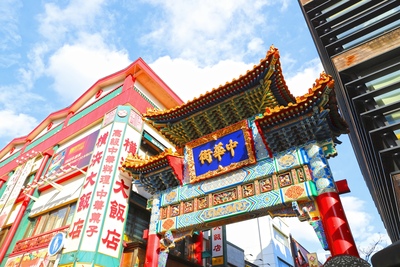
Nearby attractions include Yokohama Chinatown (Yokohama Chūkagai), Ōsanbashi Pier, and the Yokohama Red Brick Warehouse (Yokohama Akarenga Sōko).
The park's rest house reopened as THE WHARF HOUSE Yamashita Park in April 2023, providing a place to eat, drink, and relax within the park.
If there is a restaurant you want to visit, check its official information for opening days, reservation requirements, and food options.
Avoid adding too many stops after your walk, leaving enough time for travel and rest.
How to Get to Yamashita Park by Train, Bus, and Sea Bass
The nearest train station is Motomachi-Chūkagai Station on the Minatomirai Line, approximately a 3-minute walk from Exit 4.
If you take the JR Negishi Line, allow approximately 15 minutes on foot from Ishikawachō Station's Chinatown Exit or 20 minutes from Kannai Station's South Exit.
By bus, take Yokohama municipal bus 26 from outside JR Sakuragichō Station to Yamashita-Kōen-mae bus stop, or municipal bus 8 or 58 or Kanagawa Chūō Kōtsū bus 11 to Chūkagai-iriguchi bus stop, approximately a 3-minute walk away.
The Sea Bass water bus also runs from Yokohama Station's East Exit and arrives at the pier in front of Yamashita Park.
Sea Bass fares from Yokohama Station's East Exit to Yamashita Park are 1,500 yen for adults and 750 yen for children, with direct services and services calling at other piers depending on the day and departure.
If you are driving, the paid Yamashita Park Parking Lot beneath the park has space for 222 passenger cars.
Note Nearby Stations Such as Motomachi-Chūkagai and Your Return Route Before Leaving
When exploring an unfamiliar city, check the route back to your accommodation and the names of the stations you will use in advance.
When using a map, confirm your destination's name as well as your current location, and check local signs for entrances and walking routes.
Keep an eye on your smartphone's battery and keep necessary routes and ways to contact your companions readily available to help if plans change.
Tips for Your Yamashita Park Visit
When visiting Yamashita Park in Yokohama, decide whether you most want to enjoy the scenery, photography, or a break, and walk at a pace that suits your companions.
Enjoy the park's attractions too, including Hikawa Maru, the Future Rose Garden, and monuments that tell the story of recovery after the earthquake.
Preparing for the weather and being considerate of paths and people around you makes it easier to choose a way to enjoy the park that suits your group.
Checking local guidance and leaving room in your schedule will help you enjoy your first waterfront walk in the city.


Reviews (0)