


How to Plan a 3-Day, 2-Night Autumn Okinawa Itinerary
In October and November, Okinawa's main island makes it easy to enjoy seaside scenery and Shuri's history in one trip, but your plans need to remain flexible rather than depending solely on whether you can swim.
Planning Day 1 around the waterfront after arriving in Naha, Day 2 around the sea in an outlying area, and Day 3 at Shurijo Castle Park makes travel and weather-related changes easier to manage.
Match Day 1 to Your Arrival Time
On arrival day, avoid adding a long journey and combine a sea-view location near Naha with time in the city.
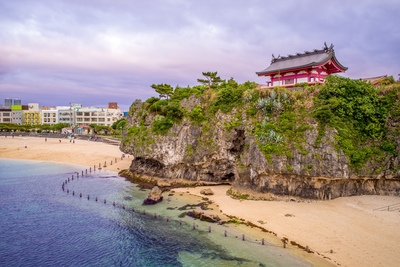
Check the sunset time and wind strength locally, and plan to finish walking along the coast while it is still light.
Decide Day 2 Based on Sea Conditions
Waves and winds can be strong even on sunny days, so choose the safest option from swimming, walking on the beach, taking in the view, and an indoor activity.
For reserved marine activities, follow the operator's decision on whether the activity will proceed and its equipment guidance; do not enter the sea on your own judgment.
Walk Through Shuri's History on Day 3
On the final day, trace Shureimon Gate, the stone gate, castle gates, and stone walls at Shurijo Castle Park to understand the setting of the Ryukyu Kingdom's politics and international exchange.
Viewing procedures and reservation requirements for paid areas may change, so check the visitor information before your trip.
The table summarizes the role of each of the 3 days.
| Day | Main area | Main experience | Alternative |
|---|---|---|---|
| Day 1 | Around Naha | Seaside walk | City sightseeing |
| Day 2 | Coast of the main island | Coastal scenery | Indoor activity |
| Evening of Day 2 | Naha | Food and a city walk | Turn in early |
| Day 3 | Shuri | Castle gates and stone walls | Short circuit |

Prepare for Both the Sea and the Heat in Okinawa in October
October can offer days suitable for marine activities, but it is also a time to stay prepared for strong sunshine and sudden weather changes.
Do not choose your clothing based only on the calendar season; check the forecast just before your trip and information from the beach you plan to use.
Choose a Managed Area If You Enter the Sea
If you swim, choose an area with lifeguards or safety equipment and follow flags indicating whether swimming is allowed and instructions from staff.
Precautions against dangerous marine life and rip currents are necessary in every season, so also consider gear that reduces exposed skin.
Plan for Sunshine and Rain at the Same Time
In addition to a hat, drinks, and sun protection, lightweight rainwear that can handle a brief shower is useful.
Keep in mind that you may enter an air-conditioned place after getting wet, and bring quick-drying clothes and a light outer layer.
Turn an Evening at the Sea into Time for Viewing
In the evening, do not insist on swimming; switch to taking in the colors of the sand, the clouds, and the contrast along the horizon.
Return to your parking place or public transportation stop before dark, and never enter rocky areas marked off-limits.


Enjoy Okinawa's Sea in November with the Wind as Your Guide
November can feel chilly after sunset or in cloudy or rainy weather, so a light outer layer makes it easier to adjust.
Treating a trip to see the color of the sea separately from a trip to swim helps you stay satisfied even on windy days.
Stay Away from the Waterline When Walking on the Beach
On days with high waves, do not approach the water's edge; choose a promenade, viewpoint, or another location that keeps you at a safe distance from the sea.
When taking photos, watch for waves coming from behind, and do not climb onto wet seawalls or rocks.
Include Ways to Experience the Sea Without Getting Wet
Having options that do not involve entering the water—such as a viewpoint, a facility featuring underwater scenery, or a walk through a port town—will help you keep your plans on track.
If you use a boat or facility, check its operating or opening status on the day as well.

Experience the Sea Around Okinawa's Main Island on Day 2
On a day centered on the sea, rather than rushing through several beaches, explore the relationship among the beach, cape, and village in one area to appreciate Okinawa's distinctive terrain.
Whether traveling by rental car or public transportation, avoid excessive travel time and stay within a range that lets you return to Naha in bad weather.
Check the Weather and Sea Conditions in the Morning
Clear skies do not necessarily mean good sea conditions, so separately check weather information, beach swimming advisories, and the operator's decision on whether activities will proceed.
If a typhoon or strong winds are expected to have an impact, stay away from the coast and switch to an indoor-focused plan.
Observe the Sea's Colors and the Terrain at Midday
From higher ground, you can see the difference in color between the shallow coral reef and the open sea; on the beach, the sand and driftage reveal how the sea moves.
Do not take coral or shells home, and observe natural objects where they are.
Leave Enough Time to Return to Naha in the Evening
Allow for traffic and darkness on the way back; do not add another final stop, and prioritize returning to your accommodation.
Keeping some energy in reserve on Day 2 will let you walk through Shurijo Castle Park at a relaxed pace the next day.


Follow the Castle Gates of Shurijo Castle Park on Day 3
Shurijo Castle was the political, diplomatic, and cultural center of the Ryukyu Kingdom. Walking through its gates and along its curved stone walls conveys the spatial design of the royal government.
Do not focus only on the buildings; adding the perspective of the hilltop terrain and views over Naha will deepen your understanding.
Read the Meaning of Courtesy at Shureimon Gate
The plaque on Shureimon Gate reads “Land of Propriety,” indicating that Ryukyu was a nation that valued courtesy.
The combination of a Chinese paifang-style form and Okinawa's landscape invites you to consider Ryukyu's exchange with neighboring regions.
Shureimon is a ceremonial gate that stands on the approach to Shurijo Castle.
Learn About Prayer at the Sonohyan-utaki Ishimon Stone Gate
Sonohyan-utaki Ishimon is said to be where the king prayed for a safe journey when leaving the castle.
Rather than seeing it as a gate meant for passage, focus on its role as a stone-built sacred utaki to understand Shuri's spiritual landscape.
Sonohyan-utaki Ishimon was built in 1519 and is one of the sites that make up the UNESCO World Heritage property “Gusuku Sites and Related Properties of the Kingdom of Ryukyu.”
Enter the Inner Castle Through Kankaimon Gate
Paying attention to the order in which you pass through the gates and how the view changes lets you experience a castle design that combines defense and ceremony.
Watch your footing on stairs and stone pavement, and choose an appropriate place to stop when it is crowded.

Consider Restoration and History at Shurijo Castle
Shurijo Castle Park brings together historic remains, reconstructed buildings, and exhibits that explain the process of restoration.
The areas and methods available for viewing vary by period, so use the latest visitor information as your guide before visiting.
View the Stone Walls and Gates as a Continuous Landscape
Do more than photograph each gate from the front; follow the curves of the stone walls, the slopes, and the angles from which the next gate appears.
At viewpoints such as Iri-no-Azana, consider why Shuri was built on hills in relation to the city below.
Check Conditions for Paid Areas in Advance
The reconstructed Seiden will open to the public on November 23, 2026, and entry to its interior requires an advance reservation for a specified date and a 30-minute time slot.
Paid areas other than the Seiden can be viewed without a reservation, but check ticket information and the areas open to visitors before your trip.
The table summarizes what to see at Shurijo Castle Park.
| Site | What to notice | Background |
|---|---|---|
| Shureimon Gate | Plaque and form | Courtesy and exchange |
| Stone gate | Prayer in stone | Safety on the journey |
| Castle gates | Order of passage | Ceremony and defense |
| Stone walls | Curves and elevation changes | Hilltop castle |
Prepare What to Bring and How to Travel for an Autumn Okinawa Trip
Because temperatures can feel different from day to day and by time of day in October and November, do not choose exclusively summer or autumn clothing; adjust with layers.
For 3 days of walking along the coast and on stone pavement, prioritize slip resistance and quick-drying materials over appearance.
Carry a Light Outer Layer and Rainwear
Fold a light outer layer compactly and carry it for windy conditions or air-conditioned places.
Along with an umbrella, rainwear that leaves both hands free makes it easier to move along the coast and Shuri's slopes.
Decide on Bad-Weather Alternatives in Advance
On days when you cannot see the sea, replace that time with indoor ways to learn about Okinawa, such as museums, crafts, and food culture.
Keep in mind that flights may be canceled or roads restricted, and check airline and transportation notices frequently.
Summary of the 3-Day, 2-Night Autumn Okinawa Itinerary
On Day 1, spend time by the sea around Naha. On Day 2, choose a safe way to enjoy the coast from scenery, walking, and managed activities according to sea conditions.
On Day 3, follow Shureimon Gate, Sonohyan-utaki Ishimon, the castle gates, and stone walls at Shurijo Castle Park to understand the Ryukyu Kingdom's history of courtesy and international exchange.
Do not base decisions about the sea or clothing solely on the months of October and November. Adjust your itinerary after checking the latest weather, swimming information, transportation, and viewing conditions at Shurijo Castle Park.


Reviews (0)