


What to Know Before Touring Scenic Views in Kyoto by the Sea
Kyoto by the Sea (Umi no Kyōto) in northern Kyoto is a scenic region where, unlike the temples, shrines, and machiya (traditional wooden townhouses) of central Kyoto, you can encounter the grand scenery created by the Sea of Japan, bays, a sandbar, fishing villages, and capes.
Spanning Miyazu City, Ine Town, Kyotango City, and Maizuru City, combining several views while feeling the coastline's terrain and the town's daily life deepens the impression of the trip.
Rather than rushing to see just one place, touring with separate aims is the best way to enjoy Kyoto by the Sea.
For First-Timers, Plan Around Miyazu, Ine, and Kyotango
If you are touring northern Kyoto for the first time, centering your trip on Miyazu, home to Amanohashidate, one of Japan's Three Scenic Views; Ine, known for its boathouse scenery; and Kyotango, with its continuous coastal beauty, makes it easy to grasp the kind of scenic views Kyoto by the Sea offers.
It takes about 30 to 40 minutes by car from Miyazu to Ine, and the coast of Kyotango requires going even farther, so it is reassuring to allow for travel time when building your itinerary.
Extending toward Maizuru adds viewpoints overlooking the ria bays and the atmosphere of a port town, letting you enjoy a side of the north that is more than just natural scenery.

For Photography, Be Mindful of the Weather and Direction
Seaside scenery changes greatly in impression with the color of the sky, the clouds, the wind, and the state of the waves.
Thinking separately about places to aim for sunset views, places to look far into the distance from a cape, and places to walk and photograph in a port town gives you different photos even of the same sea.
Since the weather on the Sea of Japan side tends to be rough in winter, if photography is your aim, it makes planning easier to also include the calm sea from spring to autumn as an option.
Scenic Spots Are Also Places Where People Live
In the seaside villages and around the fishing ports, residents' daily lives and the work of fishing still continue today.
Just being conscious of not entering private property, not capturing the inside of homes or laundry in your photos, and not obstructing passage lets both travelers and the local community spend their time comfortably.
First, let's organize the views that suit the purpose of your trip.
| Purpose of trip | Best view | Recommended |
|---|---|---|
| See the classics | Sandbar and pines | Amanohashidate |
| Walk a port town | Boathouse townscape | Ine |
| Shoot a sunset | Sea and sky | Yūhigaura |
| Understand the terrain | Rocks and coast | Tateiwa |
| Overlook a bay | Sea and town | Around Mount Gorō |
Representative Scenic Spots to See First in Kyoto by the Sea
If you want to feel the character of northern Kyoto on a short trip, choosing from the representative scenic spots that bring together views of the sea, the sandbar, and fishing villages makes for a more satisfying visit.
These are all places best savored including the wind, the sound of the waves, and the quiet of the town, which are hard to convey in photos alone.
Amanohashidate | One of Japan's Three Scenic Views, Gazing at a Pine Grove Stretching into the Sea
Amanohashidate is a landscape that symbolizes Kyoto by the Sea, striking for its sandbar and pine grove lying across the water as if separating Miyazu Bay from Aso Bay.
About 6,700 pines grow on the sandbar, which is about 3.6 km long and 20 to 170 m wide, and Amanohashidate is counted among Japan's Three Scenic Views alongside Matsushima in Miyagi and Miyajima in Hiroshima.
Beyond viewing it from an observation point, walking among the pines lets you experience the closeness of the sea and the long, narrow terrain of the sandbar.
Dividing your time between seeing the whole from a high vantage point and walking among the pine grove at ground level changes how the same place looks.

The Boathouses of Ine | A Port Town Where the Sea and Daily Life Are Close
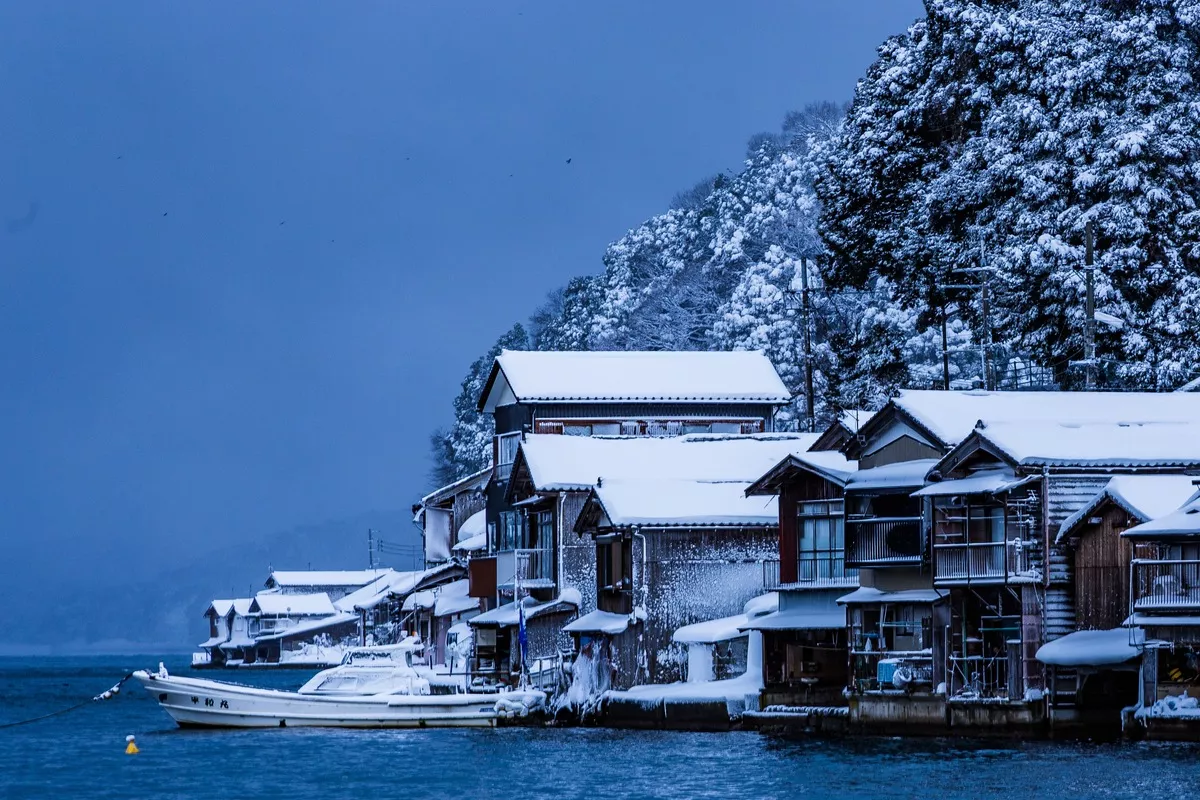
The boathouses (funaya) of Ine are scenery unique to the north, with buildings facing the sea lined up along the bay.
About 230 funaya stand around Ine Bay, and the area is selected as a national Important Preservation District for Groups of Traditional Buildings.
The funaya are not a set built for tourism; some are buildings that use the first floor to store boats and fishing gear and the second floor as living quarters, a group of buildings that remain together with the life of the fishing village.
When walking through the town, turning your attention not only to the exteriors of the buildings but also to the calmness of the bay and the movement of small boats lets you feel the flow of time that is distinctive to Ine.
Yūhigaura | Waiting for the Colors of the Sky at One of Japan's 100 Best Sunsets
Yūhigaura, as its name ("Sunset Beach") suggests, is a seaside area in Amino-chō, Kyotango City, known for sunset scenery, and it has been selected as one of Japan's 100 Best Sunsets.
On the beach stands a wooden swing about 5 m tall and 4 m wide called "Beach Swing Yurari," popular as a photo spot with the sea and sky as a backdrop.
Because the expanse of the coast overlaps with the color of the sky, spending time on the beach from before the sun lowers lets you slowly savor the changing colors of the sea's surface.
Beyond just taking photos, leaving time to walk while listening to the sound of the waves leaves a lingering impression true to a sea trip in the north.

Savor the Terrain Along the Tango Peninsula Coast
Along the coastline of the Tango Peninsula, you will find scenes created by rocks, sandy beaches, and an intricate coast.
It suits those who want to see landscapes shaped by the accumulation of natural time, different from temples, shrines, and gardens.
Tateiwa | See Andesite Towering by the Sea
Tateiwa is a single mass of andesite about 20 m tall towering over Nochigahama Beach in Taiza, Tango-chō, Kyotango City.
Known as a representative geosite of the San'in Kaigan UNESCO Global Geopark, its rugged rock face stands out powerfully when looked up at from the coast.
Its impression changes with the state of the waves and sky, and it is a symbolic landscape of Tango, with a legend of demon-slaying handed down as well.
When walking around it, watch your footing, don't get too close to the sea, and don't push yourself on days when the wind is strong.
Kotohikihama | Feel the Sea Environment on a Beach of Singing Sand
Kotohikihama is a beach about 1.8 km long known for its singing sand, which makes a sound when you walk on it.
Because keeping the sand clean is tied to the appeal of the scenery, it is also known as the world's first non-smoking beach, and being mindful to carry out your trash and not soil the beach becomes part of the trip.
Fireworks and barbecues are also prohibited, and efforts continue to protect the precious singing sand.
Beyond just gazing at the sea, listening closely to the feel and sound of the sand lets you sense how the environment and the scenery are connected.
Byōbuiwa | Gaze from Afar at Rocks Rising from the Sea
Byōbuiwa is a mass of andesite about 13 m tall rising from the sea at Fudeishi, Tango-chō, Kyotango City, like a standing folding screen.
You can take your time viewing it from the observation point along National Route 178, and beyond the rock, you also begin to see the small islands lined up in a straight line.
Rather than shooting it closely, including its relationship with the sea surface makes the characteristics of this scenery easier to convey.
Tango Matsushima | Coastal Beauty Linked Like Island Silhouettes
Tango Matsushima is a coastal landscape, reminiscent of Matsushima among Japan's Three Scenic Views, where you can see a chain of rocks and pines rising from the sea.
From the observation point near Inugamisaki, you can look out over the deep, layered scenery distinctive to the Tango Peninsula, with its sea cliffs and oddly shaped rocks lined up in a row.
During the hours bathed in the morning or evening sun, the silhouettes of the rocks and coastline stand out clearly, making for an even more striking view.
When using a roadside observation spot, watch the movement of cars and pedestrians and try not to become too absorbed in photography.
Scenic Seaside Views for Sandy Beaches and Sunsets
The sandy beaches of Kyoto by the Sea are not only places to swim; they also suit quiet ways of spending time, such as walking, sitting, and gazing at the sky.
Since the color of the sea and the number of people change with the season, considering the timing of your visit to match the purpose of your trip makes it easier to enjoy.
To Wait for a Sunset, Allow Some Slack on the Beach
At sunset spots like Yūhigaura, rather than shooting right after you arrive, having time to wait on the beach before the sky's colors change deepens the impression.
The time of sunset varies greatly by season, around 19:00 in summer and around 17:00 in winter, so checking the sunset time for the day before visiting reduces the chance of missing it.
Even on cloudy days, you can sometimes enjoy the moment when light breaks onto the sea surface or the colors reflected on the sand.
Shōtenkyō and Kumihama Bay | Sensing the Space Between the Sea and the Bay
In the Kumihama area, you can sense the distinctive terrain where the Sea of Japan and Kumihama Bay face each other at close range across a sandbar called Shōtenkyō.
From Kabutoyama Observatory at an elevation of 191.7 m, you can view Kumihama Bay, Shōtenkyō, and the Sea of Japan all at once, making it a place where the shape of the coastline is easy to understand.
Combining a trip walking the sandy beach with a trip viewing the terrain from a high place gives a sense of depth to how the scenery looks.
Considering how the scenery looks in each season makes it easier to build your itinerary as follows.
| Season | Impression of the Scenery | Best way to spend time |
|---|---|---|
| Spring | Soft sea colors | Seaside stroll |
| Summer | Bright sandy beach | Staying on the beach |
| Autumn | Clear skies | Touring viewpoints |
| Winter | Rough waves | Viewing from a distance |
Panoramas of the North Seen from Capes, Bays, and Heights
Beyond just walking the seaside, looking down from a high place or a cape makes the north's terrain easier to understand.
Places where the bay, peninsula, town, and coastline appear overlapping are good to visit at the end of a trip to organize the overall picture.
Kyōgamisaki Lighthouse | Feel the Sea at the Tip of the Tango Peninsula
Kyōgamisaki Lighthouse is a white lighthouse standing on a cliff at an elevation of about 148 m at the tip of the Tango Peninsula, the northernmost point of Kyoto Prefecture.
First lit in 1898 (Meiji 31), it is known as one of "Japan's 50 Best Lighthouses," equipped with a first-order lens found at only five locations in the country.
The view, where you feel surrounded by sea and sky, is striking, and it suits those who want to feel the expanse of the northern sea.
Since the area around the cape is easily affected by weather, watch your footing and the strength of the wind, and be mindful to act within your limits.
Around Gorō Sky Tower | Overlooking Maizuru Bay, Ranked No. 1 Among the 100 Views of Kinki
In Maizuru, you can enjoy a view overlooking Maizuru Bay and the town from Gorō Sky Tower in Gorō-ga-take Park.
The view of the ria coast from the observation room at an elevation of about 325 m has been chosen as No. 1 among the "100 Views of Kinki," showing Maizuru's identity as a port town, different from the natural scenery of the Tango Peninsula.
Visiting it after seeing the coastline up close makes the relationship between the sea and the towns of northern Kyoto easier to understand.
Kabutoyama Observatory | Overlooking the Shape of Kumihama Bay
Kabutoyama Observatory is a viewpoint where you can look out over Kumihama Bay, Shōtenkyō, and the Sea of Japan from the summit at an elevation of 191.7 m.
It is about a 30-minute walk from Kabutoyama Park to the summit, and its appeal lies in seeing from above the shape of the bay and the position of the sandbar, which are hard to grasp at ground level.
For photos, including the sea and the bay at the same time makes Kumihama's distinctive terrain easier to convey.
Seaside Etiquette That Travelers to Japan Should Keep in Mind
The scenic views of northern Kyoto are in places where nature and local daily life are close together.
To protect the beautiful scenery, it is important for visitors to adjust their behavior just a little.
Do Not Enter Private Property or Living Spaces
As with the boathouses of Ine, there are places that look like tourist sites but are in fact places where residents live.
Do not enter the premises without permission, and avoid photography that captures the inside of windows or household items.
On Sandy Beaches and Coasts, Be Mindful to Carry Things Out
In places like Kotohikihama, where the state of the sandy beach itself is tied to the value of the scenery, consideration such as carrying out your trash and not smoking is required.
Since small trash easily blows away in the wind at the seaside, it is also important not to leave bags or drink containers lying around.
Put Safety Before Photography
At rocky areas, capes, and observation points, it is easy to lose awareness of your footing while taking photos.
Following the basics of not crossing fences, not getting too close to the water's edge, and choosing where to stop along roads lets you enjoy the scenery with peace of mind.
Let's briefly organize the behavior to keep in mind at the seaside.
| Situation | Good Behavior | Avoid |
|---|---|---|
| Village stroll | Yield the path | Entering without permission |
| Photography | Focus on exteriors | Photographing daily life |
| Sandy beach | Carry out trash | Leaving things behind |
| Rocky areas | Check your footing | Crossing fences |
| Observation points | Yield after a short time | Blocking the path |
Summary | Tips for Enjoying Kyoto by the Sea's Scenic Views Without Overdoing It
Kyoto by the Sea in northern Kyoto is a scenic region where you can encounter diverse faces of the sea, from representative landscapes like Amanohashidate to the boathouses of Ine, the rocky areas and sandy beaches of the Tango Peninsula, and the views over Maizuru Bay.
If it is your first visit, rather than rushing through only the classic views, dividing your time among walking the seaside, taking in the whole from observation points, and feeling the quiet of the port towns raises your sense of satisfaction.
In places close to nature and daily life, it is important to check usage information in the official sources and to act with consideration for private property and the environment.
If you are looking for coastal scenery different from central Kyoto, the scenic views of northern Kyoto will show you a new side of Japan.
"


Reviews (0)