


How to Choose 10 Hidden Gems in Ehime
Ehime's hidden gems range widely from deep mountain gorges and stone-walled terraced fields to historic streets that prospered through wax production and post-town trade, as well as ports and islands that supported maritime transport.
Many are far from famous tourist attractions, so do not choose by name recognition alone. Check the roads, ferry services, walking conditions, and areas open to the public, and allow enough time for one region.
Focus on the story of the land, not just quietness
A “hidden gem” does not necessarily mean a place is always uncrowded. Visitor numbers may rise during the autumn foliage season, events, and public holidays.
Rather than guaranteeing few tourists, this article selects 10 places where you can observe the relationship between nature and daily life on site.
Compare the features of all 10 places first
Organizing the scenery and considerations for local communities in a list makes it easier to combine nearby places without overloading your itinerary.
| Spot | Scenic focus | Planning point |
|---|---|---|
| Nametoko Gorge | Granite and clear streams | Check the weather |
| Shirai Falls | Waterfall and mountain path | Wear comfortable walking shoes |
| Ishidatami Seiryū-en | Waterwheel and satoyama landscape | Respect the village |
| Yusu Mizugaura Terraced Fields | Stone walls and the Uwa Sea | Do not enter the fields |
| Sunokawa Park | Coast and forest | Check visitor guidance |
| Yōkaichi-Gokoku | Wax merchants' houses | Check areas open to the public |
| Unomachi | Traditional townhouses and Western-style buildings | Respect residential roads |
| Mitsuhama | Port and ferry | Do not obstruct traffic |
| Nagahama Bridge | Movable bridge and river mouth | Check opening information |
| Muzuki Island | Citrus groves and sea | Check the return ferry |

Follow Clear Streams and Local Life in Ehime's Mountain Villages
In the mountain areas of southern and eastern Ehime, you can compare rock surfaces carved by water with landscapes where residents have made use of that water.
Consider sections with poor mobile phone reception and slippery paths, and decide how far you can go while still returning before sunset.
1. Nametoko Gorge
Nametoko Gorge, spanning Uwajima City and Matsuno Town, lies within Ashizuri-Uwakai National Park. Clear water flows over its smooth granite riverbed.
At Senjōjiki and Deainame, water appears to wash across a single sheet of rock, letting you observe gentler landforms unlike waterfalls with large drops.
The walking trail continues through a natural setting, so watch for wet rocks and fallen leaves after rain. If the water rises or route guidance is posted, follow local restrictions.
Activities such as canyoning require equipment and a guide. Do not enter the water as an extension of a casual walk; check the conditions set by an authorized operator.

2. Shirai Falls
Shirai Falls in Tōon City lies within the Saragamine Range Prefectural Natural Park. Beyond the mountain path, you can see water dropping down a rock face amid the surrounding forest.
The waterfall is said to have a 96 m drop and is one of Tōon City's major waterfalls.
The scenery changes with the seasons, from fresh greenery and autumn leaves to ice, but freezing depends on the temperature and cannot be guaranteed on any particular day.
The route to the falls includes slopes, so choose slip-resistant shoes and check whether roads and paths are frozen in winter.
Use transportation information to check the width of the road beyond the parking area and public transportation guidance. It is important not to park on private property or anywhere that interferes with farm work.
3. Ishidatami Seiryū-en
Ishidatami Seiryū-en in Ishidatami, Uchiko Town, is a small park where a watermill powered by the Fumotokawa River and a covered bridge blend into the satoyama landscape.
The site preserves memories of waterwheels once used locally for rice milling and other work. Rather than viewing one as decoration, follow how water flows from the channel to the wheel to understand its connection with daily life.
The number of waterwheels and their operating condition can change as equipment is renewed, so do not rely on figures in older articles; check the guidance on site.
The surrounding area is a residential village. Do not block roads for photos or enter private home lots, and walk quietly to preserve the peaceful setting.

See Terraced Fields and Coastal Landforms Along the Uwa Sea
On the coast of southern Ehime, stone walls that transformed steep slopes into farmland and a park with a seawater pond and ubame oak forest show how close life is to the sea.
Coastal roads have many curves, so do not judge travel time by map distance alone. Allow extra time, including breaks.
4. Yusu Mizugaura Terraced Fields
At Yusu Mizugaura in Uwajima City, stone walls rise across slopes projecting into the Uwa Sea to form terraced fields. The landscape has been selected as an Important Cultural Landscape of Japan.
Looking up from below the slope reveals the continuous stone walls, while higher points overlook daily life on the Uwa Sea, including the inlet and aquaculture rafts.
The terraces are active farmland. Do not touch crops or stone walls or block work roads, and use the designated visitor route.
The slopes are steep, so keep both hands free, carry water in hot weather, and give way first when meeting farm vehicles.

5. Sunokawa Park
Sunokawa Park in Ainan Town lies within Ashizuri-Uwakai National Park, where an ubame oak forest along the coast creates a harmonious landscape with the blue sea.
Instead of looking only at the sea, observe the wind-swept ubame oak forest and rocky shoreline in sequence to compare different coastal environments in one visit.
Camping and use of the waterfront are subject to management rules. Check guidance at the management office after arriving and be prepared for the possibility that you may not be able to set up during busy periods.
Tides, wind, and waves change from day to day, so do not force your way close to rocky areas. Follow local safety guidance when swimming or taking part in marine activities.

Walk Through the Merchant and Learning Districts of Uchiko and Unomachi
Yōkaichi-Gokoku and Unomachi are both Important Preservation Districts for Groups of Traditional Buildings, but the industries and architecture that supported each town differ.
Compare not only building façades but also lattices, plasterwork, roofs, and street widths to better understand the roles played by towns in southern Ehime.
6. The Historic Streets of Yōkaichi-Gokoku, Uchiko
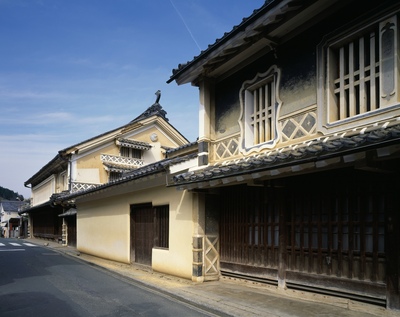
In Uchiko's Yōkaichi-Gokoku district, merchant houses and traditional townhouses that prospered through wax production from the late Edo period to the Meiji era remain along the street.
Yellow-tinted plaster walls, mushikomado lattice windows, and decorative plaster reliefs reveal not only the wealth of major merchants but also the plastering skills refined by local craftspeople.
Interior access to museums and residences differs by facility, and some places may close for conservation repairs. Check plans for walking the streets and entering buildings separately.
The street is both a sightseeing area and a living space, so do not block entrances or enter buildings that are not open to the public without permission.

7. The Historic Streets of Unomachi, Uwa
Unomachi in Uwa, Seiyo City, developed as a post station on the Uwajima Kaidō and as a regional market town. It is a preservation district that retains an early modern street layout and substantial traditional townhouses.
Alongside gable-fronted and eave-fronted townhouses, white walls, and lattices, you can see Western-style buildings such as churches and schools, layering the cultures of different eras along one street.
Combining cultural facilities that introduce notable local figures lets you learn not only about architecture but also the background of how medicine and education developed in this town.
Rather than trying to visit every facility with different opening days, use the streetscape as your base and choose one or two. Respect residents' privacy when photographing homes.
| What to observe | Uchiko | Unomachi |
|---|---|---|
| Foundation of the town | Wax trade | Post town and regional market town |
| Architectural features | Plasterwork and decorative reliefs | Traditional townhouses and Western-style buildings |
| How to explore | Street design | Layers of different eras |
| Consideration | Keep entrances clear | Respect residential roads |

Learn About Ehime's Maritime Transport in Port Towns and on Islands
Mitsuhama, Nagahama, and Muzuki Island preserve different memories of maritime transport through ferry crossings, a movable bridge, peddling, and citrus cultivation.
Boats and bridges also support residents' daily lives, so do not stop their operation or block passage for sightseeing.
8. Mitsuhama and the Mitsu Ferry
Mitsuhama in Matsuyama City developed as a port town and maritime gateway. Merchant houses and old buildings remain along its narrow streets, letting you trace the town's structure leading toward the harbor.
The Mitsu Ferry connecting Mitsu and Minatoyama is part of a municipal road. It operates not as a sightseeing boat but as an everyday means of local transportation.
Even on the short crossing, follow the boat operator's instructions, do not block the boarding area with bicycles or luggage, and check service information for cancellations and operating hours.
When walking through town, do not assume shops will be open. Observe the relationship between the harbor and the streets without entering homes or work areas used by people in the fishing industry.
9. Nagahama Bridge and the Hiji River Mouth
Nagahama Bridge in Nagahama, Ōzu City, is a movable road bridge spanning the mouth of the Hiji River. Its central section opens to allow ships to pass.
Completed in 1935, it is a heritage structure of modern civil engineering and is also known locally as Akabashi, or the Red Bridge, because of its red-painted appearance.
It is said to be Japan's oldest movable road bridge still in operation and was designated an Important Cultural Property of Japan in 2014.
Regular openings are conducted for inspections and tourism, but schedules may change because of weather or work. Do not rely on a fixed time; check the latest opening information.
The bridge remains in use as a road, so stay out of the roadway when taking photos and observe the movable section and river mouth from the sidewalk or another safe viewing position.
10. Muzuki Island
Muzuki Island off Matsuyama City prospered through itinerant trade and citrus cultivation. Old houses with nagayamon gates remain in the settlement near the port.
Farm roads circling the hills offer views of the sea and surrounding islands beyond citrus groves, helping you understand land use on the island, which differs from that of a port town.
The settlement and fields are places where residents live and work, so do not leave farm roads to enter the fields. Respect permission and distance when photographing people or homes.
Before traveling to the island, check round-trip ferry services, the area you plan to walk, and places for food and rest, and turn back in time to avoid missing the return ferry.

Connect Ehime's Mountain Villages and Port Towns Without Overloading Your Itinerary
The 10 places are scattered across the prefecture, making them unsuitable for an itinerary that tries to cover Matsuyama, Uchiko and Seiyo, Uwajima and Matsuno, and Ainan in one day.
Choosing one natural site and one historic streetscape in each region lets you look carefully at the background of the scenery instead of spending the day only in transit.
Plan around one region per day
In Matsuyama, center your day on Mitsuhama and the harbor area; in Uchiko, combine Yōkaichi-Gokoku with Ishidatami; in Seiyo, explore Unomachi; and around Uwajima, focus on either the terraced fields or Nametoko Gorge.
On a day when you travel south to Sunokawa Park, allow time in Ainan Town and keep it separate from an island trip in northern Ehime for a safer itinerary.
When using public transportation, plan backward from the last service. When driving, check rest areas on mountain and coastal roads to reduce long-distance travel after sunset.
Check changing information and local rules immediately before your visit
Ferry timetables, road restrictions, facility openings, bridge operations, and conditions on nature trails can change because of weather or management needs.
Before visiting, check guidance from transport operators and each facility, and do not apply schedules or fees from older travel accounts without verification.
Many hidden-gem landscapes overlap with places of daily life, farming, and fishing. Do not enter private property, take your trash with you, and give residents priority on narrow roads.
Summary: Explore Ehime's Mountain Villages and Port Towns Quietly
Ehime's hidden gems reveal the connection between land and daily life through the clear waters of Nametoko Gorge, the waterwheel at Ishidatami, terraced fields along the Uwa Sea, historic wax-trading and post towns, ferries and a movable bridge, and island citrus groves.
Avoid packing too much into one day. Narrow your trip to one region, check roads, ferries, and public access information, and respect farmland and living spaces to enjoy a quiet journey without strain.


Reviews (0)