


Plan a Car-Free Ehime Trip by Tram from Matsuyama City Station (Matsuyama-shi Station)
Using Matsuyama City Station as your base, you can connect the Horinouchi, Ōkaidō, Dōgo Onsen, and Dōgo Kōen stops and explore castles, modern architecture, literature, and hot-spring culture without a car.
Instead of packing all 10 places into one day, divide them into 3 areas—around Matsuyama City Station, Matsuyama Castle, and Dōgo—to leave enough time for slopes and museum visits.
Use Matsuyama City Station, Ōkaidō, and Dōgo as your tram hubs
The basic route is to take a city tram from Matsuyama City Station, visit Matsuyama Castle and modern cultural facilities from Ōkaidō, then head to the hot-spring district and literary sites from Dōgo Onsen or Dōgo Kōen.
Some services have similar routes, so check both the stop name and destination display, along with current service information, before boarding to avoid confusing them with the loop line.
Treat the slopes at Shiroyama and Isaniwa Shrine separately
Matsuyama Castle still requires walking after the ropeway or lift, while Isaniwa Shrine is reached by climbing stone steps from central Dōgo, so both demand more effort than a flat city walk.
If visiting both on the same day, wear broken-in shoes and arrange your route so you can rest at an art museum or history museum between them.
Compare the nearest stops and themes of 10 attractions
Organizing each attraction by its main stop and focus makes it easier to choose a combination that suits your interests and preferred walking distance.
| Attraction | Main stop | Focus |
|---|---|---|
| Botchan Train Museum | Matsuyama City Station | History of Iyo Railway |
| The Museum of Art, Ehime | Minami-Horibata | Local, modern, and contemporary art |
| Ninomaru Historical Garden | Near Kenchō-mae | Palace ruins and garden |
| Matsuyama Castle | Ōkaidō | Original castle keep and stone walls |
| Saka no Ue no Kumo Museum | Ōkaidō | Modern Matsuyama and literature |
| Bansuisō | Ōkaidō | French-style mansion |
| Dōgo Onsen Honkan | Dōgo Onsen | Hot-spring culture and architecture |
| Yuzuki Castle Ruins in Dōgo Park | Dōgo Kōen | Medieval Kōno clan residence |
| Shiki Memorial Museum | Dōgo Kōen | Masaoka Shiki and literature |
| Isaniwa Shrine | Dōgo Onsen | Hachiman-zukuri shrine buildings |


3 Rail, Art, and Castle-Site Attractions Near Matsuyama City Station and Horinouchi
From Matsuyama City Station toward Horinouchi, you can trace railway history, see art, and visit a historic garden on the lower tier of Matsuyama Castle.
Combining indoor and outdoor attractions also makes it easier to adjust your visit for the weather and your energy level.
1. Botchan Train Museum | Begin with Matsuyama Railway History
At the Botchan Train Museum, a full-size replica of Iyo Railway's No. 1 locomotive, parts, and documents trace how public transportation has supported daily life and tourism in Matsuyama.
Seeing the displays before riding a city tram helps you appreciate the streetcar not simply as transportation, but as part of the city's history.
Because the exhibition space adjoins a commercial facility, check signs for the entrance and visitor rules, and avoid blocking store customers.
2. The Museum of Art, Ehime | Discover Local Artists and Diverse Art
Located in the Horinouchi area of the Matsuyama Castle site, The Museum of Art, Ehime presents collections and special exhibitions spanning local artists and art from Japan and abroad.
Comparing the materials and periods of paintings, design, prints, and other works offers a perspective on local culture different from Matsuyama's literature and architecture.
Displays and closing days change, so do not assume a particular work is always on view; check the information for your visit date.
3. Matsuyama Castle Ninomaru Historical Garden | Read the Palace Plan Through the Garden
At the Ninomaru Historical Garden, water, gravel, lawns, and other features outline the palace plan identified by excavation, helping you imagine the scale of the administrative Ninomaru compound.
Look beyond the garden itself to the relationship between Shiroyama and Horinouchi behind it, and you can see how the Honmaru, Ninomaru, and Sannomaru used changes in elevation.
Events or maintenance may alter accessible areas, so follow fences and signs and do not enter plantings or archaeological remains.

3 Matsuyama Castle and Modern-Culture Attractions from Ōkaidō
Near the Ōkaidō stop, Matsuyama Castle's surviving keep can be linked on foot with a museum and Western-style mansion that convey the city from the Meiji through Taishō periods.
Decide whether to climb the castle or visit the indoor facilities first after checking weather, crowds, and final admission times.
4. Matsuyama Castle | Explore an Original Keep and Defensive Design
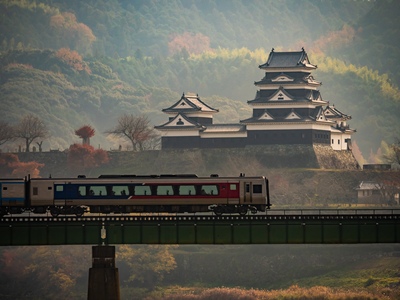
Matsuyama Castle has an extensive layout adapted to Shiroyama's terrain; following its stone walls, gates, turrets, main enclosure, and surviving keep reveals a design intended to complicate an attacker's route.
Rather than stopping at the view, observe the twisting passages, gate orientations, and layered stone walls to recognize the defensive ideas introduced by the first lord, Yoshiaki Katō.
Ropeway and lift operations can change because of weather or inspections, and the castle has steep stairs, so prioritize same-day operating and access information and your physical condition.
The keep was rebuilt during the Edo period and is counted among Japan's 12 surviving original castle keeps.

5. Saka no Ue no Kumo Museum | Connect Modern Matsuyama's People and Era
Centered on Ryōtarō Shiba's novel, the museum uses documents and video to present the age of Masaoka Shiki and brothers Yoshifuru and Saneyuki Akiyama, Japan's path toward a modern nation, and Matsuyama's local history.
Notice the ramps linking the floors and the inverted-triangle architecture to experience the story's themes together with a design harmonized with Shiroyama and Bansuisō.
Materials vary with exhibition rotations and events, so check dates and admission conditions if you have a specific display in mind.
6. Bansuisō | See Taishō-Era Design in a Western-Style Mansion
Bansuisō is a French-style mansion built as a villa for Sadakoto Hisamatsu, a descendant of Matsuyama's former ruling family; its stairs, windows, decoration, and interiors evoke Taishō-era social culture.
Examine the materials and original uses of the rooms as well as the facade to imagine how Western architecture was introduced into Matsuyama's castle town.
Exhibitions and concerts can change accessible areas and fees, so check the day's information before combining it with the Saka no Ue no Kumo Museum.
Bansuisō's main building is valued as authentic Western architecture and designated an Important Cultural Property of Japan.

2 Hot-Spring and Medieval-History Sites from Dōgo Onsen Station
A tram ride from Ōkaidō to Dōgo lets you compare modern hot-spring architecture with the residence of the Kōno clan, rulers of medieval Iyo, within one compact area.
If bathing is part of your day, allow time to change and rest rather than scheduling it like a brief park visit.
7. Dōgo Onsen Honkan | Experience Hot-Spring History in a Cultural Landmark
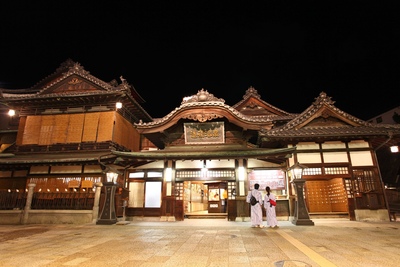
Dōgo Onsen Honkan is a wooden complex of overlapping wings that remains an active bathhouse while creating the defining scene of Dōgo's hot-spring culture.
If bathing, check which baths and rest options are available that day; if viewing the exterior, stand where you will not obstruct the entrance or shopping-street traffic and take in the whole building.
Temporary closures, crowd-control measures, and procedures may change, so check same-day information rather than relying on fixed hours or fees.

8. Yuzuki Castle Ruins in Dōgo Park | Trace the Kōno Clan's Residence and Daily Life
Dōgo Park occupies the site of Yuzuki Castle, the base of the Kōno clan that ruled medieval Iyo; earthworks, moats, reconstructed zones, and the museum reveal where warriors lived and governed.
Compared with Matsuyama Castle's high stone walls, its terrain, earthworks, and moats show the features of a medieval fortified residence and let you study different castle eras in one city.
The park is also used for walking and rest, so check the museum's opening status and avoid damaging reconstructed buildings or vegetation.


2 Literary and Shrine Sites Around Dōgo Park and Dōgo Onsen
Around Dōgo Park, you can combine a museum devoted to Masaoka Shiki's literature with Isaniwa Shrine on Dōgo's elevated ground.
By visiting the indoor displays before climbing the stone steps, you can decide whether to keep the shrine in your itinerary according to weather and energy.
9. Matsuyama Municipal Shiki Memorial Museum | Learn Matsuyama Literature Through Masaoka Shiki
The museum explores Masaoka Shiki's life, friendships, and works, including his efforts to reform haiku and tanka, and shows the modern literature fostered in Matsuyama.
Connect manuscripts and exhibition explanations with Dōgo Park and poetry monuments around the city to experience the relationship between the works, the land, and the writer.
Materials rotate for preservation and special exhibitions, so check display information in advance if you seek a particular item.
10. Isaniwa Shrine | See Hachiman-Zukuri Beyond the Stone Steps
Set above Dōgo, Isaniwa Shrine features Hachiman-zukuri buildings said to be modeled on Iwashimizu Hachimangū, with vermilion corridors and ornamentation.
This Hachiman-zukuri style is said to be one of only 3 examples nationwide, alongside Usa Jingū in Oita and Iwashimizu Hachimangū in Kyoto, and the main sanctuary is an Important Cultural Property.
Quietly observe the layered roofs, columns, and corridor arrangement as well as the facade to appreciate a space uniting worship and architectural beauty.
People pass each other on the long stone staircase, so choose where you stop and always give priority to festivals and worshippers.


Plan Transfers and Safety for a Car-Free Matsuyama Trip
Although the tram corridor is easy to travel, slopes and stairs accumulate at Shiroyama, the gardens, and the shrine, so do not judge an itinerary only by the number of stops.
Check your return service, final admissions, and weather first; alternating outdoor and indoor sites makes changes easier.
Make Matsuyama Castle or Dōgo the focus of a one-day trip
Rather than visiting all 10 places from Matsuyama City Station in one day, split them into a day centered on the castle and modern culture and another focused on Dōgo Onsen and literature.
If you have only one day, choose about 3 anchors such as Matsuyama Castle, the Saka no Ue no Kumo Museum, and Dōgo Onsen Honkan, then add nearby supporting stops.
Keep alternatives near the same tram stop for closures
If the ropeway stops or outdoor visits are difficult, switch to the museum and mansion near Ōkaidō or the literary museum near Dōgo Kōen.
Check each facility's notices and Iyo Railway service information before departure and again before moving, and keep your plan flexible.
Choose an order based on your travel theme
Selecting a combination by interests and walking conditions lets the same tram corridor create very different trips.
| Theme | Main order | Check |
|---|---|---|
| Railways and art | Matsuyama City Station → Horinouchi | Exhibitions and closures |
| Castle and modern culture | Matsuyama Castle → Ōkaidō area | Operations and slopes |
| Hot springs and medieval history | Dōgo Onsen → Dōgo Kōen | Bathing procedures and weather |
| Literature and shrines | Shiki Museum → Isaniwa Shrine | Displays and stone steps |
If your condition or the weather changes, reduce the latter part of the day using a stop that offers an easy return to Matsuyama City Station or your accommodation.
Summary | Explore Ehime by Tram from Matsuyama City Station
For car-free sightseeing in Ehime, linking Horinouchi, Ōkaidō, Dōgo Onsen, and Dōgo Kōen by tram from Matsuyama City Station brings railways, art, castles, modern architecture, hot springs, literature, and shrines together in one urban area.
Do not collect all 10 simply for the count; decide whether Matsuyama Castle or Dōgo is your focus, then narrow the stops according to slopes and exhibition time.
Before leaving, check city-tram service, facility openings and access, and the weather, then build a relaxed itinerary backward from the time you need to return to Matsuyama City Station.



Reviews (0)