


Sukayu Onsen: Tōji Traditions and Mixed Bathing in the Hakkōda Mountains
Sukayu Onsen is a secluded hot spring resort with a single inn, about 900 m above sea level on the western slopes of Aomori Prefecture's Hakkōda range, known for its Edo-period bathing retreat traditions and large mixed-gender bath.
With the all-hiba-cypress Hiba Sennin-buro and the separate men's and women's Tama-no-Yu baths, even first-time mixed-bathing visitors can choose an option that suits them by learning about women-only hours and bathing garment rules.
In 1954, its therapeutic qualities, spring output, natural setting, and other features earned it the first designation as a National Hot Spring Health Resort.
Appreciate the Hot Springs Through Their Edo-Period Tōji Heritage
Tōji is a way of caring for your body by staying at a hot spring destination and alternating bathing with rest.
Sukayu's hot springs are said to have been discovered in 1684 by a hunter following an injured deer, and were originally named Shika-no-Yu, meaning deer hot spring.
Sukayu has welcomed tōji visitors since the Edo period, with a tradition that values time spent resting as well as bathing.
Local people once built huts where the springs emerged and opened them to bathers; the association later formed by these hut owners is considered the beginning of present-day Sukayu.
Even on a sightseeing visit, leaving breathing room before and after bathing and taking time to relax afterward helps you appreciate this culture.
Useful Onsen Terms: Mixed Bathing, Bathing Garments, and More
If Japanese onsen are new to you, knowing terms such as konyoku (mixed-gender bathing) and yuamigi (special bathing garments) makes the local guidance easier to understand.
In particular, bathing garments and towels for drying your body serve different purposes and should not be treated as interchangeable.
Here are useful onsen terms, their meanings, and when they apply.
| Term | Meaning | When It Applies |
|---|---|---|
| Tōji | A restorative stay at a hot spring resort | Planning how to spend your stay |
| Konyoku | Men and women using the same bathing area | Choosing a bath |
| Yuamigi | Special clothing worn while bathing | Using mixed-gender baths |
| Kakeyu | Pouring hot water over your body to adjust to it | Before entering the bath |


Hiba Sennin-buro or Tama-no-Yu: Which Sukayu Bath Should You Choose?
Choose Hiba Sennin-buro to experience the large wooden bathhouse, or Tama-no-Yu if you prefer to relax in separate men's and women's bathing areas.
Day-use admission covers both baths, so you can choose between them according to your mood and your companions' preferences.
Hiba Sennin-buro: A Mixed-Gender Bathhouse Spanning 160 Tatami Mats
Hiba Sennin-buro is a large mixed-gender bathing hall built entirely of hiba cypress, spanning 160 tatami mats without a single pillar obstructing the view.
Looking at the ceiling, beams, and wood grain lets you appreciate the atmosphere of a traditional bathhouse alongside the water itself.
In winter, the temperature difference between indoors and outdoors fills the hall with steam, creating a scene distinctive to this wooden bathhouse.
This is a working bath used by real bathers, rather than a space solely for sightseeing, so respect the peaceful way others spend their time here.
The Sennin-buro's 4 Springs: Netsu-no-Yu, Shiburoku-no-Yu, and More
Hiba Sennin-buro has 4 different spring sources: Netsu-no-Yu, Shiburoku-no-Yu, Hie-no-Yu, and Yutaki.
Netsu-no-Yu is a tub in the main bathing hall where hot spring water rises directly from the bottom.
Shiburoku-no-Yu uses a different source from Netsu-no-Yu, so even within the same hall, the water comes from different springs.
The bath names refer to how they warm the body rather than the water temperature: Netsu-no-Yu is said to warm you gradually afterward with lasting warmth, while Shiburoku-no-Yu feels hot on entry but its warming effect does not last as long.
Hie-no-Yu is used for pouring water over the body, while Yutaki is a falling-water bath directed onto the neck and shoulders.
Do not judge the temperature by a bath's name alone; pour some water over yourself before entering to check that you can soak comfortably.
Prefer Separate Men's and Women's Baths? Try Tama-no-Yu
Tama-no-Yu consists of smaller, separate men's and women's baths with cloudy, acidic sulfur water from a source different from Sennin-buro's.
As the water type is similar to Sennin-buro's, visitors unfamiliar with mixed bathing can still enjoy Sukayu's distinctive springs in separate bathing areas.
The women's Tama-no-Yu bath is built of hiba cypress and has room to relax despite being classed as a small bath.
Sennin-buro has no washing area, hot-water showers, or faucets, while the women's Tama-no-Yu bath has showers, so note the different facilities when planning to wash.
Depending on the period, Tama-no-Yu's day-use hours are shorter than Sennin-buro's; if you want to try both, check Tama-no-Yu's last admission time first.


Sukayu Onsen Mixed-Bathing Rules: Women-Only Hours and Bathing Garments
Hiba Sennin-buro has women-only hours, and during mixed bathing you also have the option of using the facility's bathing garments.
Choose a bathing area and time that feel comfortable, rather than putting up with anxiety about mixed bathing, as the first step toward a relaxed visit.
Wooden screens run from the women's changing room entrance to the tub, allowing women to reach the water without feeling watched by other bathers.
There are designated bathing spaces for men and women within the tub; check the local signs for the divisions.
A group dedicated to protecting mixed bathing was established in 2005, reflecting Sukayu's commitment to passing on this bathing culture.
Women-Only Hours Twice Daily: Check Which Fit a Day Visit
Hiba Sennin-buro has women-only sessions twice every day, from 8:00 to 9:00 a.m. and from 8:00 to 9:00 p.m.
If you want to use a women-only session, check before visiting whether those times fit your admission conditions.
Day-use bathing hours differ from those for overnight guests, so the existence of women-only hours does not necessarily mean day visitors can use them.
When Sennin-buro's day-use hours are 7:00 a.m.–6:00 p.m., the 8:00–9:00 a.m. women-only session is included, but the 8:00–9:00 p.m. session falls outside day-use hours.
When day-use hours are 9:00 a.m.–4:00 p.m., they do not overlap with women-only sessions, so consider an overnight stay if you want to use one.
Compare day-use admission hours with women-only sessions when planning your visit, and follow the entrance guidance after arrival.
Only Facility-Rented or Purchased Bathing Garments Are Allowed
Sukayu Onsen offers bathing garments for men and women to rent for a fee; wearing one is optional.
Rental costs 500 yen per garment for both men and women, and is available at the shop counter from 7:00 a.m. to 8:00 p.m.
Women's bathing garments are also sold at the shop for 1,300 yen.
Only garments sold or rented by the facility may be used; you cannot bring your own.
Do not plan to substitute your own swimsuit or clothing; if you want a garment, rent one from the shop before undressing.
Avoid entering the tub wrapped in a towel, and use a bathing garment if you want to cover your body.
Discuss Comfortable Bathing Options with Your Companions
Whether visiting with friends, family, or as a couple, allowing people to choose different baths makes it easier to accommodate everyone's preferences.
Agreeing on a meeting point before bathing makes things easier even if you use different areas.
For day visitors, the Ontakatakataka Salon or Nebuta Lobby relaxation areas make convenient meeting points, as both are available to day-use guests.
During mixed bathing, avoid staring at other bathers or moving unnecessarily close to them, and pay attention to signs and personal space.


Onsen Etiquette for a Comfortable First Mixed-Bathing Experience
The basics of communal bathing are to keep the water clean and help maintain a quiet atmosphere for those around you.
Understand the Bathing Routine, from Kakeyu to Resting Afterward
After undressing, rinse or wash off according to the facilities in your chosen bathing area, then pour hot water over yourself, starting with your hands and feet, to adjust to the temperature.
As Sennin-buro has no washing area, do not use soap or shampoo there; rinse your body with kakeyu before entering the tub.
Enter the bath slowly, and when leaving, avoid standing up suddenly and move calmly.
Here is a guide to common etiquette in Japanese communal baths for different situations.
| Situation | What to Do | What to Avoid |
|---|---|---|
| Towels | Place them outside the tub | Soaking towels in the bathwater |
| Long hair | Tie it up so it does not touch the water | Dipping hair in the tub |
| Conversation | Speak quietly and be considerate of others | Talking loudly |
| Photos and videos | Protect people's privacy | Taking pictures in the bathing area |
Avoid using your smartphone while bathing; if you want to record your trip, check where photography is permitted outside the baths.
Guest rooms and indoor public areas are entirely nonsmoking, including e-cigarettes; smoking is permitted only in designated smoking areas.
Strongly Acidic Sulfur Water: Pay Attention to Your Skin and How You Feel
Sukayu's hot spring water is strongly acidic and contains sulfur, so people with sensitive skin need to be aware of possible irritation.
Listed contraindications for bathing include hypersensitive skin or mucous membranes, particularly photosensitivity, and dry skin conditions in older adults.
Do not aim to stay in the water for a long time; if your skin feels irritated or you feel unwell, end your bath rather than pushing yourself.
If your skin is sensitive, consider rinsing off the spring minerals with warm water that is not from the hot spring, and check what facilities are available before bathing.
The inn has a hot spring therapy consultation room staffed by a counselor with nursing qualifications, where you can ask about health checks and bathing methods.
Avoid bathing after drinking alcohol, stay hydrated before and after your bath, and allow time to rest afterward.

Planning a Sukayu Onsen Day Trip or Overnight Stay
Choose a day visit for a stop during your travels, or stay overnight if you want to avoid rushing and relax fully after bathing.
Check Day-Use Prices, Bathing Hours, and Last Admission Separately
Check the facility's information applicable to your visit date for day-use prices and hours.
Under the schedule with Hiba Sennin-buro open 7:00 a.m.–6:00 p.m. (last admission 5:30 p.m.) and Tama-no-Yu open 9:00 a.m.–5:00 p.m. (last admission 4:30 p.m.), day-use admission is 1,000 yen for adults and 500 yen for elementary school students.
Under the schedule with both baths open 9:00 a.m.–4:00 p.m. (last admission 3:30 p.m.), day-use admission is 1,500 yen for adults (junior high school students and older), 500 yen for elementary school students, and free for preschool children.
Last admission does not necessarily match the time the baths close, so avoid planning to arrive just before closing.
Visitors are instructed to buy bathing tickets from the vending machine and collect towels at the front desk.
Under the 9:00 a.m.–4:00 p.m. schedule for both baths, tickets must be purchased with cash and include a rental bath towel and a face towel to take home.
After bathing, you can rest in the Ontakatakataka Salon or Nebuta Lobby day-use relaxation areas, but under the 9:00 a.m.–4:00 p.m. bathing schedule, these areas are available from 9:00 a.m. to 3:00 p.m.
The inn has a soba restaurant called Oni-Men-An, and the shop and food stalls also offer ginger miso oden, a local Aomori City specialty of simmered ingredients with ginger miso sauce.
The inn may close for equipment maintenance, so check announcements on its official website before visiting.
Allow time for changing and resting as well as bathing, keeping your return transportation in mind.
Ryokan Wing or Tōji Wing? Choose Accommodation by Room Facilities and Travel Style
Sukayu Onsen has a ryokan wing and a tōji wing, with facilities varying among its 139 guest rooms.
The ryokan wing includes Western-style rooms with beds in Building 1, renovated in 2019, and Japanese-style rooms with veranda corridors and tokonoma display alcoves in the 2-story wooden I Wing and Building 7.
The tōji wing offers simple Japanese-style rooms for longer stays; washrooms and toilets are shared except in some rooms, and guests can use a kitchen for self-catering.
Rooms with a private toilet and washbasin are limited to 7 rooms in the ryokan wing's Building 1 and 24 rooms in the tōji wing's Building 3.
When choosing a stay, check not only the room's atmosphere but also whether it has its own toilet and washbasin and whether meals are included in your plan.
A traditional tōji cycle is roughly 3 days, with 3 cycles taking about 10 days; start with around 1–2 baths daily for the first few days, and seek guidance from a doctor with specialist knowledge when undertaking hot spring therapy.
On a short trip, you need not interpret tōji as requiring a set number of baths; instead, you can prioritize rest according to your travel fatigue and the following day's plans.
Check Wi-Fi, Language Support, and Entry Conditions Before Leaving
Free Wi-Fi is available in the Ontakatakataka Salon and lobby, and reception for Japan's 3 major mobile carriers is reported to be good.
The accommodation booking page supports English, Traditional and Simplified Chinese, and Korean as well as Japanese.
If asking questions in Japanese is difficult, prepare a short message stating your preferred date, whether you want a day visit or overnight stay, and which bath you want to use.
For conditions such as tattoo policies, confirm with the facility in advance rather than relying only on general information about Japanese onsen.
For reservations and accommodation, call 017-738-6400; for other inquiries, call 017-738-6002 (9:00 a.m.–5:00 p.m.).


How to Get to Sukayu Onsen and Prepare for Snow Season
Sukayu Onsen is in the mountains about 30 km south of central Aomori City, so plan your return journey together with your bathing visit.
Know the Difference Between JR Public Buses and the Free Guest Shuttle
Routes from Aomori Station and Shin-Aomori Station to Sukayu Onsen are served by JR buses.
Allow about 1 hour 10 minutes from Aomori Station's East Exit to Sukayu Onsen-mae, or around 1 hour 20 minutes from Shin-Aomori Station's East Exit; the Aomori–Sukayu route operates year-round.
Check the timetable for your travel date on the JR Bus official website, and decide on your return service as well as your outbound journey in advance.
The inn's free shuttle is for overnight guests and requires a reservation, so do not confuse it with the public bus used for day visits.
The free shuttle links Shin-Aomori Station's East Exit and Sukayu in about 60 minutes, with listed departures from Shin-Aomori Station at 10:15 a.m. and 2:00 p.m., and from Sukayu at 8:50 a.m. and 12:30 p.m.
By car, the inn is about 40 minutes from Aomori-Chūō Interchange; a taxi from central Aomori City takes around 45 minutes and typically costs about 7,000–8,000 yen.
Aomori Airport is about 1 hour away by car, and there is no direct bus to Sukayu.
Winter Travel: Prioritize Nighttime Road Closures and Snow Preparation
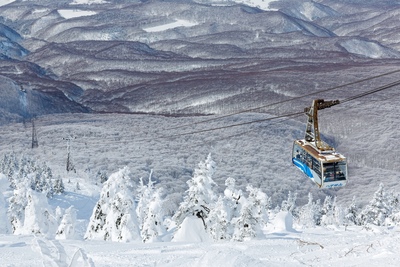
Sukayu is one of Japan's heaviest snowfall areas, with winter snow depths sometimes exceeding 5 m.
When traveling in winter, be alert to nighttime road restrictions and emergency closures.
Surrounding roads are generally closed at night from around mid-December to mid-March, and the Moya Gate is also closed overnight during this period.
As a rule, roads are not cleared of snow after 5:00 p.m., so drivers are advised to arrive by 5:00 p.m.
If driving, check restrictions issued by the inn and road authorities, fit winter tires, and plan your trip with appropriate snow equipment, such as four-wheel drive or tire chains as needed.
In severe winter conditions, vehicles without cold-climate specifications may fail to start because their batteries cannot provide enough power.
Bring footwear with good grip and warm clothing for any walking, and reduce detours when the weather is poor.
Things to See Near Sukayu Onsen: Hakkōda Nature Before or After Your Bath
Sukayu Onsen is also a trailhead for the Hakkōda Mountains, with opportunities to enjoy the surrounding nature before or after bathing.
Walk to Jigokunuma Pond and Kenashitai Wetlands
Jigokunuma, about a 10-minute walk from Sukayu, has sulfur-bearing volcanic steam and strongly acidic water above 90°C bubbling up, sending steam into the air year-round.
At Kenashitai, about a 40-minute walk from the trailhead beside the inn, you can see red and yellow autumn colors among the changing grasses around early October.
Reaching Kenashitai involves mountain paths, so bring comfortable hiking boots and rain gear, and check bear sighting information in advance.
Beech forests around Sukayu turn color around mid-October, while winter brings views of snow-covered Aomori firs.
Manjū Fukashi and Jōgakura Bridge
Manjū Fukashi, a steam bath also known as Fukashiyu, uses hot steam at around 95°C and closes in winter because of snow.
Jōgakura Bridge is a deck arch bridge 360 m long and about 120 m high, with views of the Hakkōda Mountains and Aomori City; its gorge scenery is especially striking in autumn.
In spring, the roughly 8 km stretch of the Hakkōda–Towada Gold Line between Sukayu and Yachi forms a “snow corridor” with tall snow walls on both sides, usually seen around the road's reopening near April 1.
Enjoy Sukayu Onsen's Mixed-Bathing Culture in a Way That Suits You
At Sukayu Onsen, you can experience Hiba Sennin-buro's wooden bathing hall and traditions passed down through generations of tōji visitors.
If mixed bathing concerns you, consider Tama-no-Yu, women-only hours, or the facility's bathing garments, and choose an option you feel comfortable with.
Check the visitor information for your travel date and your return transportation, be considerate of others, and leave time to rest for a relaxed first onsen experience.


Reviews (0)