


Discover Shirayama Hime Shrine as the Main Shrine Facing Mount Hakusan
Understand Its Status as the Head Shrine
Shirayama Hime Shrine (Shirayama Hime Jinja) is the head shrine of more than 3,000 Hakusan shrines across Japan and has long attracted worshippers as the ichinomiya, or highest-ranking shrine, of Kaga Province.
Its official Japanese reading is “Shirayama Hime Jinja,” and it is also affectionately known as “Shirayama-san.”
Learning the name and status of the shrine first helps you see the buildings in the grounds not as isolated attractions, but as part of a place that carries on the tradition of Hakusan worship.
Do Not Confuse the Main Shrine with the Okumiya
The main shrine visited by worshippers is in Sannomiyamachi, Hakusan City, while the Okumiya shrine stands near the summit of Mount Hakusan.
The main shrine grounds also have a yōhaisho, a place where visitors can worship the distant Okumiya.
Because climbing to worship at the summit and visiting the main shrine require different equipment and conditions, this article focuses on walking through the main shrine grounds.
| Term | Meaning | What to Observe on Site |
|---|---|---|
| Main shrine | The center of worship located in Sannomiyamachi | Observe the arrangement of the approach and shrine buildings |
| Okumiya | A shrine near the summit of Mount Hakusan | Understand it separately from the summit pilgrimage |
| Yōhaisho | A place for worshipping the Okumiya from afar | Consider the spiritual connection with the mountain |


Notice Changes in the Forest and Water Along the Front Approach
Set a Calm Walking Pace at the First Torii Gate
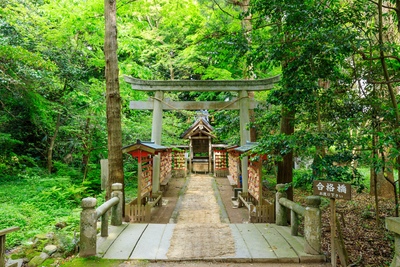
If you take the front approach, you pass through the first torii gate and follow a tree-lined path toward the main shrine.
Bow once in front of the torii gate, and lower your voice and footsteps slightly after entering the shrine grounds.
The center of the approach is called the seichū and is regarded as the path of the deity, so customary etiquette is to avoid walking down the middle whenever possible.
Take Time to Notice Biwa Falls and the Trees
Biwa Falls lies partway along the front approach, where Japanese cedars, keyaki elms, maples, and other trees arch over the path.
If you hurry while looking only toward your destination, you may miss changes in the forest light and the sound of the water.
Pause briefly in a safe place and observe, in turn, the sounds you hear, the dampness of the ground, and the layers of leaves. This helps you physically sense the setting of a shrine that speaks of Mount Hakusan and the blessings of water.
Choose an Entrance That Suits the Slope
The front approach includes an uphill section.
Visitors who use wheelchairs or find a long slope difficult are advised to use the north approach.
The purpose of worship is not to force yourself to walk along one particular route.
Choose an entrance according to your companions’ condition and the weather, and check the shrine grounds map for a shorter route if needed.
The front approach is an uphill path of approximately 250 m.


Understand the Meaning of Purification and Prayer
Use Temizu to Prepare Your Mind and Body Before Worship
Temizu, the ritual of purifying the hands and mouth, is described as a simplified form of the original misogi purification practice.
When ladles are provided, the basic order is to cleanse your hands, rinse your mouth with water poured into your hand, and finally rinse the ladle handle.
However, the procedure may change because of infection-control measures or equipment conditions, so give priority to the notices and shrine guidance provided that day.
Do Not Rush the Two Bows, Two Claps, and One Bow
At the worship hall, the customary procedure is to make an offering, bow deeply 2 times, clap 2 times, and then bow 1 more time.
Rather than hurrying through the motions, straighten your posture and face the shrine quietly.
When other worshippers are waiting before or behind you, keep your belongings contained and step aside after praying so the next person can move forward.
| Place | Basic Action | Consideration for Others |
|---|---|---|
| Torii gate | Bow once before entering the shrine grounds | Do not block the entrance |
| Approach | Avoid walking along the center | Do not spread out across the path |
| Temizuya | Purify yourself according to the guidance | Do not touch the ladle directly to your mouth |
| Worship hall | Two bows, two claps, and one bow | Quietly make way for the next person |


Observe the Alignment of the Shrine Buildings from the Shinmon Gate
Notice How the Torii Gates and Shinmon Gate Align
Following the front approach takes you through several torii gates before you reach the shinmon gate.
From the front of the shinmon, you can see the worship hall and become aware of the axis of shrine buildings extending deeper into the grounds.
Instead of focusing only on the buildings’ decoration, notice how the sense of space and the way sounds carry change as you pass through the gate.
Follow the signs on site regarding photography and areas that are open to visitors.
Understand the Sequence from the Outer Worship Hall to the Main Sanctuary
Behind the outer worship hall, the naoraiden, worship hall, heiden offering hall, and main sanctuary stand in a straight line.
Observe the arrangement from the areas visible to worshippers and imagine how the space becomes increasingly sacred farther inside.
Do not peer through fences or enter restricted areas; carefully appreciate what can be seen from permitted locations.


Connect the Enshrined Deities with Hakusan Worship
Learn About the 3 Enshrined Deities
Shirayama Hime Shrine enshrines 3 deities: Kukurihime no Mikoto, revered as Shirayama Hime Ōkami, as well as Izanagi no Mikoto and Izanami no Mikoto.
You do not need to memorize every detail of the mythology.
Read the guidance, confirm which deities are enshrined, and briefly organize what you wish to pray for. This can make your time of worship feel calmer.
Broaden Your View to the Blessings of the Mountain and Water
Water originating on Mount Hakusan flows into the Tedori River and has supported daily life and farmland across the Kaga Plain.
Rather than viewing the forest at the main shrine, Biwa Falls, and the temizu water separately, think of them as one flow of water from the mountain to the river and onward to people’s lives. This reveals how Hakusan worship connects nature with human activity.
Be mindful that the water level changes with the weather and observe from a safe location.
Reflect on Distance at the Okumiya Yōhaisho
The Okumiya yōhaisho in the shrine grounds is a place for worshipping the Okumiya on the summit of Mount Hakusan from afar.
Do not judge its value solely by whether the mountain is visible; instead, consider how prayer connects the main shrine with the summit.
If other worshippers are praying quietly, refrain from conversation and photography and respect the purpose of the place.

Quietly Observe Nature and Cultural Properties in the Shrine Grounds
View the Sacred Tree from a Respectful Distance
Near the temizuya on the front approach stands an old Japanese cedar wrapped with a sacred shimenawa rope.
Look beyond numerical measures of its size and observe the spread of its roots, the texture of its bark, and how it differs from the surrounding trees.
Do not step around the base or touch the bark. Respecting the protective boundary is a way to honor a tree that has been passed down through generations.
The circumference around the base of this sacred tree is approximately 12 m.
Check Access Conditions for the Treasure Hall and Other Areas
The grounds include several places such as a treasure hall, auxiliary and subordinate shrines, and a misogi purification area, but you do not need to visit them all at once.
Check published information for opening hours, viewing conditions, and changes due to events, and do not force closed locations into your plans.
It is best to make worship your priority and deepen your understanding of each place one by one if time allows.
Plan for Changes in Transportation and Weather
Allow Extra Time for Each Mode of Travel
Traveling by public transportation may require connections among trains, buses, and walking routes.
Even by car, the surrounding area can become crowded during festivals and the New Year worship period, so it is important not to assume that normal travel times will always apply.
Check access information and transit operators’ service notices on the day of your visit, and plan a schedule that does not make you rush your worship even if you arrive late.
The parking areas accommodate approximately 300 cars at the north approach and approximately 30 cars at the front approach.
Prioritize Path Conditions in Rain or Snow
Hokuriku weather can change with the season and time of day, and stone steps, slopes, and wet fallen leaves may affect walking conditions.
Bring shoes with good traction, rain gear, and clothing that lets you regulate your temperature. When using an umbrella, keep a safe distance from others.
In severe weather, do not force yourself to walk the front approach. Follow guidance on site and be prepared to shorten the area you visit.
Limit Your Stops When It Is Crowded
On event days and during busy worship periods, routes around the torii gates, temizuya, and worship hall can become crowded.
Do not try to visit both the sacred tree and the yōhaisho at all costs; reorganize your visit so prayer remains the top priority.
Save quiet observation for another opportunity, and when you stop, choose a safe place away from the flow of people.
Summary: Experience Prayer to Mount Hakusan Through the Approach and Shrine Layout
At Shirayama Hime Shrine, paying attention in sequence to the forest and water along the front approach, purification and prayer, the axis from the shinmon gate through the shrine buildings, and the Okumiya yōhaisho helps you understand in three dimensions the faith linking the main shrine with Mount Hakusan.
Observe the rituals quietly and with consideration for others, and adjust your route according to slopes, weather, and crowds.
Give priority to published information and signs on site. Rather than rushing to collect attractions, it is important to walk thoughtfully through this place of prayer.



Reviews (0)