


Kashihara Rice Terraces: What to Know Before You Visit
Before visiting the Kashihara Rice Terraces (Kashihara no Tanada) in Kamikatsu, Tokushima Prefecture, learning how terraced farmland works can give you a deeper appreciation of the scenery.
As you admire the shapes and colors, take a moment to think about the work of growing food.
An Overview of the Kashihara Rice Terraces in the Mountains of Kamikatsu
The Kashihara Rice Terraces are located in Hakutsuru, Ōaza Ikumi, Kamikatsu, Katsuura District, Tokushima Prefecture, along the upper reaches of the Kashihara Valley River, a tributary of the Katsuura River.
The paddies occupy steep slopes at elevations of 500–700 m and form a single rural landscape together with the 3 settlements of Shimokashihara, Nakakashihara, and Kamikashihara, or lower, middle, and upper Kashihara.
The slope of the Kashihara Rice Terraces is said to be approximately 1 in 3.5, a steep gradient rising about 1 m for every 3.5 m traveled horizontally.
The terraces cover 5.1 ha, and the banks between the paddies combine stonework with compacted earth slopes.
An Important Cultural Landscape with Land Use Almost Unchanged for Over 200 Years
Kashihara preserves a valuable illustrated map titled Katsuura-gun Kashihara-mura Bunken Ezu, a scaled map of Kashihara Village in Katsuura District, bearing the date 1813.
Comparing the rice paddies, houses, and roads shown on this map with the present landscape reveals a rare example of land use that has remained almost unchanged for over 200 years.
The Kashihara Rice Terraces were selected as one of Japan’s 100 Best Rice Terraces by the Ministry of Agriculture, Forestry and Fisheries in 1999.
On February 22, 2010, the landscape encompassing the terraces and settlements became Tokushima Prefecture’s first nationally designated Important Cultural Landscape under the name “Kashihara Rice Terraces.”
The area was also selected by the Ministry of the Environment as an Important Satochi-Satoyama Area for Biodiversity Conservation in 2015, and by the Ministry of Agriculture, Forestry and Fisheries for its “Connecting Rice Terrace Heritage: Passing Hometown Pride to the Future” initiative in 2022.
What Are Rice Terraces? Paddies Built into Hillsides
Rice paddies built in steps on mountain slopes and other inclined ground are called tanada, or rice terraces.
Comparing the flat paddy surfaces with their raised edges reveals the ingenuity of adapting slopes for cultivation.
The Japanese word tanbo refers to flooded fields used to grow rice and other crops, while the earthen ridges separating them are called aze.
At the Kashihara Rice Terraces, you can see ridges made from stacked stones as well as earth.
Understanding these words helps you connect the lines and surfaces in the landscape with the workings of agriculture.
Notice the Work That Sustains the Landscape
Terraced landscapes are maintained through human work, including cultivation, mowing, and water management.
In Kashihara, residents have continued working together to preserve the landscape as the population ages and fewer people are available to take over farming.
The Rice Terrace Owner System, established by the nonprofit Sato no Genki, allows people from outside the district to experience farm work throughout the year, and activities also give elementary school students experience in growing rice and building stone walls.
As you look around, notice the field boundaries and the care of the surroundings as well as the colors of the crops.
When you see farm work in progress, it is important to respect the time of the people working there.
Connecting the rice you eat on your travels with the places where it is grown can add depth to your experience of the terraces.


How to Enjoy the Shapes and Changing Scenery of the Kashihara Rice Terraces
Part of the pleasure of visiting rice terraces is observing the field outlines and the state of the crops from slightly different perspectives.
At Kashihara, too, take time to appreciate what you can see on the day rather than focusing too strongly on finding exactly the view in a particular photograph.
Different Views in Lower, Middle, and Upper Kashihara
The Kashihara Rice Terraces are divided into 3 areas at different elevations: lower Kashihara, middle Kashihara, and upper Kashihara.
Lower Kashihara, surrounded by mountains, is the most popular area for photography.
Here, numerous small paddies, each about 190 square meters, form a sequence of fields with curving ridges.
Middle Kashihara has many earthen terrace walls, while upper and lower Kashihara use stone walls.
Because the paddy sizes and wall construction vary by area, comparing them from permitted viewing places reveals the different impressions within the same terraced landscape.
Follow the Curving Ridges to See How the Terraces Overlap
Before looking for small details, trace the field boundaries with your eyes from a permitted viewing spot to get a sense of the overlapping terraces.
A useful approach is to look separately at the lines running across the slope and the paddy surfaces stacked above and below one another.
The ridges of the Kashihara Rice Terraces curve along the contours of the mountains.
The curving ridges, stepped field boundaries, and small plots are important elements in the beauty of the Kashihara Rice Terraces.
When you notice a curved edge or a change in width, consider how it relates to the shape of the land.
Even within the area visible from your viewpoint, moving your gaze from foreground to background reveals a sense of depth that differs from a photograph.
Seasonal Views Depend on the Condition of the Paddies
In general, the appearance of rice paddies changes with the presence of water, rice growth, harvesting, and other factors.
Try changing your focus to suit the conditions: the paddy surfaces when they hold water, or the colors and density when the leaves are growing.
Even in the same season, weather and farming conditions change the view, so avoid assuming what you will see on your visiting date based only on past photographs.
The table below presents general ways to observe paddies at different stages, rather than indicating the best viewing periods at this location.
| Paddy Condition | What to Look At | What to Notice |
|---|---|---|
| Filled with water | Water surfaces and field edges | The combination of surfaces and lines |
| Leaves growing | Leaf colors and density | Different shades of green |
| Rice heads visible | The color and direction of the rice heads | Differences from the leaves |
| After harvesting | Paddy surfaces and cut stalks | Changes left by farm work |
Seasonal scenery in lower Kashihara includes sky reflected in water-filled paddies in spring, bundles of rice hung to dry in the sun in late summer, colorful maple leaves in autumn, and terraces occasionally covered in snow in winter.
Across the town, rice planting generally takes place from mid-May to mid-June, harvesting from late September to early October, and red spider lilies are typically seen in late September.
These are general timings for the town as a whole, rather than a guarantee of work dates or scenery at the Kashihara Rice Terraces, so plan on the understanding that weather and farming conditions may shift them.
Compare Wide Views with Details Such as Stone Walls and Irrigation Channels
After taking in the wider landscape, turn your attention to smaller details visible from the same spot.
You may discover things you did not notice at first, such as field boundaries or overlapping leaves.
In Kashihara, water is drawn from irrigation channels into the paddies through bamboo gutters, then allowed to flow from one paddy to the next.
Plants grow in the gaps of the dry-stone terrace banks, built without mortar, creating habitats for frogs, snakes, insects, and other creatures.
In lower Kashihara, a watermill used to polish rice has been restored, recalling the many watermills that once lined the valley, and its sound has become part of the landscape.
When taking photographs, changing your camera angle or framing lets you enjoy different impressions without moving to another spot.
Comparing wide landscape shots with close-up details can also help you reflect on what caught your attention.


Kashihara Rice Terraces Visitor Etiquette and Photography Tips
When visiting the terraces, make farm work and local life your priority.
The Kashihara Rice Terraces remain working farmland, forming a landscape that is inseparable from the settlements where people live.
Even if there is a view you want to capture, check where you are allowed to go and whether your surroundings are safe before raising your camera.
Do Not Enter Paddies or Walk on Field Ridges Without Permission
Do not enter paddies, field ridges, or irrigation channels without permission from the owner or manager.
Even a strip that looks like a narrow path may not be open to general visitors.
The basic rule is not to proceed simply because there is no fence or because other people have entered.
Avoid climbing the stone terrace banks or touching and moving stones or bamboo irrigation gutters.
Follow signs about access and viewing, and if you are unsure of the permitted area, stop and check.
If you want to enter a field and try farm work, use an organized opportunity offered by the hosts, such as the Rice Terrace Owner System.
Choose Photo Spots That Do Not Obstruct Traffic or Farm Work
Before stopping, check for vehicles, pedestrians, and entrances used for work.
The roads connecting the town’s rice terraces are narrow, so drive with great care.
Avoid stopping your car on the road to take photographs or standing at the roadside for a long time.
Do not walk backward while looking at your screen or spread across the full width of a road to compose a shot.
Consider whether a tripod or large bags would obstruct passage, and do not set them up if there is not enough space.
Even if farm tools or materials appear in your shot, never move them without permission for the sake of a photograph.
Be Considerate Before Photographing People or Homes
If you want to make someone working in the fields your main subject, ask whether you may take their photograph at a moment that does not interrupt their work.
If they decline or you cannot confirm their wishes, avoid photographs that focus on them.
Kashihara’s Important Cultural Landscape designation covers both the terraces and residential areas, so houses and scenes of daily life may appear depending on your framing.
Care is also needed with photographs that peer into homes or gardens, and with publishing images that reveal details of someone’s private life.
When reviewing your photos, consider not only how you took them but also whom you will share them with and how widely they will be made public.
Offer Greetings and Keep Your Voice Down
When you encounter local residents, offer a natural greeting.
If you want to talk, avoid keeping people from their activities for long, and refrain from repeatedly calling loudly to your companions.
The following phrases can help when you want to communicate a simple message in Japanese.
| Situation | What You Want to Say | Short Japanese Phrase |
|---|---|---|
| Meeting someone | A greeting | Konnichiwa (Hello) |
| Checking access with the manager | Whether you can use a path | Koko wa tōremasu ka? (May I pass through here?) |
| Asking someone about photography | Whether you may take a photo | Shashin o totte mo ii desu ka? (May I take a photo?) |
| Receiving directions or guidance | Thanks | Arigatō gozaimasu (Thank you) |
If words alone do not get your meaning across, use a translation function or another aid, and do not interpret an unclear response as permission.


What to Wear and Bring for a Visit to the Rice Terraces
Preparing to enjoy the scenery outdoors is easier when you focus on comfortable walking and being ready for the weather.
Carry only what you can comfortably manage, so you can still pay attention to your footing when you stop.
Choose Familiar Shoes and Clothes That Allow Easy Movement
If you plan to explore on foot, choose familiar, comfortable walking shoes.
The Kashihara Rice Terraces spread over steep slopes, so expect to walk on inclines and uneven ground.
Avoid clothes so long that they obscure your feet or restrict movement, and dress so you can walk while staying aware of your surroundings.
If visiting with children, agree on who will watch them so that an adult other than the one taking photographs can keep an eye on their movements.
Adjust What You Bring to the Weather
Check the forecast before setting out and prepare for the sunshine, rain, and temperatures expected.
The Kashihara Rice Terraces lie in the mountains at elevations of 500–700 m, and snow occasionally settles here in winter.
If visiting by car in winter, plan for the possibility of icy or snow-covered roads.
Watch your footing on wet ground, and leave room to change your plans in bad weather.
Prepare items such as the following as needed.
- Drinks and a hat or jacket suited to the season
- Rain gear and a bag for items you want to keep dry
- A bag for taking your trash home
- A charged mobile phone and confirmed travel information
Take any trash from your breaks away with you, and do not use agricultural equipment or materials as places to put your belongings.
Kamikatsu is also a town that has made a “Zero Waste Declaration,” aiming for a society that produces no waste.


How to Get to the Kashihara Rice Terraces and What to Check Before Visiting
Plan your visit to the Kashihara Rice Terraces after confirming which areas are open to visitors and how you will travel there and back.
For conditions not apparent from promotional photographs or maps, it is important to check official information from the local government or tourism services.
Check Permitted Viewing Areas and Current Guidance
Before visiting, check whether any guidance on access or viewing has been updated.
Being able to see the place you want to visit and being allowed to enter it are separate matters.
If you want to use special photography equipment or visit as a group, explain those circumstances when checking in advance.
For tourism inquiries in Kamikatsu, contact the Industry Division of Kamikatsu Town Hall at 0885-46-0111.
If you cannot read a Japanese sign, do not simply pass it by; checking its meaning with a translation tool or another aid can help you decide what to do.
The Japan Tourism Agency’s Multilingual Interpretation Database also includes an English explanation of the Kashihara Rice Terraces, and reading it beforehand can help you understand the landscape during your visit.
Plan Your Transport for Both the Outward and Return Journey
The Kashihara Rice Terraces are in the mountains about a 60-minute drive southwest of Tokushima City.
One route heads south from the Tokushima Station area on National Route 55, turns right at Katsuura River Bridge onto Prefectural Route 16, and follows the road onward.
The terraces are about 5 km from Kamikatsu Town Hall, or approximately 25 minutes by car.
If considering public transport, check which routes and operating days are available and how you will continue after getting off.
One suggested bus route is to take a Tokushima Bus service bound for Yokose-nishi from in front of Tokushima Station, then transfer to a Kamikatsu municipal bus at Yokose-nishi.
Municipal buses allow boarding and alighting along their routes within Kamikatsu, but cannot stop in dangerous locations such as near intersections or on sharp curves.
Check the municipal bus timetable on Kamikatsu’s official website for connections with Tokushima Bus services.
If using a taxi, the Kamikatsu Paid Volunteer Taxi service operated by the general incorporated association Hidamari is also available with an advance reservation.
Do not decide that a route is walkable based on map distance alone; also check road conditions and where access is permitted.
If traveling by car, find out in advance where parking is allowed, and do not assume that a space that looks empty on arrival may be used for parking.
Consider your return transport, rest stops, and toilet locations beforehand, and make a plan that avoids rushing your journey.
Nearby Attractions and Accommodation Around the Kashihara Rice Terraces
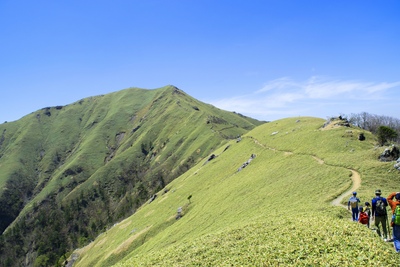
Upper Kashihara has the entrance to a hiking trail up Mount Yamainu (Yamainudake), known for its extensive moss growth.
Mount Yamainu is 997 m high, with large boulders and moss among its highlights.
The moss on Mount Yamainu is generally best seen in June and July, while autumn leaves are typically at their best from late October to early November.
If you are considering the hike, read the precautions on Kamikatsu’s official website in advance.
Nearby accommodation includes the farm stay Yamaai and Yama no Gakkō / Shizen no Yado Asahi, a nature-oriented inn.
Availability for stays and meals may change, so check opening status and whether reservations are required before planning to use them.

Planning Your Visit to the Kashihara Rice Terraces
The Kashihara Rice Terraces in Kamikatsu, Tokushima Prefecture, form a rural landscape recognized as an Important Cultural Landscape, with land-use patterns handed down almost unchanged from an illustrated map made over 200 years ago.
Learning about the shape of the terraces and the changing appearance of the paddies before visiting helps you enjoy the day’s scenery from your own perspective.
Respect the areas open to visitors and be considerate of farm work and local life, and prepare suitable clothing and transport for both directions before setting out.


Reviews (0)