


Ōasahiko Shrine: Awa Province’s Leading Shrine in Naruto
Ōasahiko Shrine (Ōasahiko-jinja), located in Ōasa-chō, Naruto, Tokushima Prefecture, is the ichinomiya, or leading shrine, of the former Awa Province and is known for holding the highest shrine rank in the prefecture.
Known locally as “Ōasa-san” and “Owasa-han,” it draws worshipers who pray for road safety, protection from misfortune, and other blessings.
The grounds feature a sacred giant camphor tree and the German Bridge (Doitsu-bashi), built by German soldiers held as prisoners of war during World War I, so a visit also offers a chance to explore local history on foot.
What Does “Awa Province Ichinomiya” Mean?
Awa is the former name of the province corresponding to present-day Tokushima Prefecture, while ichinomiya refers to a shrine revered as a central place of worship in each former province.
The Engishiki Jinmyōchō, a register of shrines compiled during the Heian period, lists it as a Myōjin Taisha, a shrine of particularly high standing.
During the Meiji period, it was ranked as a Kokuhei Chūsha, a middle-ranking nationally supported shrine, and it remains revered as one of Tokushima Prefecture’s representative shrines.
Its enshrined deities have also been honored as protectors of the land and people of Awa and Awaji.
During the Edo period, the Hachisuka family, rulers of the Tokushima domain, are said to have revered the shrine as the guardian of all communities in both Awa and Awaji provinces.
Knowing a few terms from the shrine’s history can help you connect signs bearing its name and explanations around the grounds with local life.
Ōasahiko Shrine’s Deities and Blessings
The enshrined deities are Ōasahiko no Ōkami and Sarutahiko no Ōkami.
Ōasahiko no Ōkami is identified with Ame-no-Futodama-no-Mikoto.
The shrine’s history includes traditions about the development of Awa and the cultivation of hemp and kōzo, or paper mulberry, and Ōasahiko no Ōkami is enshrined as the guardian of the region.
According to shrine tradition, its origins date to the reign of Emperor Jinmu, when Ame-no-Tomi-no-Mikoto, who spread hemp and paper mulberry cultivation, enshrined his ancestor Ame-no-Futodama-no-Mikoto as a guardian deity.
Sarutahiko no Ōkami is known as a guide in Japanese mythology, and worshipers at Ōasahiko Shrine seek blessings for protection from harmful directions, warding off misfortune, and road safety.
Sarutahiko no Ōkami is said to have originally been enshrined on the summit of Mount Ōasa behind the shrine.
Hōyoke is a prayer for protection from misfortune associated with directions.
Those receiving a hōyoke prayer are given sand believed to hold the presence of a divine spirit.
The following terms are useful when reading signs around the grounds.
| Term | Pronunciation | Meaning |
|---|---|---|
| Ichinomiya | ichinomiya | The leading shrine of a former province |
| Gosaijin | gosaijin | The deity or deities enshrined |
| Goshinboku | goshinboku | A tree revered as sacred |
| Massha | massha | A subsidiary shrine attached to the main shrine |
| Myōjin Taisha | myōjin taisha | A shrine accorded particularly high status in the Engishiki |
| Okumiya | okumiya | An associated shrine located on a mountaintop or similar site |


Things to See at Ōasahiko Shrine: Torii Gate, Sacred Tree, and Shrine Buildings
At Ōasahiko Shrine, let your gaze move from the trees lining the approach to the sacred tree and shrine buildings to appreciate a landscape where nature and faith meet.
Walk Past the 14-Meter Torii Gate and Rows of Stone Lanterns
A large torii gate marks the entrance to the approach, beyond which rows of trees, mainly camphors, and stone lanterns continue toward the shrine.
The torii stands 14 meters tall, and 100 stone lanterns line the approach alongside the camphor trees.
When you arrive, take time to notice the arrangement of the gate and lanterns as well as the shrine buildings.
If you stop along the way, check the flow of foot traffic and choose a spot where you will not obstruct people heading to worship, so you can enjoy the view at ease.
Look Up at the Sacred Giant Camphor, a Naruto City Natural Monument
The giant camphor tree in the grounds is revered as the shrine’s sacred tree and was designated a Naruto City Natural Monument in 1995.
Traditionally said to be around 1,000 years old, with some estimates placing it at about 800 years, it is the largest camphor tree in the city.
Its branches extend approximately 26.3 meters from north to south, spreading a broad canopy over the grounds.
A shimenawa, a sacred straw rope, encircles the main trunk, and the tree, enclosed by stone posts, has become a symbol of the shrine.
Look at the branches spreading upward as well as the thick trunk to get a fuller sense of the tree’s shape.
The sacred tree is also an important object of worship, so respect signs and barriers and view it from permitted areas.
Combine Worship at the Prayer Hall with Visits to Subsidiary Shrines
Praying at the haiden, or worship hall, first and exploring the grounds afterward helps give each part of your visit its own focus.
The grounds also contain subsidiary shrines, including Toyouke Shrine, dedicated to a deity of food, and Yama Shrine, dedicated to a mountain deity.
Several other subsidiary shrines are scattered around the grounds, including Nishinomiya Shrine, Suijin Shrine, and Tenjin Shrine.
Remembering that each small shrine has its own traditions may spark an interest in the aspects of daily life for which local people have long prayed.
There is no need to rush through every shrine; read the signs and quietly visit those that interest you.


The German Bridge and Megane Bridge: A History of Friendship with German Soldiers
The stone bridges in the grounds tell the story of connections between the local community and German soldiers held as prisoners during World War I.
The German Bridge: Stonework and the Story Behind This Tokushima Historic Site
The German Bridge is a stone arch bridge built by German soldiers who lived at the Bandō Prisoner-of-War Camp, using civil engineering techniques from their homeland.
The camp stood in what is now Hinoki, Ōasa-chō, Naruto, and the soldiers are said to have built the bridge when they were preparing to return home.
Furyo is a Japanese word meaning “prisoner of war” and also appears in explanations of the camp’s history.
The bridge is a cultural asset that reflects the camp’s open management style and the exchanges between German soldiers and local residents at the time.
It was designated a Tokushima Prefectural Historic Site on January 30, 2004, in recognition of its construction using European techniques in an area with limited materials during the Taishō period.
From permitted viewing areas, look at the way the stones are laid and the shape of the arch to appreciate the skills of the people who built it.
Megane Bridge’s Twin Arches and the Best Time for Autumn Leaves
Megane Bridge, or “Spectacles Bridge,” was also built by German soldiers and is distinguished by its two adjoining arches.
It spans a pond now known as Shingan no Kagami-ike.
Believed to have been built around the same time as the German Bridge, along with a stone-paved walking path nearby, it preserves a glimpse of activities on the grounds in that era.
Maruyama Park behind the shrine is known for its autumn foliage, when maple and wax trees change color.
The autumn leaves at spots around the city, including Maruyama Park, are generally at their best from late November to early December.
Follow local signs on the bridges and surrounding paths, checking which areas are open as you explore.
To learn more about these exchanges, consider adding the Naruto German House (Naruto-shi Doitsu-kan), which introduces the soldiers’ camp life and ties with the community, to your nearby sightseeing plans.
Learn About Bandō Prisoner-of-War Camp at the Nearby Naruto German House
The Naruto German House is a museum introducing Bandō Prisoner-of-War Camp, where German soldiers were held during World War I.
The camp was regarded as a model facility because of its humane management, and the museum displays materials documenting exchanges between the German soldiers and local residents.
Bandō Prisoner-of-War Camp is also known as the site of Asia’s first concert performance of all movements of Beethoven’s Symphony No. 9.
The former camp site was designated a National Historic Site as the “Site of Bandō Prisoner-of-War Camp” on October 15, 2018.
The German House is open from 9:30 a.m. to 5:00 p.m., with last admission at 4:30 p.m., and is closed on the fourth Monday of each month (the following day if that Monday is a public holiday) and from December 28 to 31.
Admission to the historical exhibition rooms is 400 yen for adults and 100 yen for elementary and junior high school students, and the museum is about a 25-minute walk from JR Bandō Station.


Ōasahiko Shrine Etiquette and Photography Tips for First-Time Visitors
When visiting the shrine, understand the meaning of the rituals and make it a priority to respect the time and space of people who are praying.
How to Purify Your Hands and Mouth at the Water Basin
Chōzu, ritual washing of the hands and mouth before worship, is performed to prepare the body and mind.
If ladles are provided, the usual sequence is to wash both hands, then rinse your mouth with water cupped in your palm.
Do not put your mouth directly on the ladle, and follow any signs explaining how the facilities may be used or whether they are available.
Understanding Two Bows, Two Claps, and One Bow
The basic form of worship at a Shinto shrine is 2 bows, 2 claps, and 1 bow (nihai, nihakushu, ippai), and this is also the practice at Ōasahiko Shrine.
Bow deeply twice, clap twice, and bring your hands together; after silently expressing your gratitude or wishes, finish with another deep bow.
There is no need to hurry if the practice is unfamiliar; simply compose yourself and approach it respectfully.
Check Signs and Your Surroundings Before Taking Photos
If you want to take photographs, check local guidance on permitted locations and subjects, and ask the shrine if anything is unclear.
Before photographing building interiors or ceremonies, it is important to check whether photography is allowed.
Avoid pointing your camera at people praying without their permission, or blocking the queue for worship or a walkway while composing a shot.
The table below summarizes general considerations for visiting a shrine in different situations.
| Situation | What to Do | What to Avoid |
|---|---|---|
| Passing through a torii gate | Bow once before proceeding | Blocking the entrance |
| In front of the worship hall | Wait your turn | Rushing people who are praying |
| Talking in the grounds | Keep your voice at a considerate level | Making loud noise |
| Taking souvenir photos | Be considerate of people nearby | Blocking walkways |


Ōasahiko Shrine Charms and Prayer Services: Hours and What to Check
If you plan to receive a charm or request a prayer service, check the relevant service hours as well as the hours when you can visit the shrine.
Types of Charms and Suggested Offerings
Items available at the shrine include shingan-mamori, charms for personal wishes, and anzan-mamori, charms for safe childbirth.
Juyo is the word used for receiving charms, ofuda talismans, and similar items from a shrine.
The offering made when receiving a charm or similar item is called hatsuhoryō.
Shingan-mamori and small anzan-mamori are 1,000 yen each; saiwai-mamori, for happiness, and aizome-mamori, indigo-dyed charms, are 1,500 yen each; and dōchū-anzen-mamori, for safe journeys, are 500 yen.
Sacred talismans and charms are available from 7:30 a.m. to 4:30 p.m.
Considering the wish represented by a charm as well as its appearance can help you decide which one to receive.
Check the available types and offerings at the charm counter, and ask how to handle your charm when you receive it if you are unsure.
Prayer Service Hours and How to Apply
Ōasahiko Shrine offers prayer services for road safety, protection from misfortune, safe childbirth, and other wishes.
It also offers prayers for a baby’s first shrine visit and hōyoke, and also accepts prayers for safe childbirth on days other than Inu no Hi (Days of the Dog in the traditional Japanese calendar).
To apply, explain your wish at reception, make the offering, and follow the priest’s instructions to enter the shrine building.
Shōden means entering the shrine building, where you receive the prayer service in the place indicated.
Prayer service reception is open from 9:00 a.m. to 4:00 p.m., and services are held at 30-minute intervals.
On November 1 each year, the annual grand festival means prayer services are unavailable at certain times, and services are also unavailable after 1:00 p.m. on December 31.
Service hours may change because of festivals and other events, so if a prayer service is the purpose of your visit, check the application procedure and available times for your chosen date in advance.

How to Get to Ōasahiko Shrine and Prepare for Your Visit
It is easier to plan your trip when you consider the journey to and from the shrine together with how much of the grounds you want to explore and any nearby sightseeing.
By Train: About a 25-Minute Walk from JR Bandō Station
If traveling by public transport, you can walk to the shrine from Bandō Station on the JR Kōtoku Line.
The shrine is about a 25-minute walk north of Bandō Station.
If traveling by highway bus, it is about a 20-minute walk from the Naruto-nishi highway bus stop.
Check the walking route from the station on a map and coordinate your plans after arrival with the time of your return train.
On hot days or when carrying heavy luggage, allow for the effort of walking and leave enough time for onward travel after your visit.
By Car: About 10 Minutes from Itano IC, with Free Parking
The shrine has free parking and can be reached by car from Itano Interchange and other access points.
It is about a 10-minute drive from Itano Interchange on the Takamatsu Expressway.
The parking area has space for approximately 1,000 vehicles.
When traffic guidance is issued for occasions such as hatsumōde, the first shrine visit of the New Year, check the information for your visiting date rather than relying only on the usual route.
Even after setting your navigation destination, follow local direction signs and instructions from staff.
Check Opening Hours and Busy Periods
The shrine grounds are open from 6:00 a.m. to 5:00 p.m. from March to November, and from 6:30 a.m. to 4:30 p.m. from December to February.
Entry to the grounds is free, with no admission fee.
More than 300,000 worshipers from within and beyond the prefecture are said to visit during the first 3 days of the New Year.
For a quieter walk around the grounds, consider avoiding the New Year worship period and festivals and arriving soon after the gates open.
In addition to Japanese and English, assistance is also said to be available in German.
The shrine’s website has English and German versions.
Preparing to Hike Mount Ōasa to Mine Shrine, the Inner Sanctuary
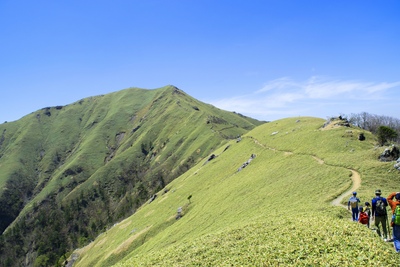
Mine Shrine, the okumiya or inner sanctuary, stands at the summit of 538-meter Mount Ōasa behind the main shrine.
The giant Japanese cedar at Mine Shrine, formed from joined trees, was designated a Naruto City Natural Monument in 2020.
The hike from the shrine to the summit takes about 1.5 hours each way, depending on the route and your fitness.
The route to the summit includes steep stone steps and slopes, so reaching the inner sanctuary requires a hiking plan that takes account of the weather, your fitness, and your equipment.
Even if you are staying within the main grounds, prepare what you need for the weather and the area you plan to walk.
- Familiar shoes with good grip
- A handkerchief for use after ritual handwashing
- Rain gear and drinks suited to the weather
Experience Local Faith and History at Ōasahiko Shrine
Through its role as Awa Province’s leading shrine, its sacred giant camphor tree, and its stone bridges recalling exchanges with German soldiers, Ōasahiko Shrine offers an introduction to Naruto’s culture.
Center your visit on prayer at the worship hall, then turn your attention to the trees, smaller shrines, and stone bridges to explore the grounds with a sense of their different stories.
When worshiping or taking photographs, follow local guidance and be considerate of others, enjoying a quiet visit that fits your travel plans.


Reviews (0)