


See How Myōjō-ji’s Temple Complex Connects, Starting from the Five-Story Pagoda
At Head Temple Myōjō-ji in Hakui, Ishikawa Prefecture, you can understand the layout of the entire temple more easily by looking beyond the five-story pagoda and taking in how the structures lead from the gate to the temple halls.
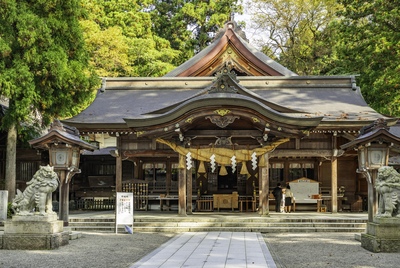
The grounds contain a concentrated group of historic cultural-property buildings, including the main gate (Sōmon), Kaisandō Hall, the worship hall of Sanjūbanjin-dō, and Shakadō Hall.
First, get a sense of the overall orientation, then move your attention from nearby buildings to their details in order. This lets you appreciate both the architectural differences and the unity of the complex.
Look for Overlapping Rooflines Before Passing Through the Gate
Change your viewpoint before and after entering the grounds, and compare where the roofs of the five-story pagoda and temple halls come into view.
Looking from a short distance away rather than only from the front reveals how buildings of different heights overlap within the terrain.
Instead of rushing to take photos, stop where you will not obstruct worshippers, visually confirm the layout, and then decide on your composition.
Study the Width and Eaves of Each Story of the Five-Story Pagoda
When looking up at the five-story pagoda, notice not only its height but also the width of each story, the projection of the eaves, and how its outline changes as it rises.
Do not get too close just to see the details. Choose a distance within the designated area where you can view the entire structure.
Sunshine and cloud cover create different shadows on the woodwork and roof, so finding a way to view the pagoda that suits the day’s light is also part of the experience.


Compare the Different Roles of the Important Cultural Property Halls
Myōjō-ji retains a group of buildings designated as Important Cultural Properties of Japan, including the main hall (Hondō), Soshidō Hall, and the five-story pagoda. Keeping the role of each building in mind makes a visit more rewarding.
There are 10 buildings designated as Important Cultural Properties of Japan, and the fact that they survive together within the same grounds is one of Myōjō-ji’s main attractions.
Rather than merely memorizing their names, imagine the functions these halls have served, such as places for prayer, spaces for conveying teachings, and repositories for sutras.
Compare the Frontages of the Main Hall and Soshidō Hall
At the main hall and Soshidō Hall, look at the position of the entrance, the roof shape, the components beneath the eaves, and the space in front of each building.
Even within the same grounds, buildings do not all look the same because of differences in the object of worship and their connection to rituals.
If interior viewing is permitted, confirm where entry is allowed and whether photography is permitted, and prioritize quiet worship.
Consider the Roles of the Sutra Repository (Kyōdō) and Bell Tower (Shōrō)
The sutra repository can be understood through its connection to the scriptures that convey Buddhist teachings, while the bell tower is a structure whose sound marks time and rituals at the temple.
When viewing their exteriors, check their distance and orientation in relation to the principal halls to better consider their place within the grounds.
Visitors are not necessarily free to ring the bell, so do not touch it unless signs or temple staff indicate that you may.
Organize Your Viewpoints When Comparing Buildings
To keep the differences between the halls clear, divide your observations by location and focus as follows.
| Subject | What to Look At | What to Notice |
|---|---|---|
| Five-story pagoda | Stories and eaves | Outline as it rises |
| Main hall and Soshidō Hall | Frontages and roofs | Differences in worship spaces |
| Sutra repository and bell tower | Location and orientation | Roles within the grounds |


Discover Myōjō-ji’s History as the Hokuriku Head Temple of Nichiren Buddhism (Nichiren-shū)
Myōjō-ji is known as the Hokuriku head temple of Nichiren Buddhism and was founded by Nichizō, a disciple of one of Nichiren’s disciples.
When standing before halls developed over the temple’s long history, do more than line up their construction dates. Consider how faith and support from the local community have sustained the temple complex.
Connect the Founder’s Story with the Layout of the Temple
After reading an explanation about the founder, connect it with the actual locations of buildings associated with individuals and faith, such as Kaisandō Hall and Soshidō Hall.
Historical names can have similar readings or spellings, so it is important to check the explanations on site rather than relying solely on memory.
Distinguish stories presented as tradition from facts confirmed in historical records, and receive them as narratives the temple has carefully passed down.
View Ties to the Kaga Domain (Kaga-han) as Part of the Architectural Background
Myōjō-ji’s temple complex was developed through its relationship with the Maeda family of the Kaga Domain, offering clues for considering architectural culture from the Momoyama period to the early Edo period.
Jufuku-in, mother of Toshitsune Maeda, the third lord of the domain, is said to have made Myōjō-ji her family temple and commissioned the main hall, Soshidō Hall, the five-story pagoda, and other buildings.
Do not focus only on ornate decoration. Observe the order expressed in the timber joinery, roofs, and arrangement of the buildings.
Check details about people and dates in explanations provided by the temple or local government, and do not treat unverified anecdotes as historical fact.


Balance Worship and Architectural Appreciation on the Temple Grounds
A temple is a place of prayer before it is a tourist attraction, so consideration for worshippers and religious services is essential even when viewing the architecture.
If you have several purposes, such as taking photos, reading information boards, or receiving a goshuin temple seal, decide the order according to the guidance on site.
Worship First, Then Examine the Details
When you arrive in front of a hall, first compose yourself in a place that does not block the central path and worship quietly.
Looking at carvings and the undersides of the eaves afterward makes it easier to keep the flow of worshippers separate from your own observation.
Follow the example of those around you regarding hats and large bags, and do not lean belongings against walls or pillars.
Prioritize People Even Where Photography Is Allowed
Photography rules can vary by building and event, so check posted signs and staff guidance on the spot.
Tripods and long equipment can narrow passageways. If the conditions of use are unclear, do not bring them in, and take handheld photos briefly.
When publishing photos that show the faces of other worshippers, consideration such as changing the composition or blurring faces is also necessary.

Plan a Noto Temple Walk for the Season and Weather
On grounds lined with wooden architecture, sunlight, rain, snow, and wind change both the footing and the appearance of the buildings.
Do not assume a particular seasonal view. Adjust how you explore to suit the day’s weather and the areas that are open.
On Rainy Days, Observe the Eave Lines and Wet Ground
Stone and earthen paths can become slippery in the rain, so secure your footing before looking up at the scenery.
Wet woodwork and roofs may show deeper shadows, but do not enter beneath the eaves without permission; view them from areas open to the public.
When passing someone while holding an umbrella, adjust its height so the tip does not point toward the building or the other person.
On Sunny Days, Change Your Angle to Follow the Light
Strong light from the front can make details difficult to see, so move a little farther along the approach and try a different angle.
Alternate between viewing the outlines of the pagoda and roofs against the sky and taking a closer look at shadows on the woodwork so your observation does not become monotonous.
Do not stay too long while enduring heat or cold. Rest according to your condition and explore the grounds in short stages.


Check Transportation and Visiting Conditions Before Going to Myōjō-ji
Road and public transportation conditions can change when traveling in Noto, so it is important to check both how to get there and how to return on the same day.
Visiting hours and accessible areas may also change because of events, so do not finalize your plans based only on old travel accounts.
Check the Entire Public Transportation Route, Including the Return Trip
If traveling by train or bus, check not only the service that reaches the nearest stop but also the connections for your return journey.
Allowing extra time for transfers reduces the chance that you will need to rush on the grounds or cut your visit short.
Operating conditions may differ depending on the date of your visit, so use service information from the transportation operators.
When Driving, Check the Entrance and Parking Location Separately
The point marked with the temple’s name on a map may not be the same as the vehicle entrance or designated parking area.
Check a map provided by the temple or local government in advance to avoid accidentally entering narrow roads or residential streets.
After arriving, follow the directional signs, do not stop on the road or approach, and keep pedestrian routes clear.
Divide Your Checklist by Purpose
Dividing your pre-departure checks into 3 categories—transportation, visiting, and safety—can help prevent omissions.
| Category | Information to Check | What to Decide |
|---|---|---|
| Transportation | Road and transit information | Round-trip route |
| Visiting | Hours and open areas | Order of the visit |
| Safety | Weather and footing | Clothing and length of stay |
Summary: Appreciate Myōjō-ji’s Temple Complex Through the Relationships Between Its Buildings
At Head Temple Myōjō-ji, compare the positions and roles of the gate, main hall, Soshidō Hall, sutra repository, bell tower, and other structures using the five-story pagoda as a landmark. This reveals how the Important Cultural Property halls come together to form a single temple complex.
Confirm the temple’s history as the Hokuriku head temple of Nichiren Buddhism and its ties to the Kaga Domain through explanations from the temple or local government. Prioritize worship before observing the outlines and details of the architecture.
Before visiting, check the visiting conditions and round-trip transportation, and tour the grounds in a manageable order that suits the weather and guidance on site.


Reviews (0)