


Ōwani Onsen: An 800-Year-Old Hot Spring Town in Tsugaru
Ōwani Onsen, in Ōwani Town, Minamitsugaru District, Aomori Prefecture, is a hot spring resort said to date back more than 800 years; known as “Tsugaru's secluded retreat,” it has long welcomed visitors seeking rest and recuperation in its waters.
Hot spring inns line the Hirakawa River, while the town's public baths and footbaths offer a glimpse of everyday life shaped by the springs.
With a day-use bathing facility right beside JR Ōwani-Onsen Station, it is an easy stop on a trip around Hirosaki and Aomori.
The clear, colorless water is said to retain heat well, helping the body stay warm after bathing.
Discover Tōji and Everyday Life Supported by Hot Spring Heat
Tōji means staying at a hot spring resort to bathe and give your body time to rest.
One legend traces the springs' discovery to the late Heian or early Kamakura period, when the ailing Buddhist monk Enchi Shōnin followed guidance received in a dream, bathed in the water, and recovered.
Another tradition says that Tamenobu Tsugaru, founder of the Tsugaru domain, discovered the springs after a dream directed him there to treat an eye condition.
When the Ōu Main Line station opened in 1895, Ōwani Onsen became even busier with visitors coming for tōji.
In Ōwani, hot spring heat has been used not only for bathing but also for growing bean sprouts and making miso.
Exploring local ingredients reveals how the hot springs have supported everyday life.
Day Trip or Overnight Stay? Choose Based on Your Travel Plans
If you want to include a bath in a trip around Hirosaki or Aomori, a day trip centered on the station is easy to plan.
For more time to relax after bathing without watching the clock, consider staying at a hot spring inn along the Hirakawa River.
If you want to use an inn's baths without staying overnight, check its day-use policy directly.
Try Bath Hopping Around the Town's Public Baths
Ōwani Onsen has 9 public baths used regularly by local residents.
Stops for hashigo-yu, or bath hopping, include Aoyagi Kaikan, Ōyu Kaikan, and Wakamatsu Kaikan, as well as Wani-come and the Ekimae Omotenashi footbath.
For example, admission to Ōyu Kaikan (Ōwani Onsen Kaikan) is generally around 200–300 yen for adults; check elementary school student prices in advance. Normal hours are 6:00 a.m.–9:00 p.m., and it is closed on the 2nd Wednesday of the month.
These public baths are part of local daily life, so respect regular users' pace and enjoy bathing quietly as a guest in their community.
Closing days vary by bath, so check ahead if you plan to visit several in one day.


How to Get to Ōwani Onsen via JR Ōwani-Onsen Station
If arriving by train, use JR Ōwani-Onsen Station on the Ōu Main Line as your starting point to combine bathing with a walk around town.
Wani-come, a day-use hot spring facility, is just a short walk from the station entrance.
Check Trains from Shin-Aomori, Hirosaki, and Akita
The station timetable lists services toward Hirosaki and Aomori, and toward Higashi-Noshiro and Akita.
Ōwani-Onsen Station is about 40 minutes from Shin-Aomori Station by limited express, and around 2 hours from Akita Station by limited express.
Check connections from your departure point along with services on your visit date and your return train time.
Working backward from your return train helps you decide when to bathe and eat while leaving enough time to get back to the station.
Getting to Ōwani Onsen by Car or Kōnan Railway
By car, Wani-come is about 10 minutes from Ōwani-Hirosaki Interchange on the Tōhoku Expressway via National Route 7, or around 15 minutes from Ikarigaseki Interchange.
Wani-come has parking, making it a convenient base for bathing and meals when visiting by car.
From central Hirosaki, take the Kōnan Railway Ōwani Line from Chūō-Hirosaki Station to its terminus at Ōwani Station, a journey of about 35 minutes.
The Kōnan Railway Ōwani Line is scheduled to suspend operations after services on March 31, 2028, so check service information before traveling.
Relax at the Free Footbath Outside Ōwani-Onsen Station
The Ekimae Omotenashi footbath outside JR Ōwani-Onsen Station lets you soak your feet and rest without changing out of your clothes.
Admission is free; typical opening hours are 6:00 a.m.–7:00 p.m. from May 1 to August 31, and 7:00 a.m.–6:00 p.m. from September 1 to April 30.
Bring a towel to dry your feet and wear clothes with hems that are easy to roll up.
If using the footbath while waiting for a train, finish with plenty of time to board.


Wani-come Day-Use Onsen: Wani-no-Yu Prices and Visitor Guide
A convenient option for day-use bathing is Wani-no-Yu at the Ōwani Town Regional Exchange Center, Wani-come (Wanikamu).
It is also worth considering if you want to combine bathing, a meal, and shopping in one place.
Inside, you will find a restaurant, souvenir section, and relaxation area, as well as free Wi-Fi.
The tatami relaxation area has horigotatsu-style recessed seating, where you can unwind after bathing while looking out at the courtyard or enjoying the fireplace made with Ōwani's local Abu stone.
Enjoy Ōwani Onsen's Communal Baths, Outdoor Baths, and Saunas
The Uguisu and Tsutsuji communal bathing areas alternate daily between men and women; both have indoor and outdoor baths.
The 2 bathing areas have different designs featuring plenty of wood and stone, and each also has a high-temperature sauna.
The water is classified as a sodium-calcium chloride and sulfate hot spring.
On the day of your visit, check the men's and women's signs at the entrance rather than relying on the bath's name.
Private Family Baths: Same-Day Phone Reservations from 9:00 a.m.
There are 2 family bath rooms with outdoor baths, Hagikatsura and Kawasemi.
Family baths can be reserved by phone from 9:00 a.m. on the day of use.
The price is 1,800 yen per hour, with 10 daily slots running from the first session at 9:15–10:15 a.m. to the last at 8:30–9:30 p.m.
Phone lines may be busy on weekends and public holidays, so contact Wani-come at 0172-49-1126 early.
If you want to bathe only with your companions, check reservation availability before adding a private bath to your plans.
Check Towels, Toiletries, and What to Bring
Body soap and conditioning shampoo are provided in the bathing areas.
If you forget a towel, face towels are sold for 350 yen, and a bath towel and face towel rental set is available for 350 yen.
Pack with your journey after bathing in mind as well.
- A towel for drying your body or feet
- A bag for wet towels
- A change of clothes for after bathing
Here are common onsen terms found in facility information and what they mean.
| Onsen Term | Meaning | What to Check |
|---|---|---|
| Higaeri nyūyoku (day-use bathing) | Bathing without an overnight stay | Admission hours |
| Daiyokujō (communal bath) | A bathing area shared with other guests | Men's and women's signs |
| Roten-buro (outdoor bath) | A bath outdoors | Weather and footing |
| Kazoku-buro (family bath) | A bath reserved for private use | How to book |
Wani-no-Yu Opening Hours, Prices, and Closing Days
Wani-no-Yu's normal opening hours are 9:00 a.m.–10:00 p.m., and standard adult admission is 550 yen.
Junior high school students and older pay the adult price, elementary school students pay the child price of 270 yen, and preschool children enter free.
For frequent visitors, books of 11 tickets are available for 5,500 yen for adults and 2,700 yen for children.
The facility is closed on the 3rd Thursday of each month, with additional temporary closures possible for equipment inspections and other reasons.
Check the operating information before visiting, and if you want a family bath, confirm both closing days and available reservation slots.


Taste Tsugaru's Food Culture with Ōwani Onsen Bean Sprouts
Ōwani Onsen moyashi, the area's hot spring-grown bean sprouts, are a traditional Tsugaru vegetable that brings the benefits of the springs to the dining table.
On March 30, 2020, they were registered under Japan's Geographical Indication (GI) protection system, which protects the names of regional specialty products.
How Hot Spring Heat and Water Support Soil-Grown Bean Sprouts
These sprouts are distinctive for being grown in soil using hot spring heat and water, and are known for their long, slender shape and crisp texture.
After growing underground for about a week, the sprouts reach more than 30 cm in length and are less than half as thick as ordinary soybean sprouts.
Hot spring water is used for watering, keeping the soil warm, and washing the sprouts after harvest, in a unique growing method passed down through generations.
In snowy Ōwani, they have been cultivated since the Edo period as a valuable winter vegetable.
They also contain more alanine, an amino acid associated with sweetness and umami, than ordinary soybean sprouts.
When tasting a dish, notice how their texture differs from the bean sprouts you usually eat.
Check Bean Sprout Dishes and Availability at Hanaringo
Hanaringo, the restaurant at Wani-come, offers dishes made with Ōwani Onsen bean sprouts, although the dishes may be unavailable depending on the season and supplies.
Menu items include the Ōwani Onsen Moyashi Umaka-don rice bowl (1,300 yen), Ōwani Onsen Moyashi Soba noodles (1,000 yen), and Ōwani Onsen Moyashi Shabu-shabu Gozen set meal (1,800 yen).
If you are visiting specifically for the bean sprout dishes, check opening days and that day's availability first to make planning easier.
Hanaringo opens from 11:00 a.m. to 3:00 p.m. (last orders 2:30 p.m.) and is closed every Wednesday, so its dining hours differ from those of the bathing facility.
If you want to enjoy a meal too, decide on your lunchtime before fitting in bathing and a walk.


Things to See in Ōwani Onsen: Daien-ji Temple and Chausuyama Park
A walk around town offers a chance to discover religious traditions that have endured alongside the hot springs, as well as seasonal plants.
Daien-ji Temple: Ōwani's Dainichi-sama and an Important Cultural Property
Daien-ji is a temple of the Kōyasan Shingon Buddhist school, affectionately known locally as “Ōwani no Dainichi-sama.”
Its revered principal statue is designated a national Important Cultural Property as the Wooden Seated Amida Nyorai (Amida Buddha), although the temple traditionally identifies it as Dainichi Nyorai (Dainichi Buddha).
This large jōroku-scale seated statue, a traditional Buddhist statue size, is believed to date from the early Kamakura period; intriguingly, it depicts Amida Nyorai despite being known as Dainichi-sama.
Tsugaru has a custom called Tsugaru Ichidai-sama, in which people visit a guardian Buddhist figure associated with their birth year's zodiac animal; Daien-ji enshrines the guardian for those born in the years of the Sheep and Monkey.
Look up at the vermilion temple gate before entering the grounds to see its carved sheep and monkey motifs.
The temple is about a 10-minute walk from JR Ōwani-Onsen Station, with visiting hours of 5:00 a.m.–5:00 p.m.
Avoid disturbing people at prayer, arrange a statue viewing in advance, and follow local photography guidance.
Chausuyama Park: Azaleas and the Haiku Path
Chausuyama Park is known for its azaleas and its Haiku Path, lined with stone monuments inscribed with poems.
About 15,000 azaleas are planted in the park, usually reaching their best in mid- to late May.
The planting began in 1966, when students at Ōwani Junior High School planted azaleas to mark their enrollment, and further planting has continued since.
Along the Haiku Path, more than 60 stone monuments engraved with poems stand beside the walkway.
During flower season, check bloom conditions and take time to read the words carved in stone as well as enjoying the flowers.
The park is about a 15-minute walk from JR Ōwani-Onsen Station and also has parking.
If you plan to walk to the park, choose comfortable shoes suited to exploring town.
Ōwani Onsen in Winter: Adjust Your Walk for Snowy Conditions
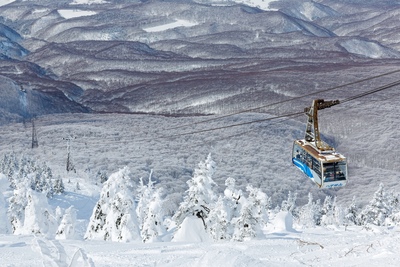
Ōwani is an area of heavy snowfall, so prepare for snow and icy surfaces as well as the cold in winter.
Limit your destinations according to sidewalk and park-path conditions, and focus on bathing and meals on days when walking feels uncertain.
If you plan to spend a long time outdoors after bathing, keep your change of clothes and outer layers within easy reach.

Onsen Etiquette for Your First Visit to Ōwani Onsen
In communal baths, help keep the water clean and be considerate so other visitors can relax.
Wash in the Washing Area Before Entering the Tub
In Japanese onsen, people generally bathe without swimsuits.
Undress in the changing room, wash in the washing area before entering the tub, and rinse away all soap and shampoo.
Do not force yourself to tolerate water that feels too hot; take breaks according to how you feel.
Drink water regularly before and after bathing, and avoid bathing after drinking alcohol or when you feel unwell.
Be Considerate with Towels and Smartphones
You can use a small towel for washing or covering yourself while moving around, but keep it out of the tub.
Prioritize other people's privacy in bathing areas and changing rooms, and refrain from taking photos.
Here are actions to keep in mind in different parts of a communal bath.
| Area | What to Do | What to Avoid |
|---|---|---|
| Washing area | Rinse off soap thoroughly | Splashing people around you |
| Bath | Tie up long hair | Swimming or going underwater |
| Changing room | Speak quietly | Loud conversations |
| Bathing area | Leave your smartphone outside | Taking photos or making calls |
Ask in Advance About Tattoos and Children's Admission Conditions
If you have tattoos or are visiting with children, check the facility's bathing conditions before you go.
If you want a family bath, asking about both booking procedures and conditions in advance will make things smoother on the day.
When asking, explain the relevant details clearly, such as whether you have tattoos or the ages of your children.
Enjoy Hot Springs, Local Food, and Town Walks at Ōwani Onsen
Ōwani Onsen is a hot spring town where you can combine day-use bathing with a meal of local bean sprouts and visits to temples and parks.
Check your return JR train, Wani-no-Yu's closing day (the 3rd Thursday of each month), Hanaringo's regular closing day, and the availability of bean sprout dishes to plan your day smoothly.
Follow basic onsen etiquette and enjoy time discovering everyday life in Tsugaru.




Reviews (0)