


Hōkoku-ji Temple in Kamakura: What to Know Before You Visit
Hōkoku-ji in Kamakura is a Zen temple known for its Bamboo Garden, where around 2,000 bamboo stalks, mainly mōsō bamboo, grow; for your first visit, check the day's guidance and prepare to enjoy the quiet grounds at a relaxed pace.
Along with seeking out beautiful views, leave yourself time to appreciate the particular stillness of a temple.
Hōkoku-ji is a temple of the Kenchō-ji branch of the Rinzai school of Zen Buddhism in Kamakura's Jōmyōji district, founded in 1334 (Kenmu 1).
Its founding abbot was the Zen master Tengan Ekō, known as Butsujō Zenji, and its founding patron was Ashikaga Ietoki, the grandfather of Ashikaga Takauji; the temple is said to have been established by Uesugi Shigekane to commemorate Ietoki.
The mōsō bamboo grove in the grounds is particularly famous, giving Hōkoku-ji its other name, the "temple of the bamboo garden."
Hōkoku-ji Opening Hours, Admission, and Matcha at Kyūkō-an
Hōkoku-ji is open from 9:00 a.m. to 4:00 p.m., with admission accepted until 4:00 p.m.
The temple is closed to visitors over the New Year period from December 29 through January 3, and may also close due to weather or other conditions.
Pay the admission fee at reception before entering the Bamboo Garden; admission is 400 yen for high school students and older and 200 yen for elementary and junior high school students.
Admission is free upon presentation of a disability certificate.
At Kyūkō-an (a tea area) inside the Bamboo Garden, you can sit on chairs and enjoy matcha and higashi (dry Japanese sweets) while looking out over the bamboo grove.
If you would like matcha, purchase a tea ticket at reception together with your admission ticket; the tea ticket costs 600 yen and includes dry sweets.
Tea tickets are sold until 3:30 p.m., and reservations are not required, although ticket sales may be temporarily suspended when it is crowded.
Public restrooms are also available, but check the signs on site for their location.
Read the Visitor Information Before Planning Your Trip
Before leaving, read the temple's admission conditions and any notices for the day.
In addition to Japanese, Hōkoku-ji's official website provides links to English, French, Spanish, Chinese, and Korean pages.
Traveler posts and photographs can give you a sense of the atmosphere, but they may not reflect the guidance in effect when you visit.
If there is a place you want to see or an activity you want to join, check the official information rather than assuming it is available based only on photographs.
Special evening visits with limited capacity are generally held on the 1st and 3rd Saturdays of each month, and advance registration is recommended.
Avoid packing your schedule too tightly before and after your journey, and leave yourself time to read the guidance on site and ask questions if needed.
If you plan to combine a walk through the Bamboo Garden with a tea break at Kyūkō-an, allow about 1 hour for a relaxed visit.
How to Avoid Crowds in the Bamboo Garden
Hōkoku-ji welcomes many visitors from Japan and overseas, and the Bamboo Garden's narrow paths can become crowded on weekends and during fall foliage season.
For a quieter visit, choose a weekday or a time close to the 9:00 a.m. opening.
If you want to enjoy matcha at Kyūkō-an, it is also wise to purchase your ticket early in case sales are temporarily suspended due to crowding.
Group reservations are not accepted, and entry may not be possible depending on conditions, so contact the temple in advance if you are visiting with a large group.
Be Considerate of Both Worshipers and Sightseers
At a temple, some people are there to pray, alongside those visiting for sightseeing.
Hōkoku-ji holds zazen (seated Zen meditation) sessions every Sunday morning from 7:30 to 9:15 a.m., except during the New Year period from December 29 through January 3; no reservation is needed, but sessions may be canceled due to weather or temple events.
The zazen sessions are generally conducted only in Japanese, with no interpreter, and late arrivals cannot join because the temple gate closes at 7:30 a.m.
Once inside the grounds, lower your voice a little and turn your attention to the scenery before you and the people around you.
Hōkoku-ji asks visitors to remain quiet within the grounds.
When sharing your impressions with companions, speak softly nearby rather than calling out from a distance to help maintain a peaceful atmosphere.
Sharing the quiet with those around you is a basic part of visiting a temple.


Visiting Hōkoku-ji: From the Temple Gate to the Bamboo Garden
Follow the entrance guidance as you move through the grounds, and pause to compose yourself at places of worship.
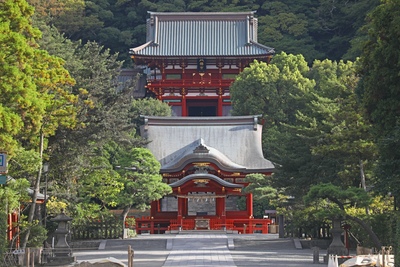
After passing through the temple gate, a path lined with moss-covered stones leads up a gentle slope, where the copper-roofed main hall comes into view above the steps on your right.
Rather than rushing to memorize the etiquette, follow the signs and the temple staff's explanations and act with care.
Pay at Reception and Check Which Areas You Can Visit
Before you start walking, read the entrance and reception guidance for directions, accessible areas, and photography precautions.
Pay the admission fee at reception before entering the Bamboo Garden.
Even if you see people going into an area, it may not be open to general visitors.
Do not enter areas marked by fences or signs restricting entry, and stay on paths that are open.
Hōkoku-ji specifically asks visitors not to cross fences.
Join Your Hands and Bow Quietly Before the Main Hall's Principal Image
When praying at a Buddhist temple, it is customary to join your hands quietly before the Buddha; clapping is not necessary.
At Hōkoku-ji, visitors are instructed to pray before the main hall's principal image by joining their hands and bowing once.
The principal image is a wooden seated statue of Shaka Nyorai (the historical Buddha), attributed to the Buddhist sculptor Takuma Hōgen of the Nanboku-chō period, and is a designated cultural property of Kamakura City.
The standing statue of Shō Kannon Bosatsu (a Buddhist bodhisattva) to the right as you face the main hall is the principal image of stop 10 on the Kamakura 33 Kannon Pilgrimage; it is normally not on public view but is unveiled 3 times a year.
If someone is already praying, wait for them to finish rather than stepping in from the side.
If you are unsure about the etiquette, ask the temple staff and follow the instructions provided on site.
Keep Following Local Guidance Throughout Your Visit
At building entrances, read signs about whether entry is permitted and whether shoes must be removed, rather than assuming you can freely explore the interior.
Adjusting your actions as you move between walking and viewing areas, as outlined below, can help you avoid feeling rushed.
| Situation | What to check | How to proceed |
|---|---|---|
| Before entering the grounds | Entrance guidance | Check which way to go |
| Before praying | People already there | Wait your turn |
| Approaching a building | Signs at the entrance | Follow entry conditions |
| At a fork in the path | Fences and signs | Take an open path |
If you and your companions plan to explore separately, agree on how to meet up again in a place where stopping will not obstruct others.
Visitor Rules to Follow at Hōkoku-ji
Hōkoku-ji lists the following requests for visitors.
- Remain quiet within the grounds
- Do not use tripods or monopods
- Do not smoke
- Do not cross fences
- Do not eat or drink
- Do not bring pets (except guide dogs)
- Do not touch plants
The use of tripods, monopods, selfie sticks, and similar equipment is prohibited.
Apart from matcha at Kyūkō-an, refrain from eating and drinking in the grounds, and drink water before entering.


How to Appreciate the Bamboo Garden and Temple Grounds at a Relaxed Pace
When exploring the grounds, shifting your gaze from the overall view to smaller details can help you discover your own points of interest.
Try setting aside separate time for taking photographs and for putting the camera away to enjoy the view.
View the Bamboo, Moss, and Bell Tower from a Little Distance
When looking at trees and buildings, start with what you can see from the path, noticing overlapping shapes and the differences between bright and shaded areas.
The Bamboo Garden occupies the former site of Kyūkō-an, a hermitage built for the founding abbot Tengan Ekō, and bamboo is said to have been planted on the site in the mid-Edo period.
Most of the bamboo is fast-growing, hard mōsō bamboo; the 2 narrow paths through the grove meet in front of the tea area, with lanterns and moss-covered stone statues dotted along the way.
Next, choose a detail that interests you, such as the color of the leaves or the outline of a roof, to give your visit a more distinct impression.
Built in 1757 (Hōreki 7), the bell tower is Hōkoku-ji's oldest building and preserves a sense of the time when the main hall and other buildings also had thatched roofs.
The grounds also contain a karesansui (dry landscape) garden, where stones suggest mountains and rivers, and natural cliffs and greenery create depth.
There are also yagura (cave tombs), a type common in Kamakura, said to be the graves of the founding patron Ashikaga Ietoki and Yoshihisa, the eldest son of Ashikaga Mochiuji, the 4th Kamakura kubō (ruler of Kamakura).
Even if you want to see something closer up, enjoy it from where you are rather than stepping into planted areas or moving objects.
Enjoy the moss and bamboo from the paths without touching them.
Pause to Enjoy the Sounds of Bamboo and the Changing Weather
Where you can stop without blocking the path, look away from your screen and pay attention to the sounds around you.
In the Bamboo Garden, sunlight filtering through the stalks, raindrops falling on wet days, and bamboo creaking as it sways in the wind create different scenes depending on the season, weather, and time of day.
Notice how the weather changes the scene, from moving leaves on windy days to water droplets catching the light after rain.
Moss-covered stones are common along the path from the temple gate to the main hall and in the Bamboo Garden, and the moss looks especially lush after rain.
Even when looking at the same scenery, you and your companions may notice different things.
Talking about what stayed with you after the visit can help you share memories that photographs alone cannot convey.
Best Time for Fall Foliage and Seasonal Flowers at Hōkoku-ji
The Bamboo Garden stays green throughout the year, while in autumn, colorful maples and other trees contrast with the green bamboo.
The leaves usually begin to change in mid-November and reach their peak from late November to early December, although the timing varies with weather conditions.
Seasonal flowers also color the grounds, including flowering quince and roses in spring, iwatabako wildflowers in summer, and winter cherry blossoms and camellias in winter.


Where Can You Take Photos at Hōkoku-ji? Photography Etiquette to Know
Follow the guidance for each location and enjoy photography without interfering with worship or blocking the paths.
If you are unsure whether photography is allowed, ask first for peace of mind.
Check Signs and Guidance for Permitted Photography Areas
Even if photography is allowed outdoors, the same rules may not apply inside buildings or to displayed objects.
Do not point your camera at areas marked as off-limits to photography, and follow any instructions given by temple staff.
Hōkoku-ji's goshuin (temple calligraphy stamps) are mainly those of Shō Kannon Bosatsu on the Kamakura 33 Kannon Pilgrimage, and visitors are asked not to request a particular calligrapher or take photographs when receiving them.
Do not assume photography is permitted simply because other people are taking pictures.
Keep Paths Clear While Framing Your Shot
Focusing on the screen can make it harder to notice people approaching from behind or praying nearby.
The narrow paths in the Bamboo Garden are also used by visitors passing one another, so stand to the side even when framing an upward view of the bamboo.
Choose where to stand before taking a photo, then move aside afterward so others can enjoy the view too.
If you need to step backward to change your composition, check your footing and surroundings before moving.
Avoid Tripods and Selfie Sticks, and Be Considerate When Photographing People
If you want to make someone the main subject of a photo, ask their permission first and lower your camera if they decline.
Tripods, monopods, selfie sticks, and similar equipment are prohibited at Hōkoku-ji, so use a handheld camera or smartphone for your photographs.
Here are some situations that can require care while taking photographs, along with ways to be considerate.
| Photography situation | What to do | What to avoid |
|---|---|---|
| On a busy path | Leave enough room for people to pass | Blocking the path while waiting |
| Photographing a person | Ask their permission | Taking close-ups without permission |
| Taking a wide landscape shot | Check your footing and behind you | Stepping backward while watching the screen |
| Photographing from the same spot | Take turns | Occupying the spot |


What to Wear and Bring for a Visit to Hōkoku-ji
Choose clothing that is comfortable for walking and keep your belongings compact enough to handle close to your body.
Preparing for the weather and your journey helps you move around comfortably at your own pace once you arrive.
Choose Walking Shoes and Rain Gear for Slopes and Mossy Stones
Familiar, comfortable walking shoes make it easier to pay attention to your footing both while moving and while enjoying the views.
Hōkoku-ji has a gentle slope and steps between the temple gate and main hall, along with many moss-covered stones on the approach and in the Bamboo Garden, so shoes with good grip are helpful after rain.
If rain is forecast, choose rain gear that is easy to manage, keeping in mind that you may need to pass others in narrow spaces while carrying an umbrella.
An outer layer that is easy to put on and take off lets you adjust comfortably to changes in temperature.
It is also useful to bring small items to help you stay comfortable and organized as needed.
- A handkerchief for wiping hands or belongings
- A small bag for taking litter home
- A bag to protect your smartphone from rain
If you cannot find a trash can, collect your litter in a small bag and take it with you.
Keep Your Luggage Compact While Walking
Large bags can easily bump into others when you turn, so reduce what you carry before your visit if possible.
Luggage storage may not be available, so do not plan on leaving your bags at the temple.
For suitcases and other large items, one option is the luggage storage service operated by the Kamakura City Tourist Association on the 4th floor of the Enoden Building at Kamakura Station's West Exit.
The service is available from 9:00 a.m. to 5:00 p.m. except over the New Year period, and the daily fee per item is 300 yen if each side measures 40 cm or less, including handles and wheels, or 700 yen for larger items.
When using maps or translation tools, stop somewhere out of the way instead of looking at the screen while walking so you can use them calmly.

How to Get to Hōkoku-ji from Kamakura Station
Kamakura Station, served by the JR Yokosuka Line and Enoshima Electric Railway, is the starting point for reaching Hōkoku-ji.
It takes about 60 minutes from Tokyo Station on the JR Yokosuka Line or about 53 minutes from Shinjuku Station on the JR Shōnan-Shinjuku Line.
Take a Bus or Taxi, or Walk from Kamakura Station
From Kamakura Station's East Exit, take a Keihin Kyūkō Bus bound for Kamakura Reien Seimon-mae Tachiarai or another suitable service, get off at Jōmyōji bus stop after about 12 minutes, and walk about 3 minutes to the temple.
A taxi from Kamakura Station's East Exit takes about 7 minutes.
If you walk from Kamakura Station, the route is about 2.2 km east and takes around 35 minutes.
Parking When Visiting by Car
By car, the temple is about 10 minutes from Asahina Interchange on the Yokohama-Yokosuka Road.
Hōkoku-ji has a small parking area, but visitors are instructed to use nearby paid parking if it is full.
Look up nearby paid parking before leaving so you have an alternative if the temple's parking area is full.
Roads in Kamakura can become congested on weekends and during fall foliage season, so consider traveling by train and bus as well.
What to Do If You Cannot Read Japanese Signs at Hōkoku-ji
If you do not understand a sign, check its meaning on the spot rather than guessing from photos or other people's actions and continuing.
Even a few short words or gestures can help convey what you want to know.
Recognize Words That Indicate Visitor Restrictions
Knowing some Japanese terms about access and behavior is useful when visiting a temple.
The English page of Hōkoku-ji's official website lists requests for visitors, including remaining quiet and not using tripods, so reading it before leaving can help you prepare.
Here are some common signs at temples, their meanings, and how to respond.
| Sign | Meaning | What to do |
|---|---|---|
| 立入禁止 — Tachiiri kinshi (No entry) | An area you cannot enter | Do not go beyond this point |
| 撮影禁止 — Satsuei kinshi (No photography) | Taking photos is not permitted | Put your camera away |
| 土足禁止 — Dosoku kinshi (No outdoor shoes) | You cannot enter with your shoes on | Follow the entry instructions |
| 受付終了 — Uketsuke shūryō (Admission closed) | Admission has ended | Do not insist on entering |
Use Short Questions to Explain What You Want to Know
To ask which areas you can visit, say "Koko ni haitte mo ii desu ka?" (May I enter here?); for photography, ask "Shashin o totte mo ii desu ka?" (May I take a photo?).
If you want matcha at Kyūkō-an, say "O-matcha-ken o kudasai" (A matcha ticket, please) at reception to make your request clear.
Even when using a translation app, keep your question short and get the person's attention before showing them your screen.
If you did not fully understand an explanation, do not act immediately; point to the sign and ask again.
Final Tips: Check the Guidance and Enjoy Hōkoku-ji's Bamboo Garden Quietly
When visiting Hōkoku-ji, follow the day's guidance and share the space considerately with worshipers and other visitors.
Opening hours are 9:00 a.m. to 4:00 p.m., Bamboo Garden admission is 400 yen for high school students and older, and tea tickets for Kyūkō-an are sold until 3:30 p.m.
Wear comfortable walking clothes, keep your bags light, and take photographs with attention to those around you, without tripods or selfie sticks, for a relaxed visit to the Bamboo Garden.
Make time to listen to the bamboo grove and appreciate the green moss as you enjoy a peaceful temple visit at your own pace.


Reviews (0)