


Jōshōkō-ji Temple in Kyoto: Gardens and Mountain Views
When you visit Jōshōkō-ji Temple, look beyond the garden in front of you to the groves and mountains that stretch out behind it.
Jōshōkō-ji is a Zen temple of the Tenryū-ji school of Rinzai Buddhism in Keihoku, Ukyō Ward, Kyoto City, and is said to have been founded in 1362 (the first year of the Jōji era) by Retired Emperor Kōgon (Kōgon Hōō).
Shift Your Gaze from Nearby Branches to Distant Greenery
When blossoms or autumn leaves catch your eye, it's tempting to follow their color alone, but taking a moment to look around at the surroundings makes it easier to appreciate the depth of the scenery.
By looking in turn at the branches in front of you, the outlines of the buildings, and the distant trees, you can change what you're focusing on without moving from the spot.
You don't need to know about Japanese garden design to enjoy the view; simply notice where your gaze settles and what draws it onward.
Compare the Lines of the Buildings with the Shapes of the Trees
Looking at the straight lines of pillars and rooflines together with the freely spreading branches lets you notice the contrast between architecture and nature.
Take in the whole view before searching for details, then go back to the spots that caught your interest; this also helps you avoid taking a string of similar photos.
Follow on-site guidance about where you can view from, and don't step beyond the permitted areas to get a better look at something hard to see.
A camera may adjust its exposure for bright leaves, leaving buildings in shadow. Compare the scene in front of you with the image on your screen to notice differences in light and shadow.


How the View Changes Between the Sanmon Gate and the Garden
The same trees make a different impression depending on whether you see them framed through the gate or with the garden opening up before you.
Use the Gate's Outline as a Frame for the Scenery
At the sanmon (main gate), observe both the shape of the gate itself and the difference in brightness visible beyond it.
When part of your view is enclosed by a structure, your attention turns to elements that are easily overlooked in open spaces, such as the color of the leaves and the direction of the branches.
Instead of lingering in the middle of the path, pause briefly in a spot where you won't block the flow of people; this makes for a calmer visit for everyone.
Alternate Between the Garden's Expanse and Its Details
In the garden, rather than hunting for highlights from the start, survey the whole scene first and then narrow your focus to branches or leaves that interest you; this makes the view easier to take in.
Alternating between the distant view and the foreground draws your attention not only to the intensity of the colors but also to the density of the leaves and the spaces between the trees.
Having a few points to look for at each spot also makes it easier to enjoy the time you spend without taking photos.
| Viewing Spot | Combination to Notice | What to Appreciate |
|---|---|---|
| In front of the sanmon gate | The gate and the grove beyond | Contrast of light and shade |
| Overlooking the garden | Nearby branches and the mountains | Depth of the scenery |
| Near the buildings | Lines of pillars and branches | Straight lines vs. curves |
Put What You See into Words
With your companions, go beyond simply saying it was beautiful and share specific discoveries, such as how the leaves seemed to glow against the dark grove.
Putting colors and shapes into words helps you realize that each of you was looking at different things, and even a short visit will leave you with more memorable moments.


Cherry Blossoms and Autumn Leaves at Jōshōkō-ji: Enjoy the Seasons Without Fixed Expectations
Even if you're visiting for the seasonal colors, it's important not to judge the worth of your visit solely by the condition of the blossoms or leaves.
In Cherry Blossom Season, Look at the Shape of the Branches Too
When viewing the cherry trees in spring, observe not only how many blossoms there are but also which way the branches spread and how they overlap with the surrounding trees and buildings.
The temple grounds are home to the Kokonoe-zakura, a cherry tree designated as a National Natural Monument, and are also known for trees such as the Sakon no Sakura, said to have been propagated from a tree at Kyoto Imperial Palace (Kyōto Gosho).
How the trees bloom varies by day and by tree, so the scene you saw in photos may not be exactly what's in front of you.
Check the bloom forecasts, but keep your expectations flexible so you can still enjoy the garden as a whole when there are fewer flowers.
View Autumn Leaves Together with the Surrounding Green
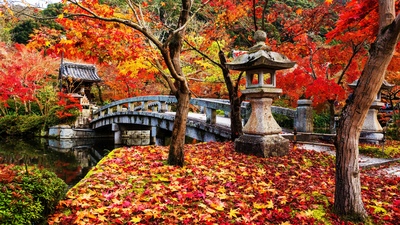
Close-up shots of red and yellow leaves are nice, but including the surrounding greenery makes the contrast in colors easier to appreciate.
The way the leaves change color and fall doesn't follow a fixed pattern, so don't rely on the calendar alone to decide what you'll see.
As the sunlight shifts, different leaves catch the light and different parts of the grove fall into shadow. Rather than pushing through to a new spot, notice these changes from where you are.


What to Wear and Bring for a Temple Visit with Stone Steps
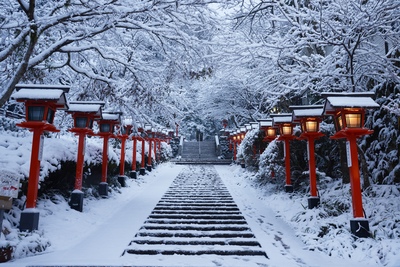
Because you'll spend a lot of time looking up at the scenery, it helps to be prepared so you can turn your attention back to your footing whenever you move.
Choose Shoes That Are Easy to Walk in and Easy to Slip Off
Shoes that fit well and have non-slip soles make it easier to get around on stone steps and rain-dampened paths.
Choose shoes that are easy to take off and put on, and wear clean socks in case you enter a building.
Large bags can easily bump into things or people when you turn around, so keep what you bring to only what you need for your visit.
Prepare for Rain and Cold
Check the weather forecast for your destination as well as your starting point, and bring a jacket you can easily put on or take off and a bag for wet items.
Holding an umbrella makes it harder to pay attention to what's overhead and around you, so keep your distance from branches and buildings and leave plenty of room when passing others.
Don't rush on wet stones or fallen leaves, and avoid walking backward to take photos.
Match Your Pace to Your Companions
If you're visiting with someone who finds stone steps difficult, discuss beforehand how far you'll go and when you'll take breaks.
Don't judge whether a wheelchair or stroller can be used just from the fact that it's a temple; check the route and the areas open to visitors in advance.


Temple Etiquette: Separate Time for Worship from Time for Photos
At a temple, the basic rule for enjoying the scenery is to balance it with respect for a place of prayer.
Check Signs and Your Surroundings Before Taking Photos
Check the on-site signs to see where and what you're allowed to photograph, and if you're unsure, ask before pointing your camera.
Even if photography is allowed outdoors, the same may not apply to building interiors or Buddhist statues, so recheck the guidance each time you move to a new area.
Avoid compositions in which other visitors' faces are prominent, and don't rush to snap photos near people who are praying.
Keep Your Distance to Protect the Scenery
Don't move branches or leaves with your hands or step into the garden to set up a shot; enjoy the view as it appears from the permitted areas.
Don't decide on your own whether to use a tripod or large camera equipment; check first, including whether it would get in the way of other visitors.
When you're unsure what to do, thinking about the impact on those around you makes the decision easier.
| Situation | Do | Don't |
|---|---|---|
| Taking photos near the gate | Keep the path clear | Stand still for a long time |
| Looking at branches up close | Keep your distance | Pull branches toward you |
| Worshipers are present | Wait before taking photos | Point your camera at their faces |

How to Get to Jōshōkō-ji: Plan Your Visit Around the Return Trip
To enjoy a mountain temple at a leisurely pace, it's reassuring to decide on your return transportation at the same time as you plan your arrival.
Public Transportation: Check Connections and the Way Back
Take a JR bus from Kyoto Station to Shūzan bus stop, then transfer to a Keihoku Furusato Bus service to Yamaguni Goryō-mae bus stop and walk to the temple. Check current timetables, connections, and the walking route before you travel.
Even if you find a way there, return services may not run at the same intervals, so it's important to check return departure times and connections first.
Saving the relevant parts of timetables and maps to your device saves you the trouble of looking them up again on-site.
If you're not comfortable with Japanese, note down the temple's name and your return destination in Japanese as well, so you can show your screen when asking where to board.
Translated place names alone can be hard to match with the signs at bus stops, so it helps to check the route name and destination together.
Driving? Leave Some Breathing Room Before and After Your Visit
If you're driving, check road conditions and parking information, and don't park on nearby residential streets or private property.
Check opening hours, admission procedures, and the admission fee (shinōkin, an offering paid on entry) before your visit, and allow time to explore rather than planning only for travel.
Leave time to relax after viewing the garden rather than rushing straight to your next destination.
Summary: Tips for Enjoying the Garden and Groves at Jōshōkō-ji
At Jōshōkō-ji, enjoy the seasonal blossoms and leaves along with the layered scenery created by the sanmon gate, the garden, and the surrounding groves.
Prepare for the terrain, be considerate when taking photos, and plan ahead all the way to your trip home, and you'll be free to focus on the scenery before you.


Reviews (0)