


Saimyō-ji Temple in Makinoo, Kyoto: A Scenic Walk Across Shigetsu-kyō Bridge
Saimyō-ji Temple is located in Makinoo, in Kyoto's Ukyō Ward, with its grounds spreading across the mountainside on the far side of the Kiyotaki River from the Shūzan Kaidō road.
Because the scenery shifts in sequence from river to bridge to stone steps to gate, don't rush to arrive; savor the approach itself as an introduction to the mountain temple.
Check Your Return Route at Makinoo First
After getting off the bus, check the return bus stop, the timetable, and where to cross the road before heading to the temple.
Saimyō-ji has no parking lot, so plan around public transportation and don't park on nearby private property or road shoulders.
Rather than relying only on your phone's map, check the on-site signboards and traffic signs to choose a safe route.
Admire the Layers of River and Trees from Shigetsu-kyō Bridge
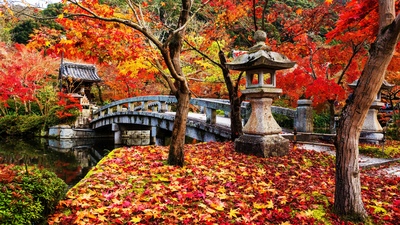
On the vermilion Shigetsu-kyō Bridge leading to the grounds, look in turn at the bridge railings, the flowing Kiyotaki River, and the trees on the opposite bank to see how color and depth interact.
When taking photos, don't keep standing in the middle of the bridge; leave room for visitors to pass and take turns quickly.
After rain or when leaves have fallen, the bridge and stone steps can be slippery, so prioritize watching your step over taking photos.


Saimyō-ji History: From Chisen Daitoku Through the Ages
Saimyō-ji belongs to the Daikaku-ji school of Shingon Buddhism and bears the honorary mountain name Makinoo-san, a traditional Buddhist temple designation.
Together with Jingo-ji and Kōzan-ji, it is known as one of the ancient temples of the Sanbi area, which comprises Takao, Makinoo, and Toganoo, letting you compare the temples along the Kiyotaki River in terms of both terrain and history.
According to the temple's history, it was founded during the Tenchō era (824–834) of the Heian period by Chisen Daitoku, a leading disciple of the Buddhist monk Kūkai, as a training hall for Buddhist precepts.
Founding, Revival, and Reconstruction: Understanding Each Stage
The temple's history has several stages: decline after its founding, revival in the Kamakura period, independence from Jingo-ji, destruction in war, and subsequent reconstruction.
Rather than memorizing these events as one continuous story, use the on-site explanations to distinguish which buildings relate to which periods.
The temple's in-gō (honorary temple title), Byōdō Shinnō-in, is another clue to understanding its independence.
According to the temple's history, after its revival in the Kamakura period, it was granted this title by Emperor Go-Uda in 1290 (the 3rd year of the Shōō era) and became independent from Jingo-ji.
Experience the Silence as a Setting for Spiritual Training
The quiet atmosphere at Saimyō-ji reflects its history as a training hall where young monks studied Buddhist precepts.
Refrain from loud conversations and phone calls on the grounds, and give priority to memorial services and worshipers.
Once you know the history, tuning in to the sound of the river and the rustle of the trees makes it easier to sense the bond between the setting and prayer.


Saimyō-ji Main Hall (Hondō): Architecture and Buddhist Statues
The current Main Hall was rebuilt in the Edo period with a donation from Keishōin, mother of the fifth shogun Tokugawa Tsunayoshi.
Looking at the exterior first before moving inside to worship lets you balance appreciating the building as a cultural property with approaching it as a place of faith.
Observe the Exterior: Roof, Pillars, Then Veranda
In front of the Main Hall, move your gaze across the spread of the roof, the spacing of the pillars, and the link between the veranda and the garden to see how the building sits within the sloping grounds.
Stepping back from the path to fit the whole view in your frame can bring you close to steps, so check your footing first.
Including the surrounding trees in your frame, not just the halls, lets you capture the mountain temple atmosphere of Makinoo.
Worship the Principal Image with Respect for Tradition and Faith
Inside the hall, the principal image, a statue of Shaka Nyorai (Shakyamuni Buddha), is enshrined along with other Buddhist statues highlighted by the temple.
The principal image is said to be a standing statue in the Seiryō-ji style traditionally attributed to the sculptor Unkei, but don't treat this tradition as confirmed authorship; understand it in line with the temple's own explanation.
Follow the day's posted notices on photography and access, and keep a respectful distance and speak quietly so you don't disturb others' prayers.
Organize What You See
Dividing what you see on the grounds along the following lines keeps architecture, faith, and nature from blurring together, making your impressions easier to put into words.
| Focus | Key Points | What to Do |
|---|---|---|
| Architecture | Roof and pillars | View the entire building from the front |
| Faith | Principal image and worship | Follow the in-hall guidance |
| Nature | Garden and trees | Observe from the path |


The Guest Hall and Garden: Savoring the Depth of the View
Don't end your visit at the Main Hall; check which parts of the guest hall (kyakuden) and garden are open to visitors, and you'll discover Saimyō-ji's quiet spatial composition.
In the garden, stones, moss, trees, and the edges of the buildings set one another off, so rather than zooming in on a single element, take in the overall spacing.
Where the scene changes with the wind and light, don't start shooting right away; take time to compare the foreground and background of the garden from the same spot, and you'll more easily sense the intent behind its arrangement.
Slowly Shift Your Gaze from the Veranda to the Garden
When viewing the garden from the building, move your eyes in turn from the veranda in front, to the arrangement of stones, the moss and shrubs, and the trees beyond.
On rainy days or after morning dew, verandas and stepping stones can be slippery, so don't stray from the designated areas.
Where you can sit and look, don't spread out your belongings; leave space for the next visitors to spend time quietly.
Capture the Connection Between Spaces Rather Than the Details
Rather than only photographing moss and leaves up close, choose a spot where the guest hall and garden appear together to convey the relationship between mountain temple life and nature.
Tripods and large equipment can get in the way of other visitors, so check the conditions for their use on site.
Don't touch cultural properties or garden features; observe from behind the boundary lines and fences.


Saimyō-ji Through the Seasons: Comparing Fresh Greenery, Autumn Leaves, and Snow
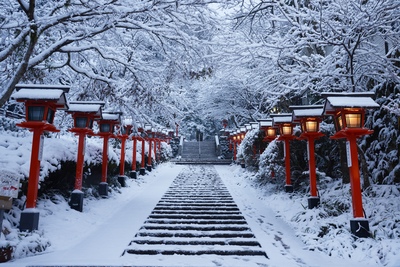
Saimyō-ji describes itself as a mountain temple enveloped by spring blossoms, early summer greenery, autumn leaves, and winter snowscapes.
Rather than chasing only peak viewing periods, compare how the seasons transform Shigetsu-kyō Bridge, the Main Hall, and the garden using the same viewpoints, and you'll find the appeal of the day you visit.
Fresh Greenery: Translucent Leaves and Water Reflections
In the season of young leaves, compare leaves glowing translucent against the light with greens that look deep in the shade.
By the river you can look for reflections on the water, but don't force your way close to the embankments or wet stones.
Keep in mind fatigue from the sun and humidity, and make sure you have drinks and time to rest.
Autumn Leaves: Enjoy Them Mid-Change Too
The progress of the autumn colors varies with the year and the weather, so don't treat past information as a guarantee for your visit; check the temple's information before setting out.
Layering in not only reds and yellows but also branches that are still green, fallen leaves, and the color of the moss lets you record the changing of the seasons.
When it's crowded, don't hog the photo spots on the bridge or in front of the gate; take turns quickly so the flow of worshipers doesn't stop.
Prepare for Each Season
Adjust not only the scenery you look for but also your footwear and clothing to suit the season.
| Season | Scenery | Preparation |
|---|---|---|
| Spring | Blossoms and new buds | Prepare for temperature swings |
| Early summer | Green maples | Stay hydrated |
| Autumn | Bridge and fall foliage | Watch for crowds and fallen leaves |
| Winter | Branches and snow | Check for icy conditions |

Saimyō-ji Visitor Info: Check Hours, Admission, and Access Just Before You Go
Visiting hours, admission fees, events, and transportation are subject to change, so check the official information from Saimyō-ji and transportation operators before setting out.
Factor in not just the travel time to Makinoo but also the time to cross the bridge from the bus stop and walk the grounds, plus the waiting time for your return trip.
How to Get to Saimyō-ji: Check Public Transportation Both Ways
Check your bus route, boarding location, the Makinoo bus stop where you'll get off, and the return service.
During the autumn foliage season and other busy periods, roads and buses can get crowded, so don't schedule your next activities too close together; leave room to deal with delays.
Don't rely only on saved timetables; check the service information as of your departure as well.
From Kyoto Station, it takes about 50 minutes by bus to the Makinoo bus stop, and from there it's about a 5-minute walk to the temple grounds.
Plan a Quiet Visit in Non-Slip Shoes
Bring comfortable shoes you're used to, rain gear, and layers to adjust your body temperature, and carry a bag that keeps your hands free.
If you feel tired or unsure of your footing, don't try to see everything; rest in a safe place or turn back.
In the evening, the mountain valley can feel dark early, so decide when to leave the grounds with your return bus and the remaining daylight in mind.
Summary: Saimyō-ji Quietly Connects River, Bridge, and Prayer
At Makinoo-san Saimyō-ji, the path from the Kiyotaki River across Shigetsu-kyō Bridge to the Main Hall, guest hall, and garden helps shift your mind into the stillness of a mountain temple.
Trace the temple's history from its founding by Chisen Daitoku through later periods, and show respect for its principal image and historic buildings as parts of a living place of worship.
By checking official information on seasonal scenery, visiting, and transportation just before you go, and allowing enough time to walk safely and catch your return bus, you can fully appreciate the connection between Makinoo's natural beauty and spiritual heritage.


Reviews (0)