


Shōbō-ji Temple in Kyoto: Rock Garden and Borrowed Scenery
Shōbō-ji Temple in Ōharano, Kyoto, is a temple where you can calmly savor a garden in which the shapes of stones, an expanse of white sand, and distant mountain ranges overlap.
Check in at reception before paying your respects, and in the garden, rather than focusing on a single stone, take in the spacing between the stones and the background as well, which makes the garden's composition easier to see.
Plan Your Route from Reception to Worship
After entering through the side gate, first check the information at the visitor reception desk to learn which areas you can enter and the suggested route through the temple.
Head to the main hall first and quietly put your hands together in prayer before moving on to the shoin (traditional reception hall) and garden, which lets you shift into sightseeing mode while maintaining respect for the temple.
If there are signs or explanations from staff, follow the on-site route rather than your own plan.
See the Stones as the Foreground and the White Sand as the Middle Ground
When you begin viewing the garden, move your gaze in order: the stones in front as the foreground, the white sand as the middle ground, and the trees and mountains as the background.
Paying attention not only to the size of the stones but also to their tilt, their shadows, and the space left around them reveals that even a quiet garden has its own rhythm.
If there's a designated spot for seated viewing, see how the garden looks from there and compare it with the view while standing.


The Rock Garden of Birds and Beasts: Searching for Animal Shapes with an Open Mind
The Hōshō-en garden is also known as Chōjū no Sekitei (the Rock Garden of Birds and Beasts).
Its stones resemble a variety of creatures.
Rather than rushing to find the answers, the way to enjoy this garden is to observe each stone's outline, orientation, and pairing with neighboring stones, and to enjoy your own interpretations.
Imagine Ears and Backs from the Outlines
As you trace the bumps and curves along the tops of the stones, there are moments when they look like ears, beaks, shells, or the back of a crouching animal.
The same stone can look different depending on your viewing angle and the direction of the light, so try shifting your gaze slightly within the permitted viewing areas.
Using your imagination from a distance, without touching the stones or stepping down into the garden, also helps protect the landscape.
Look at the Relationships Between Stones, Not for One Right Answer
Even when you spot a stone that looks like an animal, don't move straight on; see how it forms a group with the smaller stones and plantings nearby.
Sometimes a stone looks like a single animal, while at other times several stones together seem like a parent and child or a herd.
If you're with companions, quietly share the shapes you see and enjoy the differences in your interpretations for a richer experience.
Shift Your Focus Step by Step
Changing your focus in the following order helps you keep track of both the garden as a whole and its details.
| Viewing Stage | What to Focus On | What to Notice |
|---|---|---|
| Full view | The layout of the white sand and stones | The expanse of open space |
| Middle ground | Groups of stones | Orientation and spacing |
| Details | Outlines and shadows | Features that look like animals |
Returning to the full view after studying the details reveals connections between the stones that you didn't notice at first.


Shōbō-ji's Borrowed Scenery: A Rock Garden Framed by Mountains
Beyond the garden stretch the Higashiyama mountains, creating a shakkei (borrowed scenery) view that isn't complete with just the white sand and stones.
Shifting your gaze from the nearby garden stones to the distant mountains makes the garden's limited space feel much larger.
Follow the View from Garden Stones to Mountain Ridges
First look at the tops of the stones in front, then follow how those lines connect to the trees beyond and the ridgelines of the mountains.
Don't treat clear days as the only ideal; on days with haze or clouds, savor the softened outlines, and you'll find it easier to embrace the scenery in any weather.
Even when distant views are hard to see, looking at the boundary where the colors shift from white sand to plantings gives a sense of depth.
Use the Building's Edges as a Picture Frame
When viewing the garden from the Hōshō-den hall, treat the lines of the pillars and eaves as a picture frame to better grasp how the rock garden and the distant scenery come together.
Don't stay only in the center of the room; move around a little within the designated area and compare how the stones and mountains appear between the pillars.
If other visitors are seated, don't cross in front of them; share the view by taking turns at the viewing spots.


Main Hall and Shoin: Prayer, Garden Views, and Paintings
Shōbō-ji has a main hall and a shoin, so you can switch perspectives between a space for prayer and a space for appreciating the garden and paintings.
Said to have been founded in 754 (the 6th year of the Tenpyō-shōhō era), Shōbō-ji belongs to the Tō-ji school of Shingon Buddhism and is also known as Ishi no Tera (Temple of Stones) because of the many large boulders on its grounds.
Remember that both are indoor spaces, so keep your voice down, handle your belongings carefully, and move quietly.
In the Main Hall, Pray Before Looking Around
In the main hall, put your hands together in prayer before examining the details, respecting it as a place of worship.
When reading the explanations about the Buddhist statues and the hall interior, don't occupy the aisle or the front for long, and leave room for people behind you to pray.
Photography rules differ by location, so even if you don't see a no-photography sign, it's best to ask at reception when in doubt.
In the Shoin, Compare the Fusuma Paintings with the Colors of the Garden
In the shoin, you can enjoy comparing the Nishiyama landscapes and flowers depicted on the fusuma (sliding door) paintings with the colors of the garden outside the windows.
The fusuma paintings span 41 panels depicting the landscapes, flowers, and plants of Nishiyama through the four seasons.
Seeing how the seasonal mood in the paintings resonates with the trees and light on the day of your visit makes the indoors and outdoors feel like one continuous space.
Keep a respectful distance from the artwork. Take in the whole composition first, then study the details.


Shōbō-ji Through the Seasons: Blossoms, Greenery, and Autumn Leaves
The garden has a weeping cherry tree and other trees, and the colors of their blossoms and leaves change the look of the stones and white sand.
Blooming and foliage timing depend on the climate, so don't fix a particular day as the peak; check the temple's announcements and enjoy the scenery the day brings.
Spring: See How the Branches Overlap the Stones
During the blooming season, don't just focus on the blossoms; notice which stones sit beneath the branches and what shadows they cast on the white sand.
In crowded spots, don't occupy a photo position for long; you can also step back and watch how the blossoms add to the garden as a whole.
The Green Season: Follow the Shades of Green
As the greenery deepens, look in turn at the brightness of the leaves, the shadows on the stones, and the light reflecting off the white sand, and you'll find many shades within the same color.
After rain, the stones look deeper in color, but the ground may be slippery. Stop in a safe place to admire them, and watch your footing when walking.
Autumn and Winter: Compare the Changing Outlines
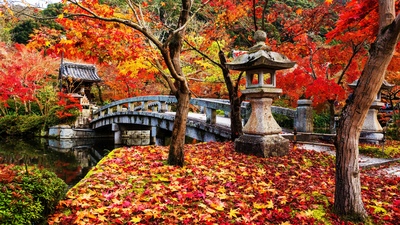
In autumn, compare the fall foliage with the gray of the stones, and when the trees have few leaves, compare the outlines of the branches and stones, and you'll discover the garden's appeal goes beyond showy colors.
Keep the cold and early sunsets in mind. Plan a comfortable schedule and choose appropriate clothing before you visit.

How to Get to Shōbō-ji and Visit Nearby Sights: Plan Around Your Return Trip
Shōbō-ji is located in Ōharano in Rakusai, western Kyoto, and by public transportation, you can take a bus from the station and walk from the bus stop.
If you're driving, you may pass through residential roads, so follow the temple's access information and on-site signs, and be considerate of local traffic.
Public Transportation: Check Return Times First
Once you've decided on your date, first look up the times and stops for return buses, then work backward to plan your visiting time.
Timetables and routes can change, so use the transportation operators' information and check transfers and walking sections separately.
Save a map in advance and check turns and landmarks so you can get around calmly, even in an unfamiliar area.
Combining Shōbō-ji with Ōharano Shrine: Leave Time to Spare
Shōbō-ji is located across from Ōharano Shrine, making it easy to plan a visit to both.
However, don't plan to rush through the garden; build in extra time for reception, getting around, and sitting quietly.
Temples and shrines have different worship etiquette, so check the guidance at each entrance and shift your mindset accordingly when you pray.
What to Check for Each Mode of Transportation
Dividing your pre-departure checks as shown below reduces mistaken assumptions about timing and routes.
| Mode of Transportation | Information to Check | On-Site Considerations |
|---|---|---|
| Local bus | Round-trip times and bus stops | Wait with time to spare |
| Walking sections | Route and weather | Choose comfortable walking shoes |
| Private car | Recommended route and parking conditions | Drive slowly on residential roads |
Opening hours, admission fees, and parking conditions may change, so check the temple's information before you set out.
Summary: Savoring Shōbō-ji's Rock Garden of Birds and Beasts and Its Borrowed Scenery
At Shōbō-ji in Ōharano, viewing in turn the garden stones that evoke birds and beasts, the open expanse of white sand, and the borrowed scenery of the Higashiyama mountains lets you appreciate the depth of the garden.
Take time to pray in the main hall and compare the fusuma paintings with the garden views from the shoin, noticing seasonal colors, light, and shadow.
By following the reception guidance and photography rules and allowing plenty of time for your return trip, you can enjoy a quiet visit appreciating the garden and its natural surroundings.



Reviews (0)